
Ear Wax Symptoms – Impact on Children’s Comfort

Every parent knows how frustrating it can be when a child complains their ear feels blocked or uncomfortable. Earwax is not just an annoyance—it plays a critical role in defending your child’s ears against bacteria, dust, and water. Understanding this protective function is the first step to deciding when professional help is needed. This guide explains what ear wax does, the common symptoms of buildup in children, and how Glasgow and Edinburgh’s NHS-accredited clinics offer the safest removal solutions without risking further blockage or harm.
Key Takeaways
Point | Details |
Understanding Ear Wax | Ear wax, or cerumen, plays a crucial protective role for children’s ears, trapping harmful particles and preventing infections. |
Symptoms of Blockage | Parents should be vigilant for signs of hearing loss, discomfort, or behavioral changes, which may indicate ear wax blockage. |
Professional Removal Techniques | Professional clinics offer safe removal methods, such as microsuction and irrigation, which are essential for effective treatment. |
Choosing the Right Clinic | Selecting a regulated clinic with trained specialists and flexible treatment options ensures safety and comfort for your child. |
What Is Ear Wax and Its Purpose
Ear wax, medically known as cerumen, is a natural waxy substance your child’s body produces to protect and maintain healthy ears. It sounds counterintuitive, but this substance your child’s ears produce is actually there for good reasons. Rather than viewing it as something unwanted, understanding its protective role helps explain why the ear canal produces it in the first place. The glands lining the outer ear canal secrete cerumen, combining with oils and dead skin cells to form the protective barrier we call ear wax.

The purpose of ear wax extends far beyond being a nuisance. This protective barrier traps dust, bacteria, and small particles that might otherwise travel deeper into the ear canal and cause damage. Think of it as your child’s ear’s own self-cleaning system. Cerumen also moisturises the delicate skin inside the ear canal, preventing dryness and irritation that could lead to itching or discomfort. When water enters the ear during swimming or bath time, ear wax forms a water-resistant shield, protecting the sensitive inner structures. Additionally, the acidic nature of ear wax creates an environment where harmful bacteria and fungi struggle to survive, giving your child’s ears an extra layer of defence against infection.
Your child’s body naturally regulates ear wax production, and in most cases, the ear canal cleans itself beautifully. The jaw movements from chewing and talking gradually move old wax towards the ear opening, where it dries and falls out naturally. However, some children produce more ear wax than others, or the wax hardens before it can exit naturally, leading to blockage. Understanding that how ear wax forms helps you recognise when production becomes excessive. Factors like narrow ear canals, hairy ear canals, or the natural tendency to produce drier wax types can all contribute to build-up in children. This is where professional assessment becomes valuable, as trained clinicians can determine whether your child simply has normal ear wax accumulation or whether they need assistance with removal.
Pro tip If you notice your child complaining of ear discomfort or reduced hearing, avoid inserting cotton buds or other objects into their ear, as this often pushes wax deeper and worsens blockage. Instead, book a professional assessment with EARS Clinics, where our trained specialists can safely evaluate and treat the issue using appropriate techniques.
Common Ear Wax Symptoms in Children
Recognising the signs that your child’s ears need attention can make a real difference to their comfort and wellbeing. Ear wax buildup doesn’t always announce itself loudly, but parents who know what to watch for can spot problems early. The symptoms vary from child to child, and sometimes what looks like one problem actually stems from impacted wax in the ear canal. Understanding these warning signs helps you decide when professional evaluation becomes necessary.
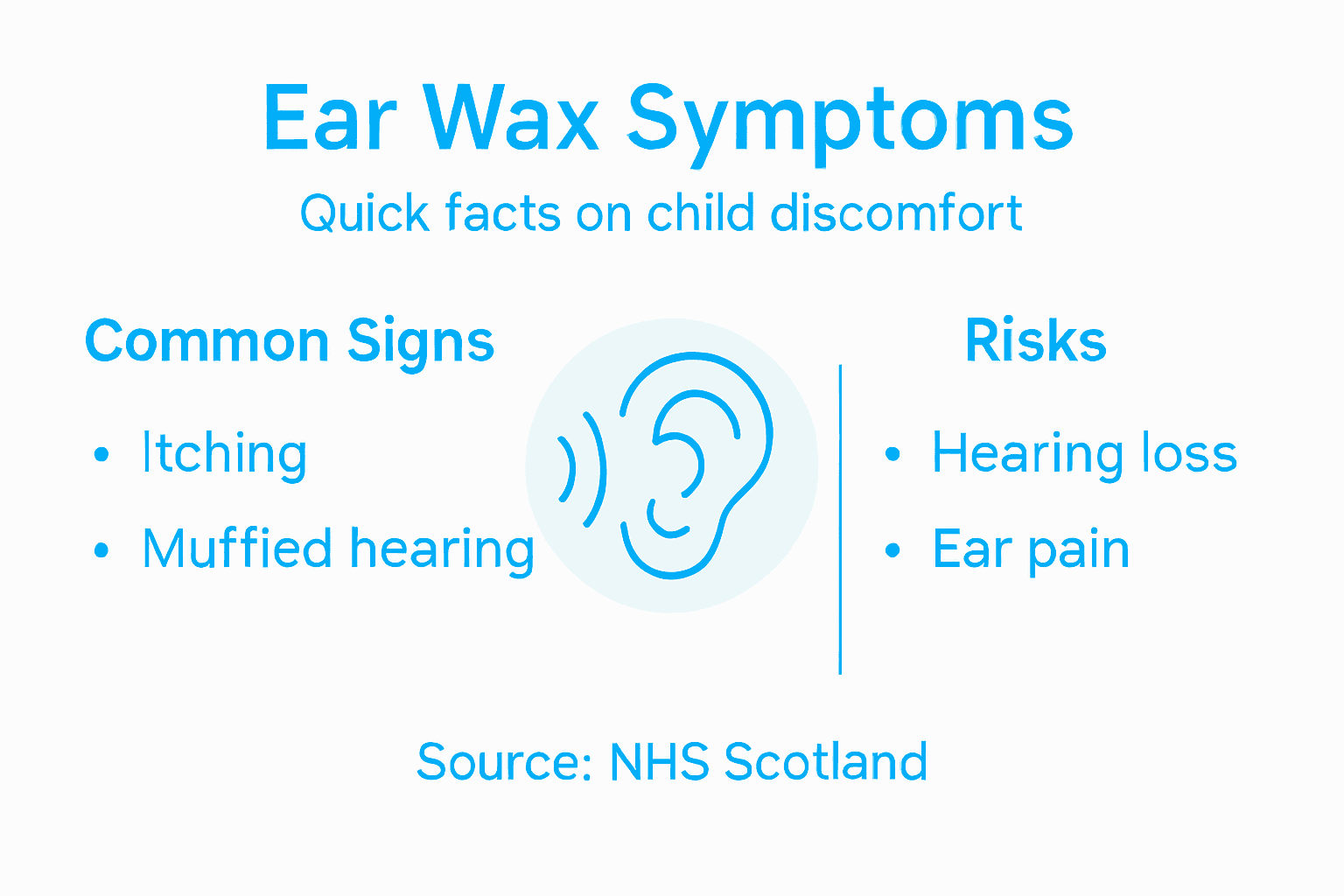
The most common indicator is when your child complains of hearing loss or muffled hearing. You might notice they turn up the television volume higher than usual, ask you to repeat yourself more often, or struggle to hear instructions in noisy environments. Children may also report an uncomfortable sensation of fullness in the ear, describing it as feeling like something is blocking their ear or that their ear feels “blocked up”. Alongside hearing changes, many children experience itching inside the ear canal. This itching can range from mild irritation to intense discomfort that makes them want to scratch or poke at their ears constantly. Some children complain of ear pain or earache, which may be persistent or come and go depending on how the wax is positioned. Dizziness or balance problems occasionally occur when wax buildup affects the inner ear, though this is less common in children than in adults.
It’s worth noting that ear wax symptoms can develop gradually, making them easy to miss at first. Your child might seem a bit withdrawn in group settings, struggle with speech development, or show signs of frustration when they can’t hear properly. Some parents only notice the problem when a teacher mentions their child isn’t responding well in class or when they observe your child tilting their head at an angle to hear better. The challenge is that earwax buildup symptoms overlap with other ear conditions, so professional assessment becomes important to confirm that impacted wax is actually the culprit. Additionally, children often push wax deeper into their ear canals by inserting fingers, cotton buds, or small objects, which can transform mild buildup into a genuine blockage requiring professional removal.
The good news is that these symptoms are completely reversible once the blockage is safely cleared. Many parents find that within hours of professional wax removal, their child’s hearing returns to normal and the irritation disappears. If you’ve noticed any of these signs in your child, don’t wait to see if the problem resolves on its own, as impacted wax rarely clears without assistance.
Pro tip If your child shows signs of ear discomfort or hearing loss, book an appointment with EARS Clinics in Glasgow or Edinburgh straight away, where our trained specialists can confirm whether ear wax is the cause and safely remove it using appropriate techniques such as microsuction or irrigation.
Types of Ear Wax Blockage and Risks
Ear wax blockage doesn’t happen in just one way. Understanding the different types of blockage your child might experience helps you recognise how serious the situation is and why professional intervention matters. Not all ear wax accumulation is the same, and the underlying cause often determines the best approach to safely clear it.
The most straightforward type of blockage occurs from natural overproduction of ear wax. Some children’s ears simply produce more cerumen than others, and their ear canals aren’t efficiently clearing it away naturally. This happens gradually over weeks or months as wax accumulates deeper in the canal. Another common type involves dry or hardened wax that has lost its moisture and become compacted against the ear canal walls. Dry wax is more likely to block the canal completely because it doesn’t move easily like softer wax does. A third type results from accidental wax impaction caused by improper cleaning. When parents or children insert cotton buds, fingers, or objects into the ear, they often push wax further inward rather than removing it, creating a dense blockage near the eardrum. Some children who wear hearing aids or earplugs regularly experience blockage because these devices prevent wax from exiting naturally and can actually pack it more tightly into the canal. Additionally, narrow or curved ear canals naturally increase blockage risk because wax accumulates in spaces where it cannot drain easily.
Here is a summary of ear wax blockage types and the main risks involved:
Blockage Type | Typical Causes | Main Risks for Children |
Overproduction | Genetics, inefficient cleaning | Hearing loss, discomfort |
Hardened/Dry Wax | Age, dehydration, canal anatomy | Pain, full blockage |
Improper Cleaning Impacted | Cotton buds, fingers, objects | Infection, severe impaction |
Device-Related (Aids/Plugs) | Regular use of aids/earplugs | Increased blockage, irritation |
Narrow/Curved Canals | Structural ear shape | Recurrent build-up, infection |
The risks associated with untreated ear wax blockage extend beyond simple discomfort. Hearing loss is the most immediate consequence, ranging from mild muffled hearing to significant impairment depending on blockage severity. This can affect your child’s speech development, academic performance, and social confidence. Ear infections become more likely when blocked wax traps bacteria and moisture in the canal, creating an ideal environment for infection to develop. Some children experience tinnitus, which is ringing, buzzing, or other sounds in the ear that can be distressing and difficult to manage. Earache and pain accompany many blockages, particularly if the wax is pressing against sensitive ear canal tissue. Dizziness and balance problems can occur when wax affects the inner ear structures responsible for balance, though this is less common in children. In rare cases, prolonged blockage can lead to otitis externa, an infection of the ear canal itself, which requires stronger intervention. The longer blockage persists, the more risk of secondary complications developing, which is why timely professional assessment becomes crucial.
What makes blockage particularly concerning in children is that they often cannot accurately describe what they’re experiencing or recognise that their hearing has diminished. A child might simply withdraw, struggle in school, or seem inattentive without any obvious cause. By the time parents notice something is wrong, the blockage has often been present for weeks. This is why professional evaluation at the first sign of hearing loss, discomfort, or behavioural changes makes such a difference. Safe removal by trained clinicians prevents the progression toward more serious complications and restores normal ear function quickly.
Pro tip Never attempt to remove impacted ear wax yourself, as this almost always makes blockage worse and risks damaging the delicate ear canal. EARS Clinics can safely assess and treat blockage using appropriate techniques, with most children experiencing immediate relief and restored hearing within hours of treatment.
Safe Removal Methods for Children
When your child’s ear wax needs to be removed, safety must come first. The good news is that several proven methods exist, each suited to different situations and levels of blockage. Understanding what these methods involve helps you feel confident about the treatment your child will receive and why professionals choose one approach over another.
At-Home Softening Options
For mild buildup, the first step often involves softening the wax before any removal attempt. This makes the wax less likely to cause discomfort and easier to clear naturally. Approved ear drops containing mineral oil, baby oil, glycerin, or diluted hydrogen peroxide can be gently placed into the ear canal as directed by a healthcare professional. These solutions work by penetrating the wax and breaking down its structure over several days. Never introduce these drops without professional guidance, and always follow the exact instructions regarding temperature, quantity, and frequency. Some children respond well to softening alone, with the wax naturally working its way out within a week or two.
Professional Removal Techniques
When blockage is significant or softening hasn’t worked, professional removal becomes necessary. Healthcare Improvement Scotland (HIS) regulated clinics like EARS Clinics employ several safe, evidence-based techniques.
Microsuction is widely regarded as the gold standard for safe ear wax removal in children. This technique uses a specially designed suction device that gently removes wax under direct visualisation using an otoscope. The clinician can see exactly what they’re doing, making it precise and minimising risk of ear canal trauma. Most children tolerate microsuction well, and the procedure typically takes only a few minutes. Hearing improvement is often immediate.
Irrigation involves gently flushing the ear canal with warm water to dislodge and wash away wax. The water temperature is carefully controlled to prevent discomfort, and the procedure is performed by trained specialists. Irrigation works particularly well for softer, less compacted wax. Some children find this method soothing, though others may find the sensation unusual.
Manual instrumentation uses specially designed instruments to carefully remove wax under direct visualisation. This method gives the clinician precise control and is effective for various types of blockage. It requires significant training and skill to perform safely without damaging the ear canal.
All three methods are clinically valid when performed by competent, trained practitioners. Your child’s practitioner will select the safest and most suitable procedure based on their medical history, the type of blockage, and how your child responds to assessment.
The following table compares professional ear wax removal methods offered for children:
Removal Method | Best For | Procedure Duration | Child Comfort Level |
Microsuction | Most blockages | 5–15 minutes | Generally well tolerated |
Irrigation | Soft wax, partial | 10–20 minutes | Soothing for some |
Manual Instrument | Complex, dry wax | 10–30 minutes | Depends on child anxiety |
What Makes Professional Removal Different
Attempting removal at home using cotton buds, bobby pins, or other objects almost always makes blockage worse. These items push wax deeper and can scratch or perforate the delicate ear canal. Professional clinicians have proper equipment, training, and the ability to see inside the ear clearly. They understand child psychology and can work calmly with anxious young patients. They also recognise complications and know how to handle them safely. Treatment typically takes 15 to 30 minutes, and your child can resume normal activities immediately afterwards.
EARS Clinics are licensed and regulated by Healthcare Improvement Scotland to treat patients from 2 years of age. Our Aural Care Specialists use microsuction, irrigation, and manual instrumentation as appropriate, selecting the method that offers the greatest safety for each individual child. We work with parents to explain procedures beforehand, answer questions, and ensure your child feels as comfortable as possible.
Pro tip Book your appointment promptly once you suspect blockage, as waiting allows wax to compact further and may require more intensive removal. EARS Clinics offer same day appointments and home visits across Glasgow and Edinburgh, making professional treatment convenient and accessible for your family.
Choosing Professional Ear Care Services
Not all ear care providers are the same. When your child needs ear wax removal or hearing assessment, selecting the right clinic makes a meaningful difference in safety, comfort, and outcomes. Several factors should guide your decision, from qualifications and equipment to how the clinic treats anxious young patients.
Key Qualifications and Regulation
The most important criterion is whether the clinic is properly regulated and staffed by trained, competent practitioners. EARS Clinics are licensed and regulated by Healthcare Improvement Scotland (HIS), which means our services meet strict standards for safety, hygiene, and clinical practice. Look for clinics that employ Aural Care Specialists who have undergone formal training in ear wax removal and related procedures. These specialists understand the anatomy of the paediatric ear, recognise potential complications, and know how to adapt techniques for younger patients who may feel anxious about treatment.
Verify that the clinic follows current clinical guidelines. Evidence-based care ensures your child receives treatment based on proven safety and effectiveness standards, not outdated or risky methods. Ask the clinic about their protocols for assessing children before treatment, how they manage anxious patients, and what training their staff have completed. A reputable clinic will happily answer these questions and provide documentation of their credentials.
Equipment and Technique Availability
Choose a clinic that offers multiple safe removal methods. EARS Clinics provide microsuction, irrigation, and manual instrumentation, allowing practitioners to select the safest approach for each child’s specific situation. This flexibility is crucial because what works brilliantly for one child may not suit another. A clinic offering only one technique may be limited in what they can safely treat. Advanced equipment such as an otoscope for direct visualisation, appropriate suction devices, and sterile instruments is essential. The clinic should explain which technique they plan to use and why they’ve selected it for your child.
Family-Centred Care Approach
The best ear care services recognise that treating children requires more than just clinical skill. Specialised paediatric audiology services emphasise family-centred care, which means the clinic listens to your concerns, explains procedures in clear language, and involves you in decision-making. Before treatment, ask whether the clinic will explain the procedure to your child in age-appropriate terms. Do they allow a parent to stay close by during treatment? Will they pause if your child becomes distressed? These factors dramatically affect your child’s experience and their willingness to cooperate.
Convenience and Accessibility
Ear wax removal shouldn’t require lengthy NHS waiting lists or complicated appointment scheduling. EARS Clinics offer same-day appointments across Glasgow and Edinburgh, plus home visits if your child has complex needs or anxiety about attending a clinic. We’re transparent about costs (£75 for under-18s, £180 for home visits) so there are no surprises. The convenience of rapid access means your child doesn’t suffer unnecessarily with hearing loss or discomfort whilst waiting weeks for an appointment.
Red Flags to Avoid
Be cautious of any service that uses cotton buds, pushes for unnecessary treatment, or dismisses your concerns about your child’s safety. Avoid clinics that don’t ask about your child’s medical history or use procedures without explaining them first. If a clinic seems uncomfortable answering questions about their qualifications or safety protocols, that’s a warning sign.
Pro tip Ring EARS Clinics to discuss your child’s specific situation before booking, as this allows our team to answer your questions, explain our approach, and determine whether an in-clinic appointment or home visit would work best for your family’s needs.
Protect Your Child’s Comfort with Expert Ear Wax Removal
Children’s ear wax symptoms such as hearing loss, itching, and discomfort can affect their daily life and wellbeing. Recognising these signs early is crucial because impacted wax rarely clears without professional help. At EARS Clinics, we understand the challenge of managing ear wax build-up safely, especially in young children. Our NHS-accredited Aural Care Specialists use advanced techniques like microsuction, irrigation, and manual instrumentation to provide precise and gentle treatment tailored to your child’s needs.

Take action now to restore your child’s comfort and hearing without delay. With convenient same-day appointments and home visits available across Glasgow and Edinburgh, you can avoid long NHS waiting times. Put your child’s ear health in trusted hands by booking an appointment today at EARS Clinics. To learn more about our safe and regulated procedures, visit our website and discover how professional care can make all the difference. Don’t let wax blockage hold your child back—secure expert help when it matters most.
Frequently Asked Questions
What are the common symptoms of ear wax buildup in children?
Common symptoms include hearing loss or muffled hearing, a sensation of fullness in the ear, itching inside the ear canal, ear pain or earache, and occasionally dizziness or balance problems.
How does ear wax affect a child’s hearing?
When ear wax builds up, it can block the ear canal, leading to reduced hearing. This can cause children to turn up the volume on devices, ask for repetition, or struggle in noisy environments.
What should I do if I suspect my child has ear wax blockage?
If you suspect ear wax blockage, avoid inserting objects like cotton buds into the ear. Instead, book an appointment with a professional, such as EARS Clinics, for a safe assessment and potential removal.
Can ear wax symptoms lead to complications if left untreated?
Yes, untreated ear wax blockage can lead to further complications such as ear infections, tinnitus, and significant hearing loss, impacting a child’s development and social interactions.
Recommended