
Benefits of Same-Day Ear Care for Families

Every parent knows the worry when a child complains of blocked ears or persistent discomfort, especially when waiting weeks for help is not an option. Prompt, professional ear care can prevent discomfort from becoming more serious, with proper ear care practices proven to reduce the risk of infections and hearing loss. Same-day clinics in Glasgow and Edinburgh offer modern solutions, giving families direct access to safe, expert ear wax removal without the frustration of long NHS queues.
Key Takeaways
Point | Details |
Understanding Ear Care | Ear wax removal is essential for preventing hearing complications and involves techniques like microsuction, irrigation, and manual instrumentation. |
Patient Safety | Clinicians must assess each patient’s needs, medical history, and appropriate technique to ensure safety and minimise discomfort. |
Children’s Care | Tailored ear care is crucial for children with complex needs; professionals should focus on gentle communication and adaptability. |
Service Comparison | Same-day ear care clinics offer personalised, immediate interventions compared to NHS services, which can have longer waiting times and standardised approaches. |
Same-day ear care explained: key concepts
Ear care represents a critical aspect of family health that requires professional understanding and timely intervention. Ear wax removal is not just a cosmetic procedure but a medical service designed to prevent potential hearing complications and maintain optimal ear health. Parents seeking professional ear care need comprehensive insights into the process, safety protocols, and potential benefits.
The core principles of ear care revolve around three primary approaches to wax management:
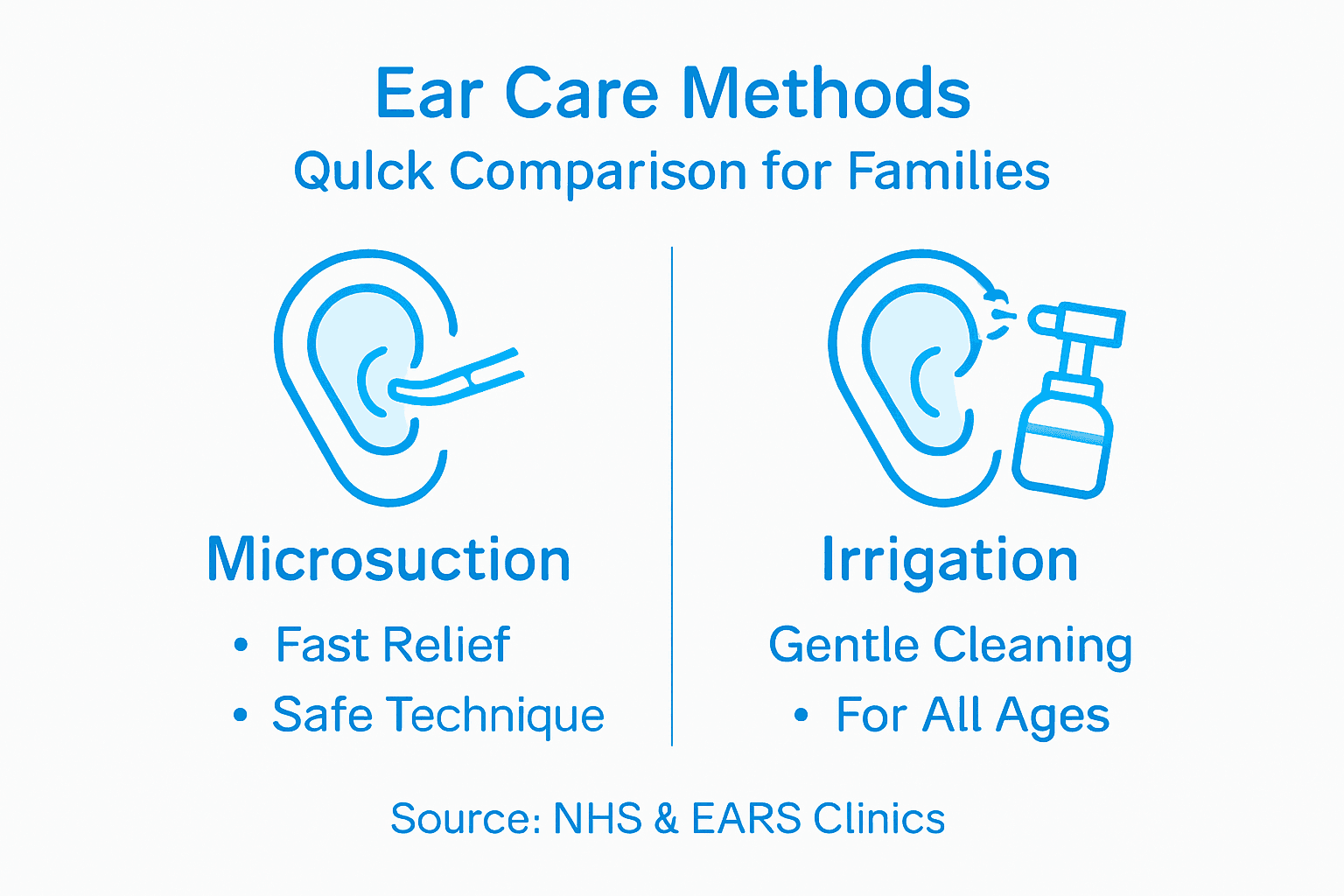
Microsuction: A precise, gentle technique using specialised suction equipment
Irrigation: A controlled water-based method for wax removal
Manual instrumentation: Professional tool-based extraction performed by trained clinicians
Understanding these methods is crucial. Proper ear care practices help reduce infection risks and prevent potential hearing loss. Each technique offers unique advantages depending on an individual’s specific ear health condition, age, and medical history.
Here is a summary comparing key professional ear wax removal methods:
Method | Best For | Main Advantage | Potential Limitation |
Microsuction | Complex ear conditions | High precision, low infection risk | Not suitable for all children |
Irrigation | Softer, accessible ear wax | Gentle, non-invasive | Not ideal with ear infections |
Manual Instrumentation | Hard or impacted wax | Direct removal by clinician | Discomfort if not expertly performed |
Professional ear care clinicians follow strict guidelines to ensure patient safety. These guidelines mandate thorough patient assessment, comprehensive medical history review, and selection of the most appropriate wax removal technique. Healthcare Improvement Scotland (HIS) and Care Quality Commission (CQC) regulations ensure that practitioners maintain the highest standards of clinical practice.
Patient Safety Considerations:
Children require specialised ear care techniques
Each procedure must be tailored to individual patient needs
Professional assessment determines the most suitable approach
Medical history plays a crucial role in technique selection
Timely ear care intervention can prevent potential complications such as hearing impairment, ear infections, and discomfort. By addressing ear wax build-up promptly, families can maintain optimal ear health and prevent long-term hearing challenges.

Pro tip: Always consult a professional ear care specialist who can assess your specific ear health requirements and recommend the most appropriate treatment method.
Safe techniques: microsuction and irrigation options
Ear wax removal requires precision, expertise, and carefully selected techniques to ensure patient safety and comfort. Two primary methods dominate professional ear care: microsuction and irrigation, each offering unique benefits for different patient needs and ear health conditions.
Clinical guidelines for ear care techniques emphasise the importance of professional assessment and tailored treatment approaches. These methods are not one-size-fits-all solutions but carefully considered interventions designed to address individual ear health requirements.
Microsuction Characteristics:
Uses high-precision microscopic equipment
Provides direct visual examination of ear canal
Allows precise removal of wax and debris
Minimises risk of infection
Suitable for patients with complex ear conditions
Irrigation Technique Overview:
Controlled water-based wax removal method
Uses warm water under carefully monitored conditions
Effective for softer, more accessible ear wax
Requires specific patient preparation
Professional ear care requires trained clinicians who understand the nuanced differences between microsuction and irrigation techniques.
The selection between microsuction and irrigation depends on several critical factors, including patient age, ear canal anatomy, wax consistency, and medical history. Professional clinicians conduct thorough assessments to determine the most appropriate and safest approach for each individual.
Specialised equipment and expert training are paramount. Practitioners must maintain strict infection control standards and possess in-depth knowledge of ear anatomy to prevent potential complications such as canal irritation or accidental damage.
Patient Considerations for Technique Selection:
Medical history assessment
Current ear health status
Wax consistency and location
Patient age and comfort level
Potential risk factors
Pro tip: Always discuss your specific ear health requirements with a trained professional who can recommend the most suitable wax removal technique for your individual needs.
Tailored care for children and complex needs
Children with complex medical conditions require specialised ear care approaches that prioritise individual needs, communication challenges, and unique sensory experiences. NHS standards for ear checks emphasise the critical importance of personalised, compassionate interventions for vulnerable populations.
Key Considerations for Complex Needs Ear Care:
Individualised assessment protocols
Sensitivity to communication barriers
Age-appropriate examination techniques
Minimal sensory distress strategies
Adaptable clinical approaches
Professional ear care clinicians must demonstrate exceptional flexibility when working with children who have additional needs, such as autism, learning disabilities, or sensory processing challenges. Understanding each child’s unique medical history, communication style, and potential anxiety triggers becomes paramount in delivering effective and comfortable treatment.
Compassionate, patient-centred care transforms medical interventions from potentially traumatic experiences into supportive health management opportunities.
Children with complex medical needs often experience heightened vulnerability during medical procedures. Practitioners must develop specialised skills that extend beyond traditional clinical techniques, incorporating gentle communication, visual preparation strategies, and consent-based approaches that prioritise the child’s emotional well-being.
Specialised Ear Care Strategies:
Gradual exposure to medical equipment
Using child-friendly communication
Creating calm, predictable environments
Involving parents/guardians in preparation
Employing distraction and comfort techniques
Understanding that each child represents a unique individual with distinct requirements ensures that ear care becomes a collaborative, respectful process. Professional clinicians trained in paediatric and special needs care can transform potentially stressful medical interactions into positive, trust-building experiences.
Pro tip: Prepare your child for ear care appointments by discussing the process positively, using age-appropriate language and potentially introducing medical tools through play or visual demonstrations beforehand.
Expert NHS-accredited practitioners and clinic standards
Accredited ear care clinics represent the pinnacle of professional healthcare, combining rigorous training, clinical expertise, and patient-centred approaches. Proficiency standards established by the Health and Care Professions Council (HCPC) ensure that practitioners deliver exceptional, safe medical interventions for patients across all age groups and medical complexities.
Core Professional Standards:
Comprehensive medical knowledge
Advanced clinical skills
Ethical practice protocols
Continuous professional development
Patient safety commitment
NHS-accredited practitioners undergo extensive training that extends far beyond basic medical qualifications. These professionals must demonstrate not just technical competence, but also exceptional communication skills, empathy, and the ability to adapt their approach to individual patient needs.
Accreditation is not merely a certificate, but a commitment to maintaining the highest standards of patient care and professional excellence.
The regulatory framework governing ear care clinicians involves multiple layers of professional oversight. Practitioners must maintain current registration, participate in ongoing education, and adhere to strict ethical guidelines that prioritise patient well-being and safety.
Key Regulatory Compliance Elements:
Annual professional registration renewal
Mandatory continuing education
Regular skills assessment
Adherence to clinical best practices
Transparent professional conduct
Professional ear care represents a sophisticated medical service that requires precise technical skills, deep medical understanding, and a compassionate approach to patient interaction. Clinicians must balance clinical expertise with emotional intelligence, ensuring that each patient receives personalised, respectful care.
Pro tip: Always verify a practitioner’s current professional registration and accreditation status before scheduling any medical procedure.
Comparing same-day ear care to NHS services
Navigating ear healthcare options requires understanding the nuanced differences between traditional NHS services and contemporary same-day care approaches. NHS hearing services analysis reveals critical distinctions in accessibility, waiting times, and personalised treatment options.
Key Service Comparison Points:
NHS: Free standardised care
Same-day clinics: Personalised, immediate intervention
NHS: Extended waiting periods
Same-day clinics: Flexible appointment scheduling
NHS: Limited patient choice
Same-day clinics: Tailored treatment approaches
NHS services provide comprehensive healthcare coverage but frequently encounter challenges with patient waiting times and limited procedural flexibility. Same-day ear care clinics offer an alternative model that prioritises rapid intervention, patient convenience, and individualised treatment strategies.
Timely medical intervention can prevent minor ear health issues from developing into more complex medical conditions.
Comparative Service Characteristics:
Waiting Time Differences
NHS: Potentially weeks to months
Same-day clinics: Immediate or within 24 hours
Cost Considerations
NHS: Free at point of service
Same-day clinics: Private fee-based model
Treatment Personalisation
NHS: Standardised protocols
Same-day clinics: Customised patient approaches
Patient-centred care extends beyond mere medical treatment, encompassing accessibility, responsiveness, and individual healthcare needs. Same-day ear care clinics bridge gaps in traditional healthcare delivery by offering more responsive, flexible service models.
The table below highlights major differences between NHS and same-day ear care services:
Aspect | NHS Ear Care | Same-Day Clinic |
Appointment Speed | Weeks to months | Often within 24 hours |
Cost to Patient | Free at point of service | Fee-based, transparent pricing |
Personalisation | Standard protocols | Individualised treatments |
Flexibility | Limited scheduling | Flexible appointments |
Pro tip: Request a comprehensive consultation that explores both NHS and private ear care options to determine the most suitable approach for your specific health requirements.
Pricing, booking, and what to expect
Ear wax removal services require transparent pricing, convenient booking options, and clear patient expectations to ensure a smooth healthcare experience. Micro-suction ear wax removal services provide comprehensive treatment packages designed to address individual ear health needs with precision and professionalism.
Pricing Structure for Ear Care:
Over-18s consultation: £60
Under-18s consultation: £75
Home visit consultation: £180
Includes pre- and post-treatment photographic documentation
Potential ENT specialist referral at no additional cost
Booking an ear care appointment involves several straightforward steps that prioritise patient convenience and clinical effectiveness. Patients can schedule consultations through multiple channels, ensuring accessibility for individuals with diverse communication preferences.
Professional ear care is an investment in your long-term hearing health and overall medical well-being.
Booking Process Stages:
Initial contact via online booking or telephone
Brief medical history assessment
Appointment confirmation
Pre-treatment wax softening instructions
Clinic or home visit consultation
Preparing for your ear care appointment requires some minimal but important steps. Patients are typically advised to use olive oil-based sprays to soften ear wax before the treatment, which enhances the effectiveness of the removal procedure.
Patient Preparation Checklist:
Soften ear wax using recommended products
Bring relevant medical records
Arrive with clean ears
Allow sufficient time for comprehensive consultation
Prepare list of current medications
Pro tip: Always provide at least two working days’ notice for appointment cancellations to avoid potential service fees.
Experience the Benefits of Same-Day Ear Care with EARS Clinics
Families struggling with ear wax build-up or discomfort understand the importance of swift and safe ear health intervention. This article highlights critical concepts such as microsuction, irrigation, and tailored care for children or those with complex needs. At EARS Clinics, we address these challenges head-on by offering NHS-accredited, professional ear wax removal services in Glasgow and Edinburgh with short waiting times and expert clinicians trained to use advanced and safe techniques.
If waiting for NHS appointments feels daunting or your family needs immediate relief from ear discomfort, our same-day ear care services provide a convenient, compassionate, and personalised alternative. With booking options for in-clinic visits or home consultations for those under 18 or with special requirements, you can trust our regulated clinic to prioritise your ear health and safety every step of the way.
Take control of your ear health today with EARS Clinics and discover how immediate, expert care can transform your family’s wellbeing.
Book your appointment now to experience professional ear care without delay. Explore our services at EARS Clinics and learn more about our safe microsuction and irrigation techniques. For questions on children’s ear care and personalised treatment plans visit EARS Clinics and secure your same-day appointment today.
Frequently Asked Questions
What is same-day ear care?
Same-day ear care refers to immediate medical interventions for ear health issues, primarily focusing on ear wax removal, which can often be scheduled and performed within 24 hours.
What are the benefits of choosing same-day ear care over NHS services?
Same-day ear care offers personalised treatments with flexible appointment scheduling and reduced waiting times, allowing for immediate intervention to prevent further complications.
How do I prepare for a same-day ear care appointment?
To prepare for a same-day ear care appointment, patients should soften ear wax using recommended products, bring relevant medical records, and arrive with clean ears for an effective treatment.
Are same-day ear care services suitable for children?
Yes, same-day ear care services can be tailored to meet the specific needs of children, including those with complex medical conditions, ensuring a compassionate and patient-centred approach.
Recommended