
Ear Irrigation Explained: Complete Patient Guide

Around 2.3 million people in the British population require earwax removal each year, making ear irrigation a common yet often misunderstood solution. Many experience sudden hearing loss or discomfort but do not realise that safe, professional procedures can offer real relief. Understanding what ear irrigation involves and how it compares to other methods helps you make informed decisions about your ear health and navigate the options available across Britain.
Key Takeaways
Point | Details |
Purpose of Ear Irrigation | Ear irrigation is primarily used to remove excessive wax and alleviate symptoms like hearing impairment and ear discomfort. |
Recommended Indicators | The procedure is advised for patients with symptoms such as earaches, tinnitus, or noticeable hearing loss due to wax build-up. |
Safety Considerations | Ear irrigation must be performed by trained healthcare professionals to avoid risks such as ear damage and infections. |
Alternative Methods | Microsuction is becoming a preferred alternative to ear irrigation, offering precision and potentially less discomfort for patients. |
What Is Ear Irrigation? Definition And Basics
Ear irrigation is a specialised medical procedure designed to safely remove excess earwax and foreign materials from the ear canal. As defined by Healthline, this technique involves systematically flushing the external ear canal with sterile water or saline solution to clear obstructions and restore hearing comfort.
The primary purpose of ear irrigation is to address hearing impairment and ear discomfort caused by wax accumulation. According to medical research from Encyclopedia.com, the procedure helps alleviate symptoms by gently removing blockages that might interfere with normal auditory function. Healthcare professionals typically recommend this method when earwax has become impacted or is causing significant problems.

Key aspects of ear irrigation include:
Use of sterile, body-temperature water or saline solution
Gentle flushing technique to prevent damage to ear structures
Professional administration by trained healthcare practitioners
Addressing specific ear health concerns like excessive wax buildup
While ear irrigation can be highly effective, it’s crucial to understand that not all patients are suitable candidates for this procedure. Individuals with certain ear conditions, previous ear surgeries, or ongoing infections should seek professional medical advice before considering ear irrigation. Learn more about ear wax removal safety in our comprehensive guide on ear health.
When Is Ear Irrigation Recommended? Symptoms And Criteria
Ear irrigation is specifically recommended for patients experiencing a range of ear-related symptoms that indicate potential wax buildup or obstruction. According to Healthline, the procedure is most commonly suggested for individuals suffering from earaches, persistent ringing in the ears, or temporary hearing loss directly attributed to excessive or hardened earwax.
Medical professionals typically recommend ear irrigation when patients present with clear diagnostic indicators. Encyclopedia.com highlights that the primary criteria for recommending this procedure include significant earwax impaction that interferes with hearing function or causes substantial discomfort. The decision to proceed with irrigation depends on a comprehensive assessment of the patient’s specific ear health conditions.
Key symptoms that might indicate the need for ear irrigation include:
Noticeable reduction in hearing clarity
Persistent ear discomfort or mild pain
Feeling of fullness or pressure inside the ear canal
Tinnitus (ringing or buzzing sounds)
Visible earwax blockage
However, not all ear issues warrant irrigation. Patients with certain conditions such as active ear infections, perforated eardrums, or recent ear surgeries should avoid this procedure. Learn more about NHS ear wax removal options and safety guidelines to understand the comprehensive approach to managing ear health professionally.
How Ear Irrigation Works: Step-By-Step Procedure
Ear irrigation is a precise medical procedure that requires specialised techniques and careful execution. According to NCBI, the process begins with applying a cerumenolytic agent - a specialised solution designed to soften and break down earwax, making it easier to remove from the ear canal.
RNPedia outlines the key steps of the procedure, which are typically performed by a trained healthcare professional in a controlled clinical environment. The patient is positioned upright to facilitate optimal water flow and minimise potential discomfort during the procedure.
The comprehensive ear irrigation procedure involves several critical stages:
Patient assessment and medical history review
Application of cerumenolytic agent to soften earwax
Gentle positioning of the patient
Careful water irrigation using specialised equipment
Monitoring and assessing wax removal effectiveness
Post-procedure ear examination
While the procedure might sound straightforward, it requires significant clinical expertise. Incorrect technique can potentially cause ear damage, which is why professional intervention is crucial. Learn more about why GP surgeries have changed their ear syringing practices to understand the evolving landscape of ear healthcare.
Safety Considerations And Regulated Practice Standards
Ear irrigation is a medical procedure that demands rigorous safety protocols and professional expertise. Healthline emphasises that while generally considered safe, the procedure carries inherent risks such as potential dizziness, ear discomfort, and risk of infection. Critically, the technique is strictly contraindicated for patients with specific ear conditions, including perforated eardrums, active ear infections, or recent ear surgical interventions.
NCBI underscores the paramount importance of professional technique in minimising potential complications. Healthcare practitioners must adhere to established medical guidelines to prevent serious issues like tympanic membrane perforation, which can result from improper irrigation methods.
Key safety considerations for ear irrigation include:
Comprehensive patient medical history review
Thorough pre-procedure ear examination
Use of sterile, temperature-controlled equipment
Gentle, controlled water pressure
Continuous patient monitoring during the procedure
Immediate cessation if patient experiences discomfort
Patients should always seek ear irrigation from regulated, professionally trained healthcare practitioners who follow strict clinical standards. Learn more about the evolving standards in ear healthcare practices to understand the importance of professional intervention.
Comparing Ear Irrigation With Microsuction And Alternatives
Healthline highlights that while ear irrigation remains a traditional method of earwax removal, microsuction has emerged as a preferred alternative for many patients. This advanced technique uses a gentle vacuum to extract earwax, offering a more precise and potentially less invasive approach compared to traditional water-based irrigation methods.
The shift in earwax removal techniques reflects changing medical practices. According to research from the University of Manchester, the reduction of earwax removal services in GP surgeries has prompted patients to explore alternative options, including private clinics specialising in advanced techniques like microsuction.
Key differences between ear irrigation and microsuction include:
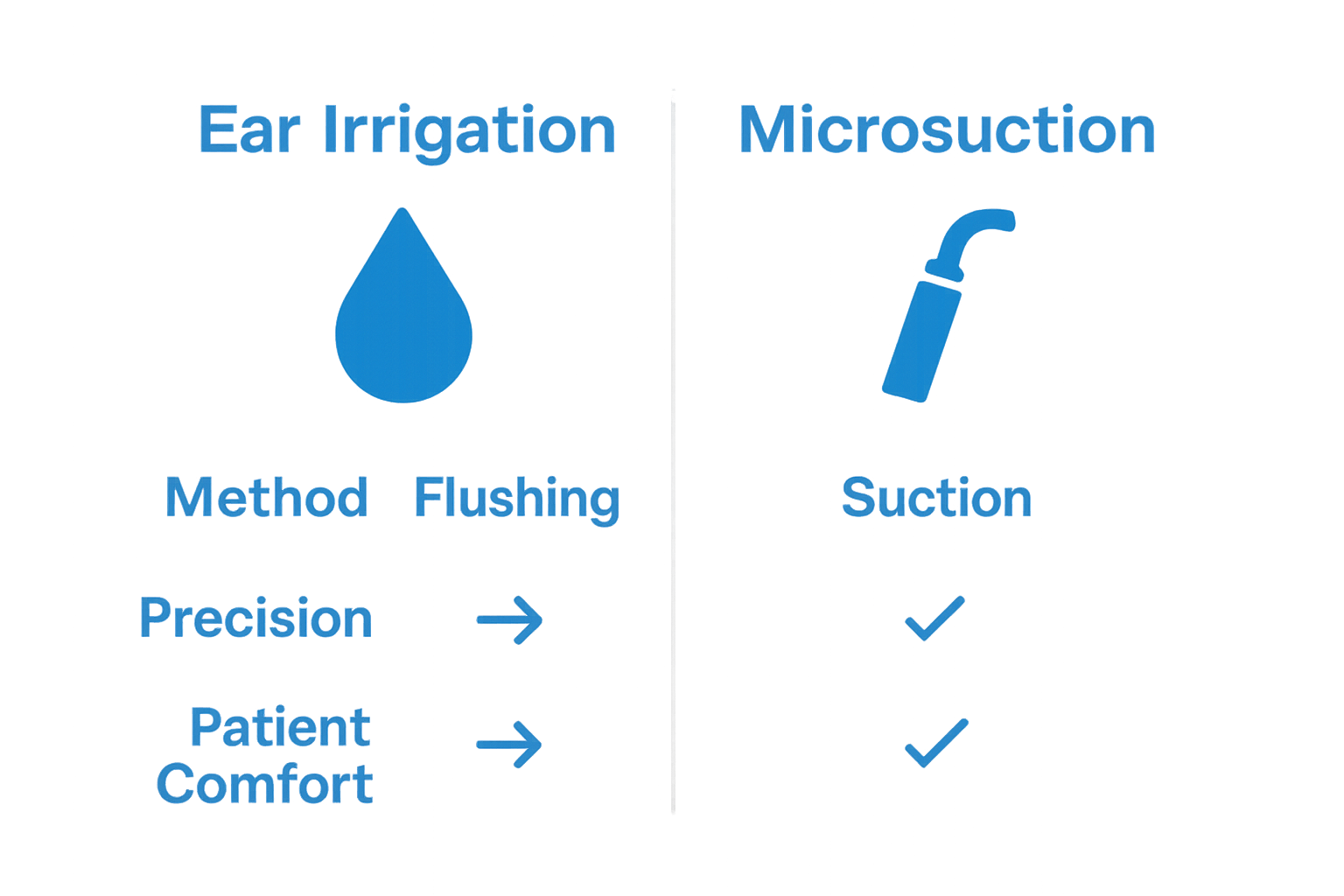
Precision of wax removal
Level of invasiveness
Risk of potential complications
Suitability for patients with specific ear conditions
Duration of the procedure
Patient comfort during treatment
While both methods have their merits, the choice between irrigation and microsuction depends on individual patient needs and clinical assessment. Explore the comprehensive advantages of microsuction in our detailed guide to understand why this method is gaining popularity among ear healthcare professionals.
Ear Irrigation Costs, Clinic Options, And NHS Waiting Times
Research from the University of Manchester reveals a significant shift in earwax removal services, with NHS availability becoming increasingly limited. Private clinics have emerged as a crucial alternative, offering immediate ear care solutions where traditional GP services are scaling back.
Healthline highlights the growing trend of patients seeking private ear care options due to prolonged NHS waiting times. Typical private clinic costs range between £30 to £50 per session, providing a faster, more accessible route to professional ear healthcare compared to oversubscribed public health services.
Key considerations for patients exploring ear irrigation options include:
Varying costs between NHS and private clinics
Waiting time differences
Quality of professional care
Accessibility of appointments
Specific patient medical requirements
Long-term ear health management
For patients seeking transparent pricing and immediate booking, our comprehensive guide to ear wax removal costs in the UK provides detailed insights into current market rates and available services.
Restore Your Hearing Comfort with Professional Ear Irrigation and Advanced Ear Care
If you are struggling with persistent earwax build-up or discomfort described in the “Ear Irrigation Explained” guide, you are not alone. Blocked ears can cause frustrating symptoms such as hearing loss, ear fullness, and tinnitus. It is vital to seek expert care that ensures safe and effective treatment tailored to your unique needs. At EARS Clinics, we specialise in NHS-accredited ear wax removal techniques including ear irrigation, microsuction, and instrumentation performed by trained Aural Care Specialists. Our clinic-based and home visit options prioritise your safety and deliver fast relief without the long NHS waiting times.

Take control of your ear health today by booking a consultation with EARS Clinics. Experience the confidence of expert care carried out in regulated Scottish clinics for patients aged two and above. Visit our website to learn about our safe procedures, explore the benefits of professional ear irrigation and microsuction, and secure your appointment. Do not wait for discomfort to worsen when effective solutions are just a click away. Choose peace of mind and improved hearing now with EARS Clinics and find out why many patients trust our expert service over other earwax removal options.
Frequently Asked Questions
What is ear irrigation and why is it performed?
Ear irrigation is a medical procedure that involves flushing the ear canal with a sterile solution to remove excess earwax and debris, thereby alleviating symptoms such as hearing loss and ear discomfort.
When is ear irrigation recommended?
Ear irrigation is recommended for individuals experiencing symptoms such as earaches, fullness in the ear, tinnitus, or significant hearing loss due to impacted earwax.
How does the ear irrigation procedure work?
The procedure typically involves applying a cerumenolytic agent to soften earwax, positioning the patient for optimal flow, and using controlled water irrigation to remove the blockage under professional supervision.
What are the risks and safety considerations of ear irrigation?
While ear irrigation is generally safe, it can pose risks such as dizziness or infection. It is contraindicated for those with certain ear conditions like perforated eardrums or active infections, necessitating a thorough assessment by a healthcare practitioner.
Recommended