
Complex ear health explained: Expert care for safe wax removal
TL;DR:
Complex ear health involves conditions requiring specialised, visualised removal methods like microsuction.
Microsuction is the safest and most effective technique for complex cases, with over 90% success.
Seeking NHS or private specialist care promptly prevents complications from unsafe DIY ear wax removal.
Ear wax removal might seem like a simple procedure, but for a significant number of people, it carries real risks if handled incorrectly. Certain ear conditions transform what appears routine into something that demands specialist knowledge, precision equipment, and a careful assessment before any treatment begins. Around 10% of adults and 5% of children require specialised wax removal due to underlying ear health complexities. This article explains what complex ear health means, which conditions qualify, which treatment methods are safest, and how people in Glasgow and Edinburgh can access the right care quickly and safely.
Key Takeaways
Point | Details |
Specialist care is essential | Complex ear health conditions require professional wax removal for safety and effectiveness. |
Microsuction is gold standard | Evidence shows microsuction offers high success rates with minimal risks for complex cases. |
Risks of routine or DIY methods | Routine or home removal techniques can cause harm for those with complex ear conditions. |
Immediate access in Scotland | Private NHS-accredited clinics provide same-day treatment and specialist care in Glasgow and Edinburgh. |
What is complex ear health?
Complex ear health refers to a range of conditions that make standard wax removal methods unsafe or unsuitable. As cerumen clinical guidelines confirm, certain anatomical features and medical histories significantly increase the risk of harm during routine procedures. Understanding whether your situation qualifies is the first step toward protecting your hearing.
The following conditions are widely recognised as requiring specialised wax removal due to heightened risks:
Perforated eardrums: Any hole or tear in the eardrum makes irrigation and syringing extremely dangerous, as water can enter the middle ear and cause infection.
Narrow or unusually shaped ear canals: These make standard tools difficult to manoeuvre safely.
Hearing aid users: Regular use of hearing aids compacts wax more quickly and in different patterns.
Previous ear surgery: Altered anatomy means standard approaches may cause unintended trauma.
Grommets (ventilation tubes): These small tubes inserted to drain fluid make irrigation completely contraindicated.
Mastoid cavities: Created by previous mastoid surgery, these cavities require careful, visualised removal only.
Recurrent ear infections: Active or frequent infections change the canal environment significantly.
Eczema or skin conditions in the canal: Inflamed or broken skin is easily damaged by standard tools or water.
When any of these conditions are present, the ear wax removal procedures used must be chosen carefully. Standard irrigation, for instance, forces water into the canal under pressure. In a healthy ear, this is generally safe. In a perforated eardrum or post-surgical ear, it can cause serious harm, including infection of the middle ear, dizziness, or lasting hearing damage.
“Complex ear health refers to conditions requiring specialised wax removal due to heightened risks, and standard methods are often inappropriate or unsafe in these cases.”
Many patients are unaware their ear history places them in this category. If you have had any surgery on your ears, experienced recurrent infections, or wear hearing aids regularly, it is worth discussing this with a specialist before any wax removal takes place. The same applies to parents of children with grommets or a history of ear problems. Seeking NHS ear treatments in Glasgow and Edinburgh through the right pathway matters enormously when complexity is involved.
Expert methods for managing complex ear health
Now that we know which conditions require specialist care, let us examine how professionals safely manage complex ear health. Not all removal methods carry equal risk, and understanding the differences helps you make an informed choice.
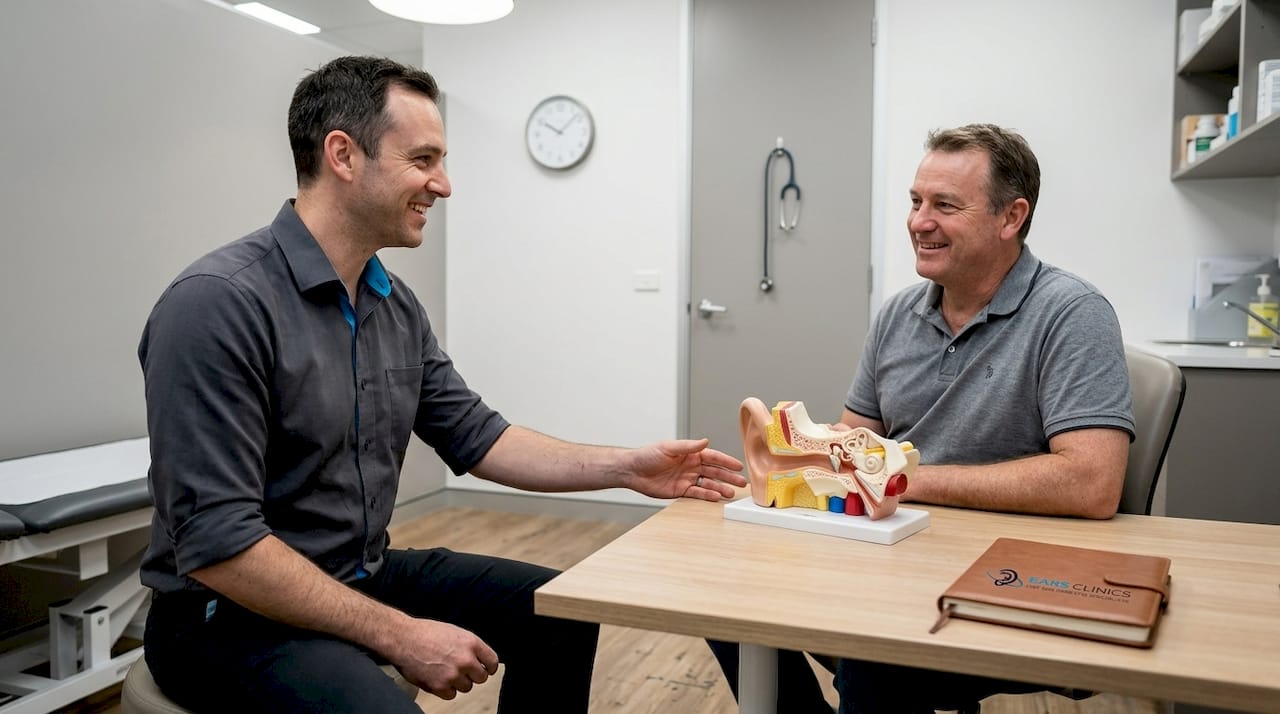
Microsuction is widely regarded as the gold standard for complex cases. It uses gentle suction applied through a fine tube while the specialist views the ear canal directly through a binocular microscope or loupe. This real-time visualisation is what sets it apart. The practitioner can see exactly what they are doing at every moment, dramatically reducing the chance of accidental contact with sensitive structures. The microsuction procedure achieves over 90% success with less than 1% complications, making it the preferred choice for complex ear health.
Here is how safe removal is typically achieved for complex cases:
Pre-treatment assessment: Video-otoscopy (a camera-based examination of the ear canal) and tympanometry (a test of eardrum function) are performed to identify the exact condition of the canal and eardrum.
Method selection: Based on assessment findings, the specialist selects the most appropriate technique.
Positioning and preparation: The patient is comfortably seated, and the ear is examined under magnification.
Wax removal: Microsuction or careful manual instrumentation is performed under direct visualisation.
Post-treatment check: The canal is re-examined to confirm complete clearance and the absence of any trauma.
For comparison, here is how the main methods differ in suitability for complex cases:
Method | How it works | Suitable for complex cases? |
Microsuction | Gentle suction under direct visualisation | Yes, preferred method |
Irrigation | Water flushed into canal under pressure | Often contraindicated |
Manual instrumentation | Small tools used to lift wax | Yes, when performed by specialist |
Ear drops alone | Softening agents applied at home | Supportive only, not standalone |
According to ear procedure guidelines, each method carries specific indications and contraindications that trained practitioners must evaluate before proceeding.
Pro Tip: If you are unsure whether your ear history qualifies as complex, book a pre-treatment assessment before committing to any removal method. A specialist can identify risks that are not always obvious from symptoms alone. For urgent situations, emergency ear wax removal appointments are available.
Risks, contraindications, and common pitfalls
Understanding expert techniques is only part of the picture. It is equally important to recognise what can go wrong when the wrong method is used or when treatment proceeds without a thorough assessment.
The most common risks associated with improper wax removal in complex cases include:
Trauma to the ear canal or eardrum: Caused by tools or water pressure applied without adequate visualisation.
Infection: Introducing water or unsterile instruments into a compromised canal can trigger acute or chronic infection.
Deeper impaction: Pushing wax further in, rather than removing it, is a frequent outcome of DIY attempts.
Dizziness or vertigo: Particularly associated with cold water irrigation, which can stimulate the balance organs.
Perforation of the eardrum: A rare but serious risk when tools are used without direct visualisation.
As Merck Manual guidelines confirm, irrigation must be avoided in patients with perforations, active infections, post-surgical ears, or grommets in place. Even microsuction requires caution in cases of acute infection, very narrow canals, or active skin conditions within the canal.
Cotton buds deserve a particular mention. They are among the most commonly misused items in ear care. Rather than removing wax, they typically push it deeper into the canal, compacting it against the eardrum. For someone with complex ear health, this can rapidly worsen an already delicate situation. Who should avoid microsuction is a question worth asking, but the more pressing concern for most people is avoiding self-treatment altogether.
Specialists identify edge cases through structured pre-treatment assessment. This includes reviewing your medical history, examining the canal with video-otoscopy, and testing eardrum function. Comparing NHS vs private ear care reveals that private NHS-accredited clinics are often better placed to perform these assessments promptly, without the delays associated with NHS referral pathways.
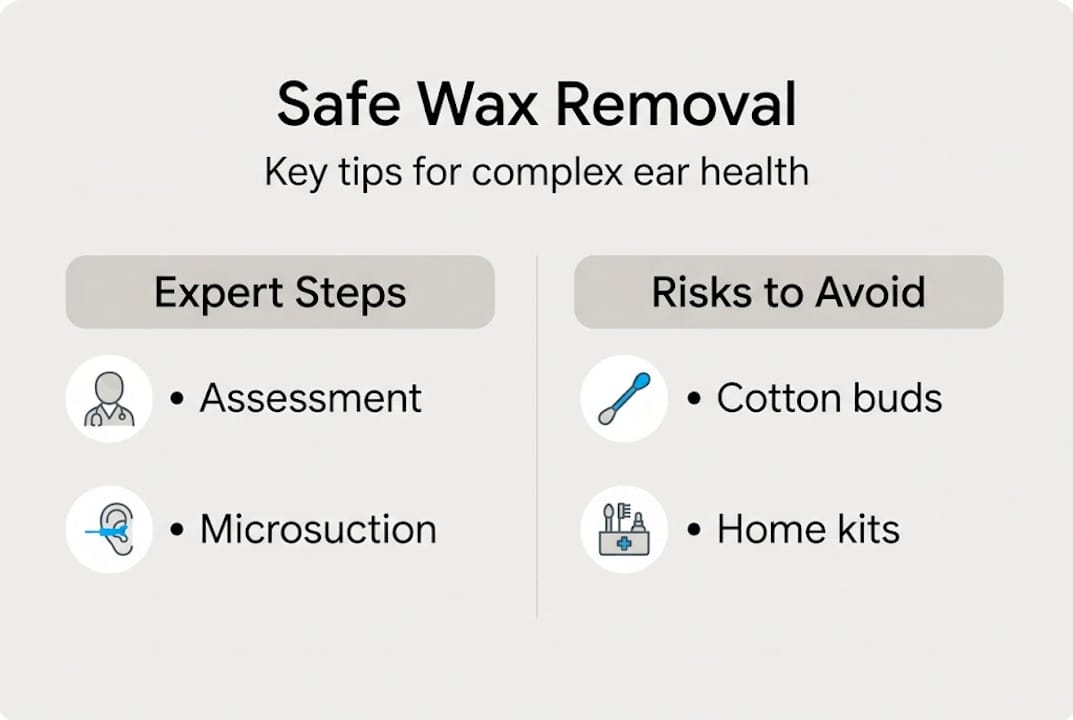
Pro Tip: Never use cotton buds, ear candles, or home irrigation kits if you have any history of ear surgery, infections, or a known perforation. The short-term relief is not worth the potential long-term harm.
Accessing specialist care in Glasgow and Edinburgh
Equipped with knowledge of risks and evidence, let us look at how to access specialist help close to home. The pathway you choose can significantly affect how quickly and safely your ear health is addressed.
The NHS pathway for complex ear wax removal typically involves a GP referral to an audiology or ENT department. NHS wait times for these services currently range from 6 to 16 weeks in many parts of Scotland. For someone experiencing hearing loss, pain, or dizziness, that wait can feel unacceptably long.
Private NHS-accredited clinics offer a meaningful alternative. Here is a comparison of the two pathways:
Factor | NHS pathway | Private NHS-accredited clinic |
Wait time | 6 to 16 weeks | Same-day or next-day available |
Pre-treatment assessment | Variable | Included as standard |
Cost | Free at point of use | £60 adults / £75 under-18s |
Home visits | Not typically available | £180 per visit |
Child treatment | From age 5 typically | From age 2 (regulated) |
For those with urgent symptoms such as sudden hearing loss, significant pain, or a blocked ear affecting daily life, same-day appointments at private clinics can provide immediate relief. UK Ear Care clinics and similar regulated providers offer structured care pathways that prioritise patient safety.
Patients who use hearing aids, have a history of ear surgery, or experience recurrent wax build-up benefit most from regular specialist checks. Rather than waiting for symptoms to worsen, scheduling a review every six to twelve months can prevent the cycle of impaction and discomfort.
“Private NHS-accredited clinics offer same-day microsuction for £60 adults and £75 children, with no pre-treatment preconditions and immediate access for complex cases.”
For parents concerned about their children’s ear health, it is reassuring to know that regulated clinics licensed to treat patients from the age of two provide a safe, child-friendly environment. Exploring the full range of wax removal types helps families understand what to expect before any appointment.
Expert perspective: What most clinics miss about complex ear care
Taking a step back from the practical, here is an insider perspective on what many clinics overlook when treating complex ear health cases.
The technique used for wax removal receives most of the attention, and rightly so. But the assessment that precedes treatment is equally important, and it is where many general practices fall short. Skipping video-otoscopy and tympanometry before treatment is a dangerous oversight, even when the practitioner is experienced and the chosen method is microsuction.
Here is the uncomfortable truth: microsuction performed without a thorough pre-treatment examination is not inherently safe. The technique is only as good as the assessment that informs it. A practitioner who does not check for a perforation, active infection, or unusual anatomy before beginning suction is taking an avoidable risk with your hearing.
NHS-accredited specialists, such as those at EARS Clinics, are trained to prioritise assessment as an integral part of treatment, not an optional add-on. This is what separates genuinely specialist care from a procedure performed in haste. When it comes to your hearing, thoroughness is not a luxury. It is the standard you deserve.
Next steps: Safe solutions for complex ear health
If anything in this article resonates with your situation or your child’s ear health history, the most important next step is to seek care from a regulated, NHS-accredited specialist.
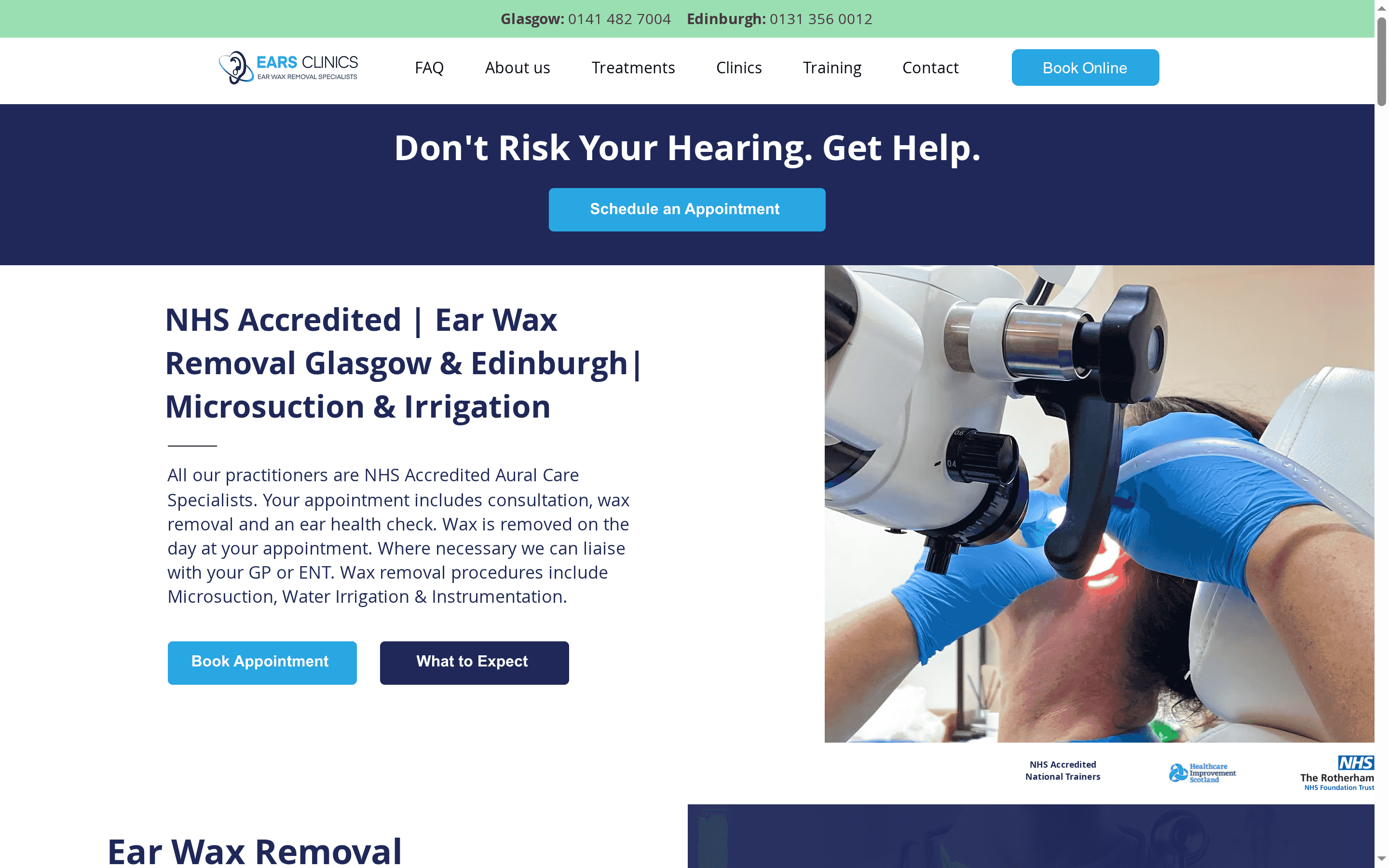
At EARS Clinics, we are Healthcare Improvement Scotland registered and licensed to treat patients from two years of age. We offer microsuction, irrigation, and manual instrumentation, all performed by trained Aural Care Specialists. You can see wax removal types in detail on our website, or explore our microsuction training programme if you are a healthcare professional seeking to develop your skills. Whether you need same-day care, a home visit, or a routine check, we are here to help you hear clearly and safely.
Frequently asked questions
What qualifies as complex ear health and who needs specialist wax removal?
Conditions such as perforated eardrums, grommets, and mastoid cavities all qualify, along with hearing aid use, previous ear surgery, narrow canals, recurrent infections, and eczema within the ear canal.
Why is microsuction best for complex ear conditions?
Microsuction delivers over 90% success with under 1% complications because it uses direct visualisation throughout, allowing the specialist to work safely even in challenging anatomical conditions.
What are the risks of DIY ear wax removal for complex conditions?
DIY methods, particularly cotton buds, typically push wax deeper rather than removing it, and in complex cases can cause infection, trauma, or worsening impaction that requires urgent specialist treatment.
How long is the NHS wait and are private options available for urgent complex ear care?
NHS waits currently range from 6 to 16 weeks in Scotland, while private NHS-accredited clinics in Glasgow and Edinburgh offer same-day microsuction for £60 for adults and £75 for under-18s.
Recommended