
What is the best way to get earwax out safely?

TL;DR:
Medical earwax removal is recommended only when symptoms like hearing loss, pain, or tinnitus occur. The safest methods are microsuction, irrigation, or manual instrumentation performed by trained clinicians, while home remedies pose significant risks. Regular professional assessment prevents impaction and protects ear health.
Earwax removal is medically indicated only when symptoms such as hearing loss, earache, or tinnitus occur. Cerumen, the clinical term for earwax, is a natural substance that protects the ear canal from dust, bacteria, and moisture. The ear is largely self-cleaning, moving wax outward through jaw motion without any intervention. When buildup does cause problems, the safest and most effective approach is professional removal using techniques such as microsuction, irrigation, or manual instrumentation, all performed by trained clinicians regulated by Healthcare Improvement Scotland (HIS) or the Care Quality Commission (CQC). Understanding what is the best way to get earwax out starts with knowing that most home remedies carry real risks.
What are the medically recommended earwax removal techniques?
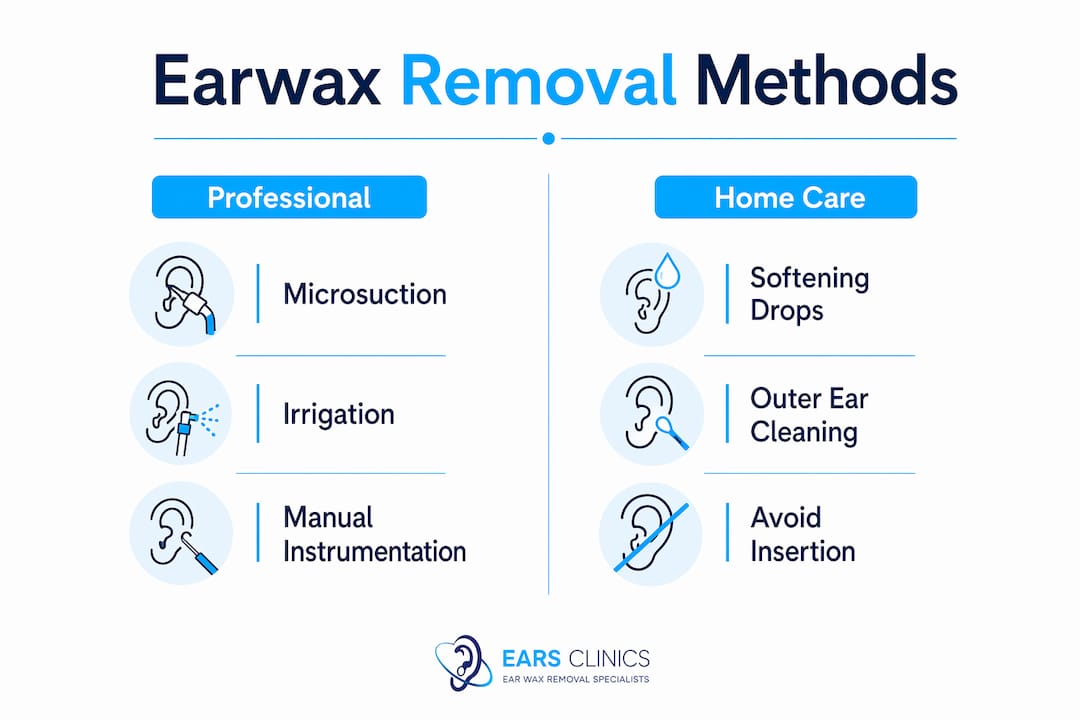
Microsuction, irrigation, and manual instrumentation are the three clinically approved methods for earwax removal. Each works differently, and a trained clinician selects the most appropriate technique based on your medical history, the type of wax present, and the condition of your ear canal.
Microsuction
Microsuction is the preferred method recommended by current NICE guidelines. A clinician uses a fine suction device under a microscope or loupe magnification to remove wax under direct visualisation. This approach is particularly effective for hard or impacted wax and carries a low risk of injury because the clinician can see exactly what they are doing throughout the procedure. Microsuction allows immediate removal of impacted wax under direct view, reducing patient discomfort and procedure time compared to irrigation.
Irrigation
Irrigation involves flushing the ear canal with body-temperature water or saline to dislodge and wash out wax. The water temperature is critical. Cold or hot water causes dizziness or ear canal injury, so body-temperature water is non-negotiable for safe practice. Irrigation is contraindicated in patients with a perforated eardrum, diabetes, a compromised immune system, or a history of ear surgery. A clinician will always screen for these conditions before proceeding.
Manual instrumentation
Manual instrumentation uses fine curettes or loops to extract wax directly from the canal. This method requires considerable skill and direct visualisation to avoid damaging the delicate skin of the ear canal or the eardrum. Procedures performed under direct visualisation enhance safety and allow thorough clearing of hard or impacted wax. Clinicians regulated by HIS or CQC follow strict protocols to protect patients throughout the process.
Pro Tip: If you are unsure which method suits you, a trained Aural Care Specialist will assess your ears before selecting a technique. You do not need to request a specific method in advance.
The table below summarises the key differences between the three clinical methods.
Method | How it works | Best suited for | Key contraindications |
Microsuction | Suction under microscope | Hard or impacted wax | Very few; preferred in most cases |
Irrigation | Warm water flush | Soft or moderate wax | Perforated eardrum, diabetes, immune compromise |
Manual instrumentation | Curette or loop extraction | Accessible wax, complex anatomy | Requires high clinical skill; not for self-use |
Why are common home earwax removal methods unsafe?
Home removal attempts cause a significant proportion of ear injuries seen in clinical practice. The most widely used home tools, cotton swabs, hairpins, and ear candles, all carry documented risks that outweigh any short-term benefit.
The ear canal self-cleans by moving wax outward via jaw motion during talking and chewing. Inserting any object into the canal disrupts this mechanism and pushes wax deeper, creating a compaction cycle that worsens the blockage. Cotton swabs are the most common culprit. They compact wax against the eardrum rather than removing it, and they can lacerate the canal skin or perforate the eardrum.
The risks of popular home remedies include:
Cotton swabs: Compact wax deeper into the canal and risk eardrum perforation.
Hairpins or keys: Cause lacerations to the canal skin and can puncture the eardrum.
Ear candling: Provides no clinical benefit and can cause burns to the face, ear canal, and eardrum. Wax from the candle itself has been found deposited inside the ear canal after use.
Unregulated drops or solutions: Can irritate the canal lining or trigger infection if the eardrum is perforated.
Essential oils (e.g., tea tree or garlic oil): No reliable evidence supports their use for earwax removal, and they carry a risk of allergic reaction or chemical irritation.
Ear candling is not just ineffective. It is actively dangerous. Clinical reviews confirm it provides no benefit for earwax removal and has caused burns, eardrum perforations, and canal blockages from candle wax deposits. No regulated health body endorses it.
Patients who believe earwax must be removed regularly often develop worse blockages through excessive cleaning habits. The ear does not need routine manual cleaning. Intervening unnecessarily breaks the self-cleaning cycle and introduces injury risk.
What home care practices are safe for managing earwax?
Safe home care for earwax is minimal by design. The ear canal does not require routine cleaning, and most adults can maintain healthy ears by leaving the canal alone entirely.
The following practices are clinically appropriate for home use:
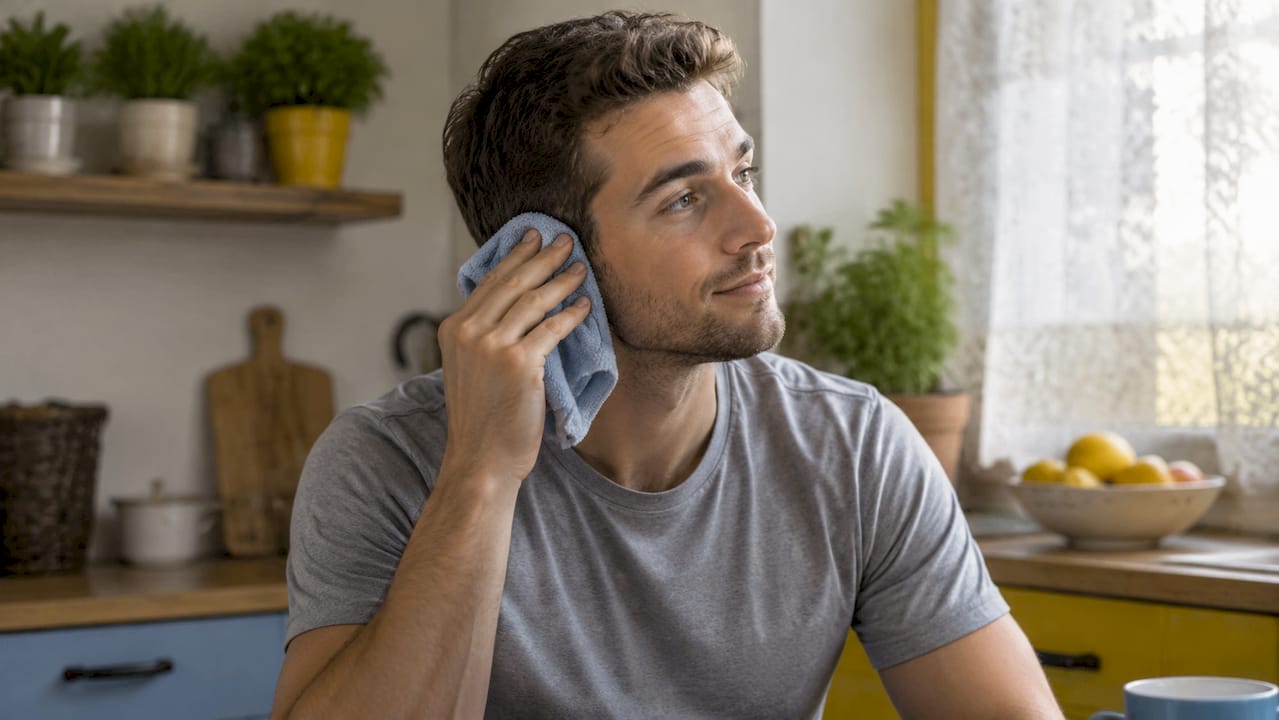
Clean only the outer ear. Use a warm, damp cloth to wipe the outer ear and the entrance to the canal. Never insert the cloth, a finger, or any object into the canal itself.
Use over-the-counter ear drops appropriately. Carbamide peroxide drops are the most widely used softening agent. Follow the product instructions precisely and use them for short periods only.
Avoid prolonged use of solvents. Overuse of softening agents like hydrogen peroxide can irritate the canal skin and encourage bacterial growth. Short-term use as directed is safe; daily long-term use is not.
Seek professional assessment before using drops. If you have a history of ear surgery, a perforated eardrum, or ear infections, consult a clinician before applying any drops. Drops entering through a perforated eardrum can cause serious harm.
Account for lifestyle factors. Hearing aid wearers and patients with narrow or curved canals experience more frequent wax buildup. Patients with narrow canals or hearing aids benefit from personalised professional management rather than repeated over-the-counter treatments alone.
Pro Tip: Softening drops used two to three days before a professional appointment can make removal quicker and more comfortable. Ask your clinician whether this is appropriate for your situation.
Prolonged use of cerumenolytic agents disrupts the ear canal’s natural flora and skin integrity, increasing the risk of infection. Less intervention at home means a healthier ear canal in the long run.
When should you seek professional earwax removal?
Professional removal is the right choice as soon as symptoms appear. Waiting and attempting home remedies when symptoms are already present risks worsening the blockage or causing injury.
Symptoms that indicate you need professional assessment include:
A sensation of fullness or pressure in the ear
Reduced or muffled hearing
Earache or discomfort
Tinnitus (ringing, buzzing, or humming sounds)
Itching or discharge from the ear canal
Dizziness or a feeling of imbalance
At a clinical appointment, a trained Aural Care Specialist will take a full medical history and examine the ear canal before selecting a method. Clinical experts select earwax removal methods appropriate to individual anatomy and health conditions. This personalised assessment is what makes professional care safer than any home approach.
The procedure itself is typically brief and well tolerated. Microsuction, for example, usually takes 15–30 minutes and causes minimal discomfort. Patients with recurrent impaction, such as those who wear hearing aids or have naturally narrow canals, may benefit from scheduled professional cleaning every few months rather than waiting for symptoms to return. Earwax removal is medically indicated only when symptoms arise, but for high-risk patients, proactive professional monitoring is a sound approach. You can review the full range of safe removal procedures available at Earhealthservice to understand what a clinical appointment involves.
Key takeaways
Professional earwax removal using microsuction, irrigation, or manual instrumentation is the safest and most effective approach, and home remedies should be limited to gentle outer ear cleaning and short-term softening drops.
Point | Details |
Earwax is protective | Leave it alone unless symptoms like hearing loss, pain, or tinnitus appear. |
Microsuction is the preferred method | NICE guidelines favour microsuction for its safety and direct visualisation. |
Home remedies carry real risks | Cotton swabs, ear candling, and unregulated drops cause injury and worsen blockage. |
Safe home care is minimal | Clean only the outer ear; use softening drops short-term and only if appropriate. |
Professional assessment is personalised | Clinicians select the right method based on your anatomy and medical history. |
What we see every day at EARS Clinics
The most common misconception I encounter is that earwax is dirty and must be removed regularly. Patients arrive having used cotton swabs daily for years, convinced they are keeping their ears clean. In reality, they have been pushing wax deeper with every attempt, and by the time they come to us, the impaction is far worse than it would have been if they had left the ear alone.
Earwax is not a hygiene problem. It is a protective barrier. It traps dust and debris, inhibits bacterial growth, and lubricates the canal. The ear is one of the few parts of the body that genuinely cleans itself. Disrupting that process with objects or excessive drops does not help. It harms.
The other pattern I see regularly is patients who have tried ear candling after reading about it online. Not one of them has found it effective. Several have arrived with candle wax deposited inside the canal, which then required professional removal. The procedure is not a gentle alternative. It is an additional problem.
What actually works is straightforward. If your ears are symptomatic, see a trained clinician. If they are not, leave them alone. For patients who wear hearing aids or have a history of recurrent buildup, a scheduled professional review every few months prevents the cycle from repeating. That is the evidence-based approach, and it is the one we follow at every appointment.
— EARS
Professional earwax removal at Earhealthservice
Earhealthservice provides NHS-accredited earwax removal at clinics in Glasgow and Edinburgh, with home visits also available for patients who need them.
Appointments are carried out by trained, NHS-accredited Aural Care Specialists using microsuction, irrigation, and manual instrumentation. Every procedure is selected based on your individual clinical assessment, not a one-size-fits-all approach. Earhealthservice is registered with Healthcare Improvement Scotland (HIS) and is one of the few regulated ear healthcare clinics in Scotland. Appointments for adults start from £60, with under-18s from £75 and home visits from £180. You can view the full range of earwax removal procedures and book directly at earhealthservice.co.uk, with same-day appointments available.
FAQ
Is earwax removal safe at home?
Home earwax removal is safe only for gentle outer ear cleaning with a warm cloth and short-term use of approved softening drops. Inserting objects into the ear canal, including cotton swabs, is not safe and risks wax impaction or eardrum injury.
What is the best way to get earwax out without a doctor?
If your ears are symptom-free, no removal is needed. If you have mild buildup, over-the-counter carbamide peroxide drops used as directed can soften wax, but professional removal is recommended as soon as symptoms such as hearing loss or pain appear.
How does microsuction differ from ear syringing?
Microsuction uses a fine suction device under direct visualisation and is preferred by NICE guidelines for its safety and precision. Ear syringing uses pressurised water without direct visualisation and carries a higher risk of injury, particularly in patients with eardrum defects.
How often should I have my ears professionally cleaned?
Most adults do not need routine professional cleaning. Patients with recurrent impaction, hearing aids, or narrow ear canals may benefit from a professional review every few months to prevent symptomatic buildup.
Can ear candling remove earwax effectively?
Ear candling provides no clinical benefit for earwax removal and is actively unsafe. It can cause burns, deposit candle wax inside the ear canal, and perforate the eardrum. No regulated health body endorses its use.
Recommended