
What gets rid of ear wax: safe methods that work

Olive oil drops and professional microsuction are the two most reliable ways to clear ear wax. For mild to moderate buildup, applying 2–3 drops of olive or almond oil 3–4 times daily for 3–5 days softens the wax so it falls out naturally over about two weeks. When home treatment is not enough, a trained clinician can remove wax safely using microsuction, irrigation, or manual instrumentation.
At a glance: what gets rid of ear wax
Olive or almond oil drops soften wax for natural expulsion over roughly two weeks
Sodium bicarbonate drops offer an alternative softening option from most pharmacies
Microsuction uses gentle suction with direct visualisation; preferred under current NICE guidelines
Irrigation flushes wax with warm water; suitable when the eardrum is intact
Manual instrumentation removes wax using small curettes, loops, or hooks
Cotton buds, ear candles, and essential oils are unsafe and should be avoided entirely
Seek professional care if you have ear pain, discharge, sudden hearing loss, or a known perforated eardrum
What actually gets rid of ear wax at home
Ear wax, known clinically as cerumen, is a natural protective secretion. The ear is largely self-cleaning by design, with skin cells migrating outward and carrying wax with them. Problems arise when this process is disrupted, either by overproduction or by misguided attempts to clean the canal.
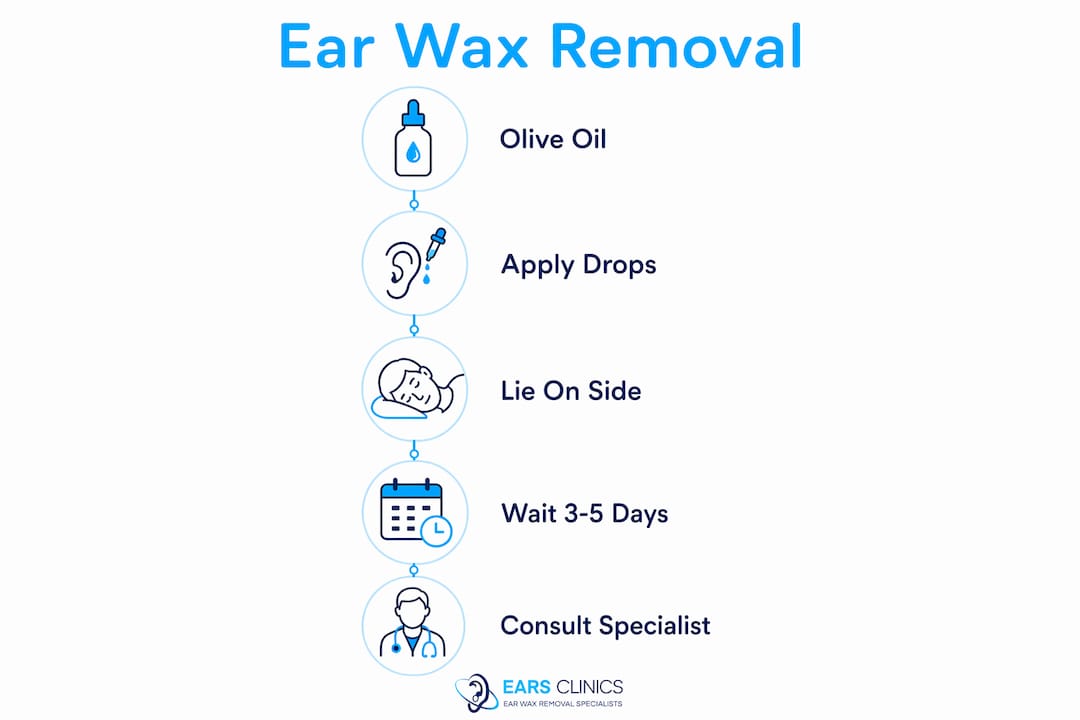
The most accessible home treatment is olive or almond oil. Lie on your side with the affected ear facing upward, apply a few drops, and remain in that position for several minutes. Repeat multiple times daily for several days. Over time, the softened wax should loosen and fall out on its own. Sodium bicarbonate ear drops work on the same principle and are widely available over the counter if you prefer a water-based option.
Consistency matters more than quantity. A few drops applied correctly each day will outperform a large dose applied once. If symptoms persist beyond two to three weeks of regular softening treatment, professional removal is the appropriate next step.
How to use ear drops safely at home
Getting the technique right makes a real difference to how well drops work. Follow these steps carefully.
Warm the oil slightly to body temperature before use; cold drops can cause brief dizziness
Lie on your side with the blocked ear uppermost and apply 2–3 drops directly into the canal
Stay in position for 5–10 minutes, then wipe away any excess with a clean tissue
Do not plug the ear with cotton wool afterwards; this counteracts the treatment
Repeat 3–4 times daily for 3–5 days as recommended by NHS guidance
Stop immediately and seek advice if you experience pain or dizziness during treatment
Contraindications to be aware of: do not use olive or almond oil if you have a nut allergy, a perforated eardrum, or a current ear infection. In these cases, drops can cause further irritation or allow fluid to enter the middle ear.
Pro Tip: When you first start using softening drops, your hearing may temporarily feel worse before it improves. This happens because the drops can cause the wax plug to swell slightly before it begins to break down. This is a normal, temporary response and not a sign that treatment is failing.
One common mistake is reaching for cotton buds. Inserting anything into the ear canal pushes wax deeper and stimulates the glands to produce more, making impaction more likely, not less. Ear candles are equally problematic. Research confirms they are neither safe nor effective, and carry a real risk of burns and injury to the ear canal.
Professional ear wax removal methods available in UK clinics
When home treatment does not clear the blockage, or when a patient’s medical history makes drops unsuitable, a trained clinician will select the most appropriate clinical method. The three established techniques are microsuction, irrigation, and manual instrumentation. The choice depends on the patient’s eardrum condition, wax consistency, and clinical presentation.

Microsuction is the method currently preferred under NICE guidelines. A clinician uses a fine suction probe under direct visualisation, typically with a microscope or loupe, to remove wax precisely and safely. Because the clinician can see the canal throughout the procedure, microsuction allows controlled removal with minimal risk to the eardrum. It does not require pre-treatment softening drops, though using them beforehand can make the process easier.
Irrigation flushes the ear canal with a controlled stream of warm water, dislodging and washing out softened wax. It is a well-established technique, but it is contraindicated in patients with a suspected or confirmed tympanic membrane perforation, recent ear surgery, or an active infection. A clinician will always assess eardrum integrity before proceeding.
Manual instrumentation involves removing wax directly using small instruments such as curettes, loops, or hooks. Clinicians select the appropriate tool based on wax consistency and location. This method is particularly useful when wax is dry and adherent, and when suction or irrigation alone would be insufficient.
All three methods require a clinical assessment of the patient’s medical history and eardrum status beforehand
Practitioners choose the safest and most suitable technique for each individual patient
No single method is universally superior; clinical judgement determines the right approach
When is it time to see a professional?
Some situations call for clinical assessment rather than home treatment. Attempting to manage these at home carries genuine risk.
Seek professional care promptly if you notice any of the following:
Sudden or significant hearing loss in one or both ears
Ear pain, pressure, or a feeling of fullness that does not resolve
Discharge or an unusual smell coming from the ear
Tinnitus (ringing or buzzing) that has recently worsened
A known or suspected perforated eardrum
Previous ear surgery or a history of ear infections
Cotton buds and unregulated home devices are a particular concern. Repeated self-cleaning attempts do not reduce wax; they push it deeper and increase the risk of impaction and eardrum damage. The safety of any removal method depends on knowing the condition of the eardrum first, which is why a professional assessment is so important.
Regulated providers registered with Healthcare Improvement Scotland (HIS) or the Care Quality Commission (CQC) follow strict clinical protocols that protect patients at every stage of treatment. Choosing an accredited clinic for ear care is not simply a preference; it is the standard the NHS recommends for safe wax removal.
Clinical note: The NHS advises patients to seek removal only from regulated providers registered with HIS or CQC to avoid risks including eardrum damage and infection.
EARS Clinics: regulated, specialist ear wax removal in Scotland
Earhealthservice operates EARS Clinics in Glasgow and Edinburgh, providing specialist ear wax removal performed by trained, NHS-accredited Aural Care Specialists. The clinics are registered with Healthcare Improvement Scotland (HIS) and are among the few regulated ear healthcare providers in Scotland, treating patients from two years of age.
Every appointment begins with a clinical assessment of the patient’s ear canal and eardrum. Practitioners then select the most appropriate technique from microsuction, irrigation, or manual instrumentation, guided by the patient’s medical history and clinical presentation. This is not a one-size-fits-all service; the approach is tailored to each patient.
Booking options are designed around real life. Same-day appointments are available for patients who cannot wait, and home visits are offered for those who find travelling to a clinic difficult. Pricing is transparent: £60 for patients aged 18 and over, £75 for under-18s, and £180 for a home visit.
HIS-registered and regulated, following the strictest guidelines on ear healthcare
NHS-accredited Aural Care Specialists performing microsuction, irrigation, and instrumentation
Same-day appointments, clinic visits in Glasgow and Edinburgh, and home visits available
Licensed to treat patients from 2 years of age
No pre-treatment preconditions required before booking
Pro Tip: Using olive or almond oil drops for 3–5 days before your appointment can soften the wax and make removal quicker and more comfortable, particularly if your wax is dry or compacted.
If you are experiencing blocked ears, muffled hearing, or persistent discomfort, you can book an appointment with EARS Clinics directly at earhealthservice.co.uk. Professional, regulated care is available when you need it.
Key takeaways
Olive oil drops soften ear wax for natural expulsion at home, while microsuction, irrigation, and manual instrumentation offer safe clinical removal when home treatment is not enough.
Point | Details |
Home treatment with oil drops | Apply a few drops of olive or almond oil several times daily for several days; wax typically clears over time. |
Microsuction is clinically preferred | Current NICE guidelines favour microsuction for its direct visualisation and controlled, precise removal. |
Avoid cotton buds and ear candles | Both push wax deeper or cause injury; neither removes wax safely or effectively. |
Professional assessment is essential | Eardrum integrity must be confirmed before irrigation; a clinician determines the safest method for each patient. |
Choose a regulated provider | Only seek clinical removal from providers registered with HIS or CQC to protect against eardrum damage and infection. |
Recommended