
Sore ear wax build-up: causes, relief and when to act

TL;DR:
Impacted earwax pressing on the ear canal skin causes soreness, which usually responds well to softening drops or professional removal.
Most symptoms improve within days of using home treatments like warm olive oil drops, but severe or worsening pain requires prompt clinical assessment.
A sore ear from wax build-up is almost always caused by impacted cerumen pressing against the delicate skin of the ear canal, and the good news is that most cases respond well to short-term softening drops or professional removal. NHS guidance recommends starting with olive or almond oil drops at home for a few days before seeking clinical assessment if symptoms persist. NICE identifies microsuction as the preferred removal method, and EARS Clinics (Earhealthservice) offers NHS-accredited microsuction, irrigation, and manual instrumentation in Glasgow and Edinburgh, with same-day appointments available.
Quick triage if your ear is sore right now:
Apply drops of warm olive oil or pharmacy softening drops, lie on your side for several minutes, and repeat multiple times daily for several days.
Take paracetamol or ibuprofen as directed for pain relief while the wax softens.
Do not insert cotton buds, hairpins, or anything else into the ear canal.
Book a clinic appointment if pain is severe, worsening, or has not improved after about two weeks.
Pro Tip: Warm the oil bottle gently in your hands for a minute before applying. Cold drops can cause brief dizziness by stimulating the balance organ in the inner ear.
What does sore ear wax build-up actually feel like?
Impacted cerumen does not always announce itself with a single obvious symptom. Hardened wax pressing on the canal skin can mimic the ache of an ear infection, which is why many patients initially assume they have an infection and delay appropriate treatment. Recognising the pattern of wax-related symptoms helps you respond correctly.
Common symptoms of earwax build-up include:
A dull ache or pressure deep inside the ear, sometimes described as a blocked or full sensation
Muffled hearing or a noticeable reduction in sound clarity on the affected side
Tinnitus — ringing, buzzing, or humming that is not present in the other ear
Mild dizziness or a sense of imbalance, particularly when moving the head
Itchiness inside the canal, occasionally with a small amount of discharge
Intermittent sharp pain if the wax plug shifts and presses on a sensitive area
Clinical note: A clogged ear from wax does not usually cause fever or systemic symptoms. If you have fever, significant discharge, or feel generally unwell alongside ear pain, this points more strongly towards infection and warrants prompt medical assessment rather than home softening drops.
The key distinction is severity and pattern. Mild, intermittent aching that comes and goes, combined with muffled hearing, is typical of wax impaction. Constant, severe, or worsening pain, especially with fever or discharge, needs clinical evaluation. You can use the ear wax symptoms checklist from Earhealthservice to help triage your situation before deciding on next steps.
Pro Tip: If your hearing in one ear suddenly drops after swimming or showering, wax is a very likely culprit. Water causes the plug to swell, which can produce rapid-onset blockage.
Safe home care for painful wax: what to try first
For mild to moderate symptoms, softening drops are the first-line approach recommended by NHS guidance. They work by breaking down the wax plug so it can migrate out of the canal naturally over the following days.
Step-by-step guide to applying softening drops:
Warm the oil or drops to body temperature by holding the bottle in your hands for one to two minutes.
Lie on your side with the affected ear facing upward.
Apply a few drops gently into the ear canal.
Stay in that position for 5–10 minutes to allow the drops to penetrate the wax.
Sit up slowly and let any excess drain onto a tissue. Do not rinse or probe.
Repeat several times daily for a few days. Wax often falls out naturally over a couple of weeks.
Olive oil and almond oil are both effective and widely available. Pharmacy-bought softening drops, including hydrogen peroxide-based products, can also break up wax, though Cleveland Clinic guidance notes that peroxide-based drops may leave residual moisture in the canal, which can encourage bacterial growth if used excessively. Follow the manufacturer’s instructions and stop immediately if you experience pain.
For discomfort during the softening period, paracetamol or ibuprofen taken at the recommended dose provides safe, effective pain relief. Neither medication removes the wax, but both help manage the ache while the drops do their work.
What to expect: Symptoms may temporarily worsen in the first day or two of using softening drops. This happens because the wax absorbs the liquid and swells slightly before it begins to break down. This is normal and not a sign that the treatment is failing.
Avoid these at all costs:
Cotton buds: they act as a ramrod, pushing wax deeper against the eardrum and often stimulating the canal to produce more wax.
Hairpins, pen lids, or any rigid object: the risk of eardrum perforation is real.
Ear candles: Mayo Clinic research confirms they are ineffective for wax removal and may cause burns or canal damage.
Essential oils marketed for wax removal: no clinical evidence supports their use.
Pro Tip: If your hearing or pain is no better after five days of consistent drops, or if symptoms are worsening at any point, stop home treatment and seek a clinical assessment. Continuing to apply drops to a fully impacted or inflamed canal can delay proper care.
For a more detailed walkthrough of safe removal options, the ear wax removal step-by-step guide from Earhealthservice covers both home and clinic pathways clearly.
How a pharmacist can help with ear wax pain
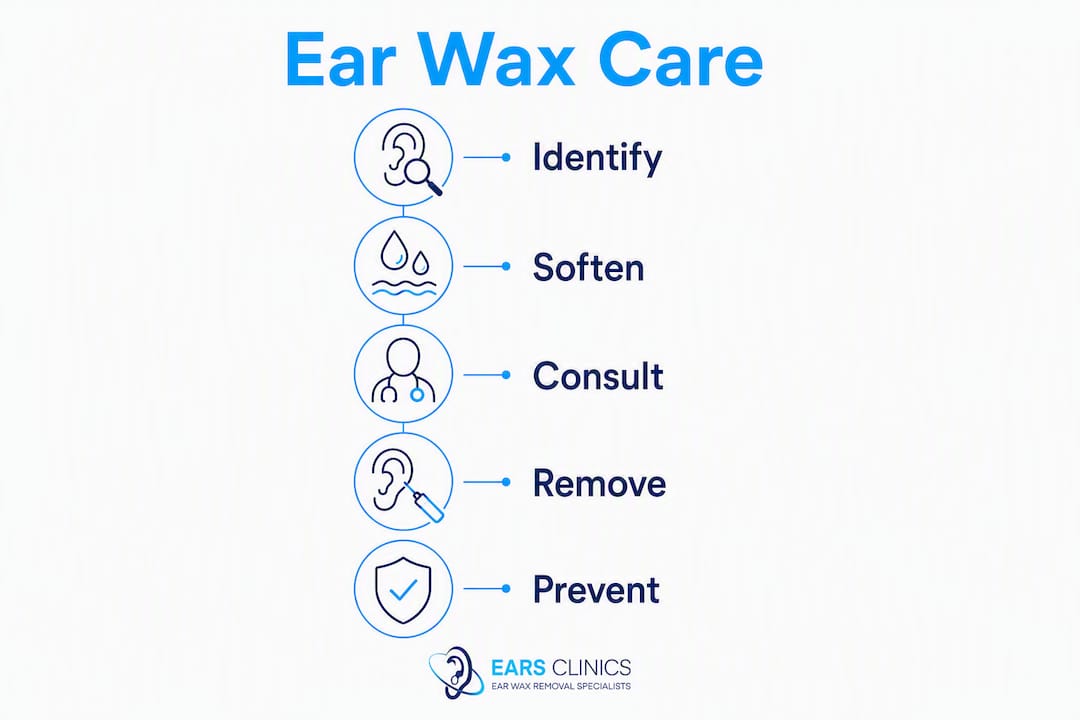
Your pharmacist is a genuinely useful first port of call for painful wax, and you do not need a GP appointment to access their advice. They can recommend appropriate OTC softening drops, advise on correct technique, and assess whether your symptoms warrant a GP visit or direct referral to a clinic.
What a pharmacist can offer:
Recommend olive oil drops, sodium bicarbonate drops, or hydrogen peroxide-based products based on your symptoms
Advise on application technique and realistic timelines
Check whether OTC drops are appropriate for your situation
Refer you to your GP or a specialist clinic if symptoms suggest something beyond simple wax impaction
When a pharmacist will refer you on rather than recommend drops:
You have a known or suspected eardrum perforation.
You have had recent ear surgery or a grommets procedure.
You have signs of active ear infection (discharge, fever, significant swelling).
You have a hearing aid and are experiencing complex symptoms.
Symptoms have not improved after a week of consistent home treatment.
If drops have not produced any improvement within about a week, return to the pharmacist or contact your GP. Waiting longer than two weeks without reassessment is not advisable if symptoms remain.

What to expect from your GP or the NHS
Your GP or practice nurse can confirm whether wax impaction is the cause of your symptoms using an otoscope, a small lighted instrument that allows direct visualisation of the ear canal and eardrum. This takes only a few minutes and is painless.
NHS treatment options following assessment:
Irrigation: Warm water is gently flushed into the canal to dislodge the wax plug. Often performed by a practice nurse after a period of pre-softening with drops.
Microsuction: A fine suction probe removes wax under direct vision using a microscope or loupe. Your GP may refer you to an audiology department or ENT clinic for this.
Manual instrumentation: A clinician uses a curette or probe to remove wax under direct vision. Typically performed by a specialist.
ENT referral: If wax is particularly impacted, if there are concerns about the eardrum, or if removal attempts have been unsuccessful, a referral to an ear, nose and throat specialist may be arranged.
NHS waiting times for audiology or ENT referral can vary significantly depending on your area and current demand. For irrigation performed by a practice nurse, some GP practices offer this in-surgery, though pre-softening with drops for several days is usually required beforehand. If you need faster access, a regulated private clinic such as EARS Clinics can typically offer same-day or next-day appointments without the need for a GP referral or pre-treatment preconditions.
Microsuction, irrigation and manual instrumentation: how each method works
Choosing the right removal method matters, and the decision should always rest with a trained clinician who has reviewed your medical history and examined your ear. No single method is universally best for every patient.
Method | How it works | Best suited to | Key precautions |
Microsuction | Fine suction probe under direct microscopic vision | Most patients; perforated eardrums; post-surgical ears | Requires trained specialist; brief noise during procedure |
Irrigation | Warm water flushed into canal via syringe or electronic irrigator | Intact eardrum; soft or semi-soft wax after pre-softening | Contraindicated with perforation or recent ear surgery |
Manual instrumentation | Curette or probe used under direct vision | Hard or impacted wax; cases where suction or water is unsuitable | Requires high operator skill; not suitable for uncooperative patients |
Microsuction is the method preferred by current NICE guidelines because it allows controlled, precise removal under direct vision and can be used safely in patients with eardrum perforations or a history of ear surgery, where irrigation would be contraindicated. The procedure typically takes some time, causes minimal discomfort, and often provides immediate relief.
Irrigation remains a safe and effective option for patients with an intact eardrum and soft or semi-softened wax. Cleveland Clinic guidance is clear that irrigation should not be used where there is a known perforation or a history of eardrum surgery. A clinician will always confirm suitability before proceeding.
Manual instrumentation, using a curette under direct vision, is particularly useful for hard, impacted wax that does not respond well to suction or irrigation. It demands a high level of operator skill and is typically performed by experienced aural care specialists.
Safety principle: Practitioners at regulated clinics take a full medical history before selecting any removal method. Factors including known perforation, previous ear surgery, immunocompromise, and current infection all influence which technique is safest for that individual patient.
Clinics regulated by Healthcare Improvement Scotland (HIS) or the Care Quality Commission (CQC) are required to follow strict clinical governance standards. All procedures at EARS Clinics are performed by trained, NHS-accredited Aural Care Specialists, providing a level of safety assurance that self-treatment simply cannot replicate.
Pro Tip: Ask your clinician which method they intend to use and why. A good practitioner will explain their reasoning based on your history and examination findings, not just default to a single technique.
Why does earwax sometimes build up and become painful?
Cerumen, the medical term for earwax, is produced by glands lining the outer ear canal. Harvard Health notes that it plays a protective role, trapping debris and providing antimicrobial properties, and in most people it migrates out of the canal naturally without any intervention. When that self-cleaning mechanism is disrupted, wax accumulates and can become impacted.
Common causes and risk factors for painful wax build-up:
Naturally high wax production, which varies considerably between individuals
Narrow or particularly hairy ear canals that slow natural migration
Ageing, which causes wax to dry out and become harder and less mobile
Regular hearing aid or earplug use, which physically blocks the canal and prevents natural expulsion
Skin conditions such as eczema or psoriasis affecting the canal lining
Previous ear surgery or trauma that has altered the canal anatomy
Inserting cotton buds, which compact wax against the eardrum and stimulate further production
Behavioural factors are among the most preventable causes. Cotton buds are the single most common reason clinicians see compacted wax plugs that are significantly harder to remove than they would otherwise have been.
Pro Tip: If you wear hearing aids, clean them daily and remove them for a few hours each day where possible. Hearing aids trap wax and heat in the canal, accelerating build-up. Consider a scheduled clinic check every six to twelve months.
How to reduce the risk of painful wax build-up in future
Prevention is straightforward for most people, and a few consistent habits make a meaningful difference.
Never insert objects into the ear canal, including cotton buds, regardless of how satisfying it feels.
If you are prone to recurrent impaction, apply a few drops of olive oil once or twice a week as routine maintenance to keep wax soft and mobile.
Keep hearing aids and earplugs scrupulously clean and follow the manufacturer’s guidance on maintenance.
Dry your ears gently after swimming or showering by tilting your head to each side and using a soft towel on the outer ear only.
If you have had impaction treated professionally, ask your clinician whether a scheduled maintenance appointment every six to twelve months would be appropriate for your situation.
For people with narrow canals, skin conditions, or a history of repeated impaction, occasional professional cleaning is a sensible preventive measure rather than a reactive one. The ear facts resource from Earhealthservice provides useful background on why some people are more prone to build-up than others.
Pro Tip: Routine aggressive cleaning is unnecessary for most people and can actually cause harm by removing the protective wax layer and irritating the canal skin. Less interference, not more, is the right approach for the majority of adults.
When ear pain with wax needs urgent attention
Most cases of painful wax are uncomfortable rather than dangerous, but certain symptoms require same-day medical assessment rather than home treatment.
Seek urgent care if you experience any of the following:
Severe or rapidly worsening ear pain that is not relieved by paracetamol or ibuprofen
Sudden or profound hearing loss in one or both ears
Continuous discharge from the ear, particularly if it is bloody or foul-smelling
Bleeding from the ear canal
Fever or feeling systemically unwell alongside ear symptoms
New neurological symptoms such as facial weakness, severe dizziness, or loss of balance
Ear pain following a head injury or a sudden loud noise
If you notice any of these signs, do not apply softening drops or attempt home removal. Contact your GP for a same-day appointment, call NHS 111, or attend an urgent care centre or A&E if symptoms are severe. A perforated eardrum, middle-ear infection, or other condition may be present, and these require clinical diagnosis before any treatment is applied.
Pro Tip: If you have recently had ear surgery, a perforated eardrum, or grommets fitted, do not use any drops or attempt any home removal without first speaking to your GP or ENT specialist. The rules are different for post-operative ears. For guidance on urgent situations, the emergency ear wax care resource from Earhealthservice sets out clearly when to act and what to do.
What to expect when booking ear wax removal with EARS Clinics
EARS Clinics (Earhealthservice) is one of the few regulated ear healthcare clinics in Scotland, registered with Healthcare Improvement Scotland (HIS) and licensed to treat patients from two years of age. All procedures are performed by NHS-accredited Aural Care Specialists who follow current NICE and HIS guidelines on safe ear care.
The patient journey at EARS Clinics:
A brief triage assessment covering your medical history, any known perforation, previous ear surgery, and current symptoms
In-clinic otoscopy to visualise the ear canal and confirm the nature and extent of the wax
Selection of the most appropriate removal method based on your individual clinical presentation, with microsuction used in most cases
The procedure itself, typically completed within 15–30 minutes
Aftercare advice and, where clinically appropriate, written correspondence with your GP or ENT specialist
Booking options include standard in-clinic appointments in Glasgow and Edinburgh, same-day appointments for urgent cases, and home visits for patients who are unable to travel. Pricing is transparent with different rates for adults, younger patients, and home visits. You can review the full service details and book an appointment directly through the EARS Clinics website.
Why regulated care matters: Ear care performed by unqualified practitioners carries real risks, including eardrum perforation, canal trauma, and incomplete removal that worsens impaction. HIS registration means EARS Clinics is subject to independent inspection and must meet defined standards of clinical governance, practitioner competence, and patient safety.
Aspect | Details |
Regulation | Healthcare Improvement Scotland (HIS) registered |
Practitioners | NHS-accredited Aural Care Specialists |
Methods available | Microsuction, irrigation, manual instrumentation |
Booking options | In-clinic, same-day, home visits |
Key takeaways
Sore ears from wax build-up usually respond to softening drops within a few days, but persistent or severe symptoms need professional assessment from a regulated clinician.
Point | Details |
Start with softening drops | Apply olive oil or pharmacy drops multiple times daily for several days; wax often clears naturally within a couple of weeks. |
Avoid inserting objects | Cotton buds compact wax deeper and increase the risk of eardrum damage. |
Know the red flags | Severe pain, sudden hearing loss, bleeding, or fever require same-day medical assessment, not home treatment. |
Microsuction is NICE-preferred | It allows precise removal under direct vision and is suitable even where irrigation is contraindicated. |
EARS Clinics offers regulated care | NHS-accredited specialists in Glasgow and Edinburgh provide microsuction, irrigation, and instrumentation with same-day availability. |
A note from EARS Clinics
Earwax problems are among the most common ear complaints we see, and they are almost always very treatable. What we notice most often is that patients have waited longer than necessary, either because they were unsure whether their symptoms were serious enough to warrant a visit, or because they had tried home remedies that did not work. If your ear is sore, blocked, or simply not right, that is reason enough to seek a proper assessment. Microsuction, when indicated, typically provides immediate relief and takes no more than half an hour. You do not need a GP referral to book with us, and you will leave knowing exactly what was found and what was done. If you are in any doubt, please do get in touch.
Book ear wax removal with EARS Clinics
Waiting weeks for an NHS referral when your ear is sore and blocked is genuinely frustrating, and it is not your only option. EARS Clinics provides NHS-accredited ear wax removal in Glasgow and Edinburgh, with no GP referral required, no pre-treatment conditions, and same-day appointments available for urgent cases.
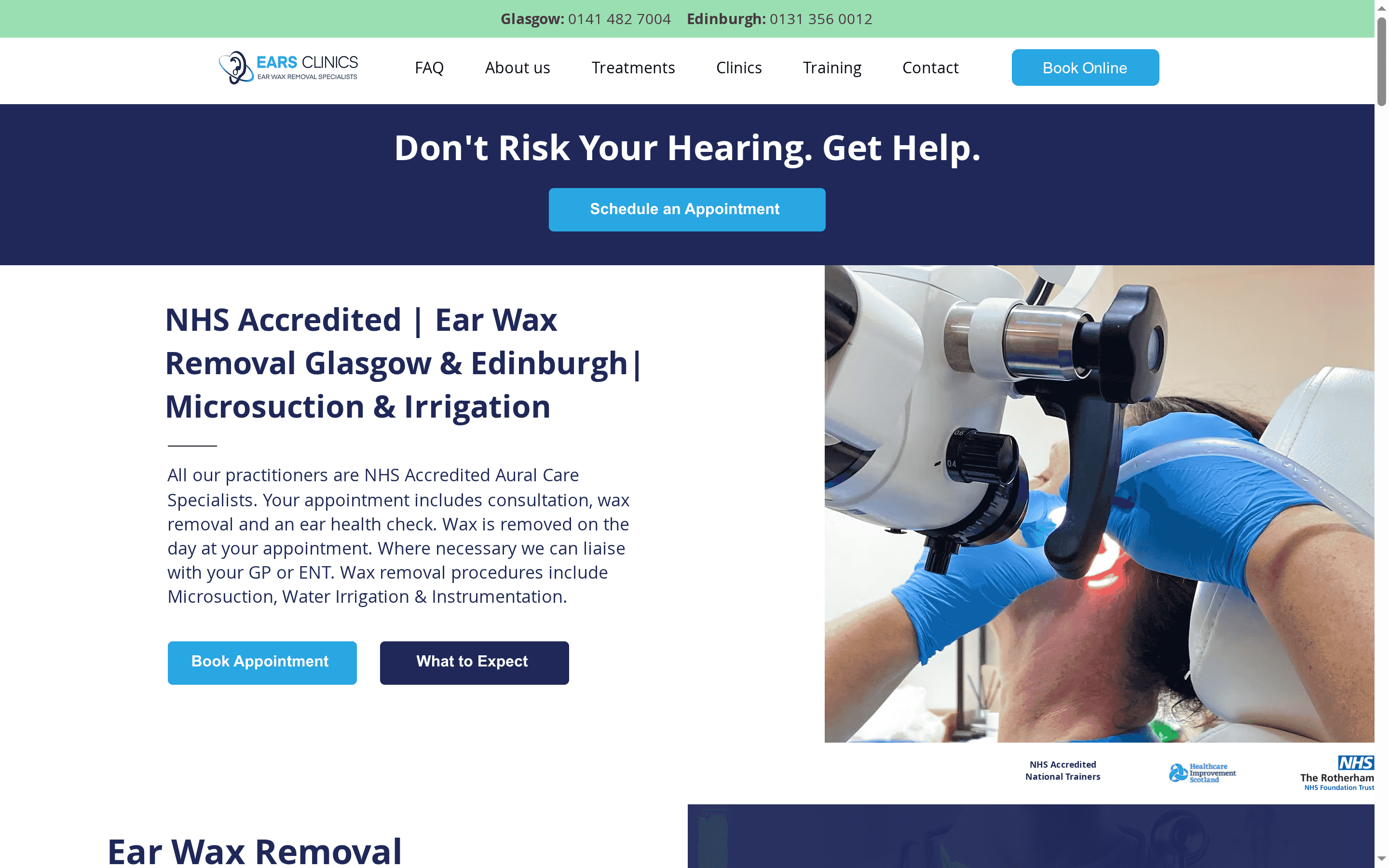
Whether microsuction, irrigation, or manual instrumentation is most appropriate for your situation, your clinician will assess your ear first and select the safest method for you. Home visits are available for patients who cannot travel to a clinic. Contact the clinic directly for up-to-date pricing information. All procedures are carried out by NHS-accredited Aural Care Specialists in HIS-registered facilities, so you can book with confidence.
To see the full range of procedures and check availability, visit the EARS Clinics procedures page or go directly to earhealthservice.co.uk to book your appointment.
This article provides general health information and is not a substitute for professional medical advice. Always consult a qualified clinician or your GP if you are unsure about your symptoms or the suitability of any treatment.
Useful sources and further reading
The following sources provide reliable, evidence-based information on earwax build-up, symptoms, and treatment options.
NHS: Earwax build-up — The primary UK clinical reference for symptoms, home care, and when to seek professional treatment. Covers softening drops, what to avoid, and NHS removal options.
NHS Inform: Earwax build-up — Scotland-specific NHS guidance covering microsuction as the preferred removal method and when to seek clinical assessment.
Cleveland Clinic: Ear wax removal — Practical guidance on OTC drops, the risks of peroxide-based products, and contraindications for irrigation.
Harvard Health: What is the best way to remove earwax? — Accessible explanation of why cerumen is protective and why routine aggressive cleaning is unnecessary for most people.
EARS Clinics: Ear wax removal procedures — Full details of the microsuction, irrigation, and instrumentation services offered by EARS Clinics, including booking information and pricing.
EARS Clinics: What to expect at your appointment — Patient-facing guide to the clinical journey at EARS Clinics, from triage through to aftercare.
Recommended