
Role of Microsuction in Safe Ear Care

Every British parent knows the anxiety when a child complains of ear pain, especially in busy cities like Glasgow or Edinburgh. Safe ear wax removal becomes urgent for children with complex ear health needs. Microsuction is clinically proven to be the most secure technique for clearing delicate ear canals swiftly and effectively. This guide helps parents understand what makes microsuction different, tackles common myths, and explains why expert care is crucial for children requiring specialised attention.
Key Takeaways
Point | Details |
Microsuction is Safe and Effective | This advanced ear wax removal technique offers minimal risks compared to traditional methods when performed by trained professionals. |
Pre-Procedure Evaluation is Essential | Comprehensive assessments ensure patient suitability and safety, particularly for children and those with complex medical histories. |
Microsuction Outperforms Alternative Methods | Compared to irrigation and manual extraction, microsuction provides superior precision and reduces the potential for injury or complications. |
Aftercare is Crucial for Recovery | Patients should keep the ear dry and monitor for symptoms post-procedure to avoid complications and support healing. |
Defining Microsuction and Common Myths
Microsuction is a sophisticated ear wax removal technique that provides a safe, precise method for clearing ear canals. Unlike traditional approaches, this procedure uses specialised medical equipment to gently remove wax and debris under direct microscopic visualisation. Microsuction clinical guidance confirms it is regarded as the most secure method for ear canal clearance.

The procedure involves using a high-powered microscope and a fine suction probe to meticulously extract ear wax with exceptional precision. Trained aural care specialists can complete the process within seconds to 20 minutes, depending on the complexity of wax accumulation. Ear and hearing professionals emphasise that when performed by qualified practitioners, microsuction presents minimal risks compared to alternative ear cleaning methods.
Many patients harbour misconceptions about microsuction that can prevent them from seeking necessary treatment. Common myths include unfounded fears about potential hearing loss or eardrum damage. In reality, these risks are extremely rare when the procedure is conducted by properly trained healthcare professionals using appropriate medical equipment. The technique actually minimises potential complications by providing direct visual confirmation throughout the entire wax removal process.
Pro tip: Always consult a registered aural care specialist and request information about their specific microsuction training and experience before scheduling a procedure.
How Microsuction Safely Removes Ear Wax
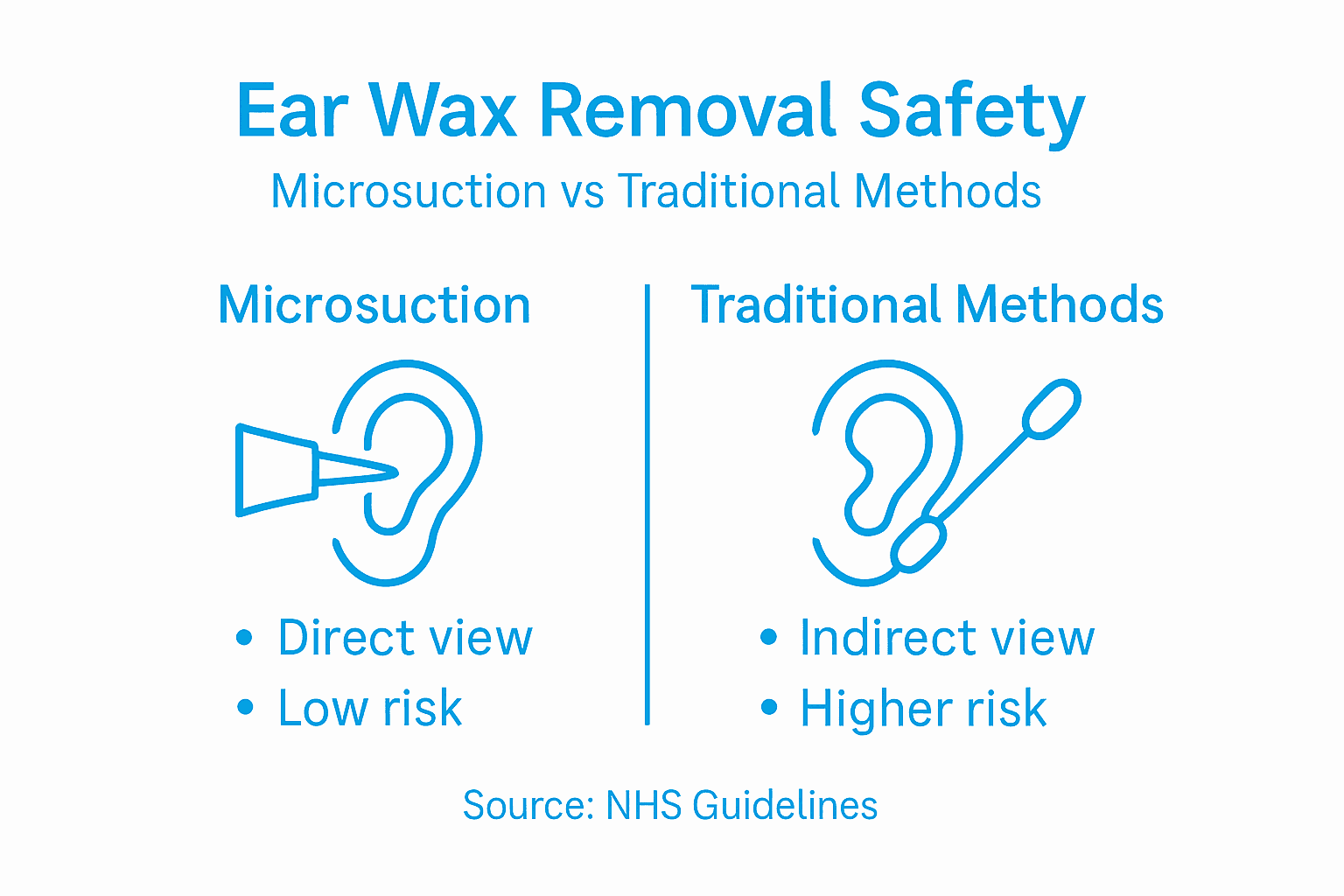
Microsuction is a meticulously precise ear wax removal technique that prioritises patient safety and comfort. Specialised ear care guidelines confirm that the procedure uses advanced medical equipment designed to extract ear wax with minimal risk and maximum effectiveness. By employing a microscopic visualization approach, trained healthcare professionals can accurately assess and clean the ear canal without causing unnecessary trauma.
The procedure involves several critical safety steps that distinguish it from traditional ear cleaning methods. A high-powered microscope allows the practitioner to view the entire ear canal in exceptional detail, enabling precise identification of wax accumulation, potential obstructions, or underlying ear conditions. The suction device operates at carefully controlled pressure levels, ensuring gentle yet thorough removal of cerumen and debris. This approach minimises the potential for accidental injury and provides a comprehensive view of the ear’s internal structures throughout the cleaning process.
Before conducting microsuction, healthcare professionals perform a comprehensive patient assessment to determine individual suitability. Factors such as existing ear infections, recent ear surgeries, or specific medical conditions are carefully evaluated to prevent potential complications. The procedure is contraindicated for patients with active infections, severe dizziness, or extreme noise sensitivity. By following these rigorous pre-procedure protocols, practitioners can ensure that microsuction remains a safe and effective method for ear wax removal, tailored to each patient’s unique medical profile.
Eligibility in Children and Complex Cases
Microsuction requires careful patient assessment, particularly for children and individuals with complex medical histories. Microsuction eligibility guidelines emphasise the importance of thorough pre-procedure evaluation to ensure patient safety and treatment effectiveness. While the technique is generally considered safe, not all patients are immediate candidates for the procedure.
Children present unique considerations during microsuction. Successful treatment depends on the child’s ability to remain still during the procedure and their specific medical background. NHS specialist assessments recommend comprehensive screening to identify potential contraindications. Key factors include recent ear infections, anatomical variations, previous surgical interventions, and the child’s capacity to tolerate the procedure. Practitioners typically recommend microsuction for children who can cooperate, demonstrate minimal movement, and have no active ear health complications.
Complex medical cases require specialised approach and individualised evaluation. Patients with specific conditions such as perforated eardrums, chronic ear infections, recent ear surgeries, or neurological sensitivities might require alternative treatment strategies. Aural care specialists conduct detailed pre-procedure assessments, which may include comprehensive medical history reviews, physical examinations, and potential additional diagnostic tests to determine the most appropriate ear wax removal method. The primary goal remains ensuring patient safety while effectively addressing ear wax accumulation.
Pro tip: Prepare young patients by discussing the procedure beforehand, explaining what to expect, and practising staying still to increase the likelihood of a successful microsuction treatment.
Practitioner Standards and NHS Safety Rules
Microsuction procedures are governed by stringent professional standards designed to ensure patient safety and treatment quality. ENT UK clinical guidance establishes comprehensive protocols that mandate specific qualifications and competencies for practitioners performing ear wax removal. Only healthcare professionals such as doctors, nurses, and audiologists with specialised ear care training are permitted to conduct microsuction, ensuring a high standard of clinical expertise and patient protection.
The NHS mandates rigorous safety protocols that encompass multiple aspects of the microsuction procedure. Practitioners must obtain informed patient consent, conduct thorough pre-procedure medical assessments, and use sterile equipment under microscopic visualization. NHS safety recommendations emphasise the importance of identifying potential contraindications, managing patient comfort, and implementing emergency precautions. These guidelines ensure that each microsuction treatment is tailored to individual patient needs while minimising potential risks.
Professional standards extend beyond the immediate procedure to include comprehensive patient care and ongoing clinical competency. Practitioners are required to maintain up-to-date training, understand complex ear anatomy, and continuously assess individual patient suitability. This includes evaluating medical history, current ear health conditions, and potential complications that might affect the microsuction procedure. Regular professional development, adherence to infection control protocols, and commitment to patient safety are fundamental requirements for healthcare professionals performing these delicate ear care interventions.
Pro tip: Always verify your healthcare practitioner’s professional credentials and NHS accreditation before undergoing any microsuction procedure.
Comparing Microsuction to Alternative Methods
Ear wax removal techniques vary significantly in their approach, safety, and effectiveness. NICE clinical research reveals that microsuction stands out as a superior method compared to traditional irrigation techniques. While water-based irrigation can be effective, it carries inherent risks such as discomfort, potential infection, and less precise wax removal, particularly for patients with complex ear conditions.
Microsuction offers distinct advantages over alternative methods. Unlike irrigation, which uses water pressure to flush out wax, microsuction employs a controlled suction technique with direct microscopic visualization. This approach allows practitioners to see the entire ear canal, ensuring precise wax removal while minimising the risk of damage to delicate ear structures. Patients with perforated eardrums, recurring ear infections, or anatomical ear variations particularly benefit from this method, as it provides a dry, controlled approach that traditional techniques cannot match.
The comparative analysis between microsuction and other ear wax removal methods highlights several key differences. Manual instrumentation, which involves using physical tools to extract wax, can be invasive and risks accidental injury. Irrigation may cause discomfort and is not suitable for all patients, especially those with specific ear health conditions. Microsuction, by contrast, offers a gentler, more controlled approach that can be customised to individual patient needs. The technique’s ability to provide real-time visualization ensures that practitioners can navigate the ear canal with unprecedented precision and safety.
Here is a comparative overview of common ear wax removal methods and their distinctive features:
Method | Visual Control Provided | Typical Risks | Suitable For Complex Cases |
Microsuction | Direct microscopic view | Minimal, if performed correctly | Yes, with practitioner guidance |
Water Irrigation | No direct view | Infection, discomfort, incomplete removal | Generally not recommended |
Manual Instrumentation | Limited indirect view | Physical trauma, discomfort | Only in selected cases |
Pro tip: Request a comprehensive ear examination before choosing a wax removal method to ensure the most appropriate and safe technique for your specific ear health needs.
Costs, Booking, and Aftercare Guidance
Microsuction treatment costs and booking procedures vary depending on individual healthcare settings and patient requirements. NHS guidance indicates that patients can typically access microsuction through GP referrals or directly at specialised ear care clinics. For private clinics like EARS Clinics, pricing is transparent with specific rates for different age groups - £60 for adults and £75 for patients under 18, with home visit options available at £180.
Booking a microsuction procedure involves several important considerations. Patients should prepare by using olive oil ear drops the night before, morning before, and morning of their appointment to soften ear wax and facilitate easier removal. Most clinics require a brief medical assessment to determine suitability, which may involve reviewing medical history, current ear conditions, and potential contraindications. Some NHS services provide microsuction at low or no cost when there is a clear medical necessity, while private clinics offer more immediate appointment options.
Aftercare following microsuction is crucial for optimal recovery and preventing potential complications. Patients are advised to keep the ear canal dry for a specified period, avoiding water exposure and refraining from inserting any objects into the ear. Follow-up recommendations may include monitoring for any persistent discomfort, avoiding swimming or water activities, and scheduling a review if experiencing unusual symptoms. Some practitioners might suggest using specific ear drops to support healing and maintain ear health after the procedure.
This table summarises key microsuction aftercare recommendations for optimal recovery:
Aftercare Action | Purpose | How Long to Continue |
Keep ear dry | Prevent infection | At least 24-48 hours |
Avoid inserting objects | Protect ear canal | Indefinitely |
Monitor for symptoms | Early detection of complications | 1-2 weeks post-procedure |
Use recommended ear drops | Support healing | As advised by practitioner |
Pro tip: Bring a comprehensive list of your medical history and current medications to your microsuction appointment to ensure the most accurate and safe treatment planning.
Experience Safe and Professional Ear Care with EARS Clinics
If you are concerned about ear wax build-up or the safety of microsuction as discussed, you deserve a trusted solution that puts your comfort and hearing health first. At EARS Clinics, we specialise in NHS-accredited microsuction treatments performed by trained Aural Care Specialists using advanced, precise techniques that align with the highest safety protocols outlined in the article. Whether you are seeking safe ear wax removal for yourself or your child, or need expert care for complex cases, our regulated clinics in Glasgow and Edinburgh ensure personalised care with minimal waiting times.
Don’t let uncertainty or misconceptions about microsuction prevent you from getting effective relief. Book your appointment today at EARS Clinics to benefit from expert assessment, same-day bookings, and options including home visits. Learn more about our comprehensive ear wax removal services and how we prioritise patient safety and comfort by visiting our main site. Take control of your ear health now with proven safe procedures tailored just for you.
Frequently Asked Questions
What is microsuction and how does it work?
Microsuction is a precise ear wax removal technique that uses specialized medical equipment and a high-powered microscope to gently suck out ear wax and debris from the ear canal. This method allows for direct visualisation, making it safer and more effective than traditional methods.
Is microsuction safe for children and individuals with complex conditions?
Yes, microsuction is generally safe for children and individuals with complex medical histories, but it requires a thorough pre-procedure assessment to determine suitability. Practitioners evaluate factors such as recent ear infections and medical conditions to ensure patient safety.
What are the advantages of microsuction compared to other ear wax removal methods?
Microsuction offers significant advantages over traditional irrigation or manual methods. It provides direct visual control, minimizing the risk of complications, and is particularly beneficial for patients with perforated eardrums or anatomical variations in the ear.
What should I expect during the microsuction procedure?
During the microsuction procedure, a trained healthcare professional will use a microscope to view your ear canal and a suction device to remove the wax. The process is quick, typically taking between a few seconds and 20 minutes, and focuses on maximizing your comfort and safety.
Recommended