
Preventing earwax buildup: a practical guide for 2026

TL;DR:
Supporting the ear’s natural self-cleaning process helps prevent wax buildup. Avoiding objects like cotton buds reduces the risk of impaction and injury. Professional removal methods such as microsuction are safest when wax accumulation causes symptoms.
Preventing earwax buildup is defined as supporting the ear’s natural self-cleaning process while avoiding habits that cause cerumen, the medical term for earwax, to accumulate and block the canal. The ear produces cerumen to trap dust, repel moisture, and protect the eardrum. Clinical guidelines from Healthcare Improvement Scotland (HIS) and the Care Quality Commission (CQC) are clear: inserting objects into the ear canal is the single most common cause of impaction. A 2026 systematic review confirms that cotton buds and similar objects increase infection risk and worsen wax impaction. The good news is that most people can maintain healthy ears with a few simple, evidence-based habits.
How does the ear’s natural self-cleaning mechanism work?
The ear is one of the few body parts designed to clean itself. Cerumen is produced by glands in the outer third of the ear canal, where it traps debris, repels water, and creates a mildly acidic environment that discourages bacterial growth. Once it has done its job, the wax migrates outward naturally.

This outward migration happens because the skin of the ear canal grows in a specific direction, from the eardrum toward the ear opening. Wax moves gradually to the ear opening, where it dries and falls out without any intervention. Jaw movements, such as chewing and talking, actively assist this process by shifting the walls of the canal and nudging wax along.
This mechanism fails in some people due to anatomy, age, or lifestyle. Narrow or unusually shaped ear canals, a tendency to produce harder or drier wax, and regular use of in-ear devices can all slow or block natural migration. When migration stalls, cerumen accumulates and may cause muffled hearing, a sensation of fullness, or tinnitus.
Pro Tip: Chewing food thoroughly is not just good for digestion. The jaw movement genuinely helps shift wax toward the ear opening, supporting the canal’s natural cleaning cycle.
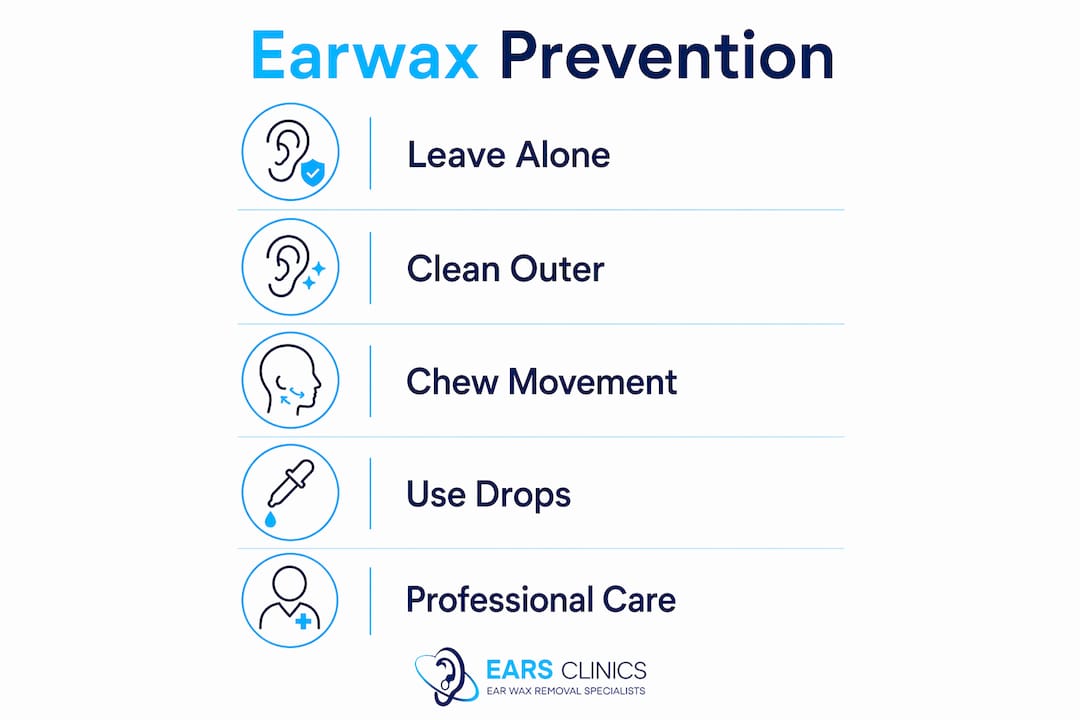
What are the safest ear hygiene practices?
Safe ear hygiene centres on one principle: clean what you can see, and leave the canal alone. The outer ear, the visible bowl-shaped area, can be wiped gently with a damp washcloth or a clean finger. Nothing smaller than your elbow belongs inside your ear canal.
The following habits reduce the risk of wax accumulation and canal injury:
Avoid cotton buds, hairpins, and any narrow objects. Inserting objects pushes wax deeper and compacts it against the eardrum, worsening blockage rather than clearing it.
Limit prolonged use of earbuds, earplugs, and hearing aids. These devices physically obstruct the canal and interrupt wax migration. Keeping devices clean and removing them regularly reduces the risk of impaction and irritation.
Keep ears dry after bathing or swimming. Tilt your head to each side after washing to let water drain. Trapped moisture softens the canal skin and creates conditions where wax can swell and block.
Use softening drops sparingly if you are prone to buildup. Clinical guidelines recommend monthly use of 1–2 drops of glycerin or carbamide peroxide for people who accumulate wax regularly. This frequency supports self-cleaning without irritating the canal lining.
Clean hearing aids and earbuds daily. Wax residue on devices re-enters the canal and contributes to further accumulation.
Parents caring for children should follow the same outer-ear-only rule. Children’s canals are narrower and more easily damaged. Guidance on safe ear cleaning for children confirms that no objects should enter a child’s ear canal under any circumstances.
Pro Tip: After swimming, use a clean towel corner to wick moisture from the outer ear only. Never fold the towel into a point and insert it into the canal.
What tools and methods actually help with earwax prevention?
Cerumenolytic drops: when and how to use them
Cerumenolytic drops are solutions that soften or dissolve wax, making it easier for the canal to expel it naturally. Common options include glycerin, olive oil, and carbamide peroxide. These are appropriate for occasional use in people who produce excess wax, not as a daily routine. Chronic daily application of cerumenolytics risks disrupting the skin environment of the canal, leading to irritation or secondary infection. A clinician can advise on the right product and frequency for your specific situation.
Professional removal methods: microsuction, irrigation, and instrumentation
When prevention is not enough and wax accumulates to the point of causing symptoms, professional removal is the appropriate next step. Three clinically validated methods are used by trained Aural Care Specialists.
Method | How it works | Best suited for |
Microsuction | A fine suction probe removes wax under direct visualisation | Most patients; preferred by NICE guidelines |
Irrigation | Warm water flushes the canal to dislodge wax | Softer wax; not suitable for perforated eardrums |
Manual instrumentation | Small instruments remove wax under direct view | Complex cases or where irrigation is contraindicated |
Microsuction is recommended by NICE guidelines as the preferred method because it allows the clinician to see exactly what they are doing throughout the procedure. Practitioners at Earhealthservice select the most appropriate method based on each patient’s medical history and clinical presentation. No single method suits every patient, and that clinical judgement is what makes professional care safer than any home attempt.
Ear candles: a clear contraindication
Ear candles are hollow fabric cones that are lit at one end while the other is placed in the ear. Multiple clinical studies and guidelines strongly discourage their use. Ear candles are ineffective for wax removal and carry significant risks, including burns to the face and ear canal, and eardrum perforation from dripping wax or flame. No regulated clinical body endorses them.
What are the most common mistakes people make?
Several widespread habits actively worsen earwax problems rather than solving them. Understanding these mistakes is the fastest way to protect your hearing.
Using cotton buds to clean the canal. This is the most common error. Cotton buds do not remove wax. They compress it against the eardrum, creating a firm plug that requires professional removal. A 2026 systematic review confirms this worsens impaction and raises infection risk.
Believing the ear needs internal cleaning. Healthy ears do not require internal cleaning. The self-cleaning mechanism handles this automatically in most people. Intervening disrupts a process that is already working.
Overcleaning or using harsh agents. Frequent use of alcohol-based drops or aggressive flushing strips the canal of its natural protective coating. This irritates the skin and can trigger the glands to produce more wax as a compensatory response.
Relying on ear candles. Despite their popularity in some wellness circles, ear candles have no clinical evidence of efficacy and carry documented risks of injury.
Assuming one approach suits everyone. Preventive ear care should be personalised based on ear anatomy, wax type, and whether the person uses hearing aids or in-ear devices. What works for one person may cause problems for another.
For parents, the same caution applies to children. Children’s ear canals are smaller and more vulnerable to injury from objects or inappropriate drops. Specialist guidance on children’s ear health is available for parents who want age-appropriate advice.
Key takeaways
Preventing earwax buildup means supporting the ear’s natural self-cleaning process and avoiding any object, product, or practice that disrupts it.
Point | Details |
Leave the canal alone | Clean only the outer ear; inserting objects compacts wax and raises infection risk. |
Use softening drops sparingly | Monthly use of 1–2 drops of glycerin or carbamide peroxide helps those prone to buildup without irritating the canal. |
Manage in-ear devices carefully | Keep earbuds, earplugs, and hearing aids clean and limit continuous wear to support natural wax migration. |
Avoid ear candles entirely | Clinical guidelines contraindicate ear candles due to burn and perforation risks with no proven benefit. |
Seek professional help when symptoms appear | Microsuction, irrigation, and manual instrumentation performed by trained clinicians are the safe options for wax removal. |
What we have learned from seeing patients get this wrong
At EARS Clinics, the pattern we see most often is not neglect. It is overcleaning. Patients arrive having used cotton buds daily for years, genuinely believing they were keeping their ears healthy. In reality, they had been compacting wax progressively deeper into the canal with each attempt. By the time symptoms appeared, the blockage required professional microsuction to resolve safely.
The ear’s self-cleaning mechanism is genuinely impressive. Trusting it is not passive; it is the clinically correct choice. Where it fails, the right response is a softening drop used occasionally, not a cotton bud used daily.
We also see parents who are understandably anxious about their children’s ears. The advice is the same: outer ear only, and seek a specialist if you notice symptoms. Earhealthservice is licensed and regulated to treat patients from 2 years of age, which means professional assessment is available even for very young children. That reassurance matters.
Microsuction has changed what professional ear care looks like. It is precise, comfortable, and performed under direct visualisation, which means the clinician sees exactly what is happening throughout. For patients who have experienced irrigation in the past and found it uncomfortable, microsuction is often a significantly better experience. Evidence-based prevention combined with professional care when needed is the approach that actually protects hearing long term.
— EARS
Professional earwax care from Earhealthservice
When prevention alone is not enough, professional assessment makes the difference between a resolved problem and a worsening one.

Earhealthservice provides NHS-accredited earwax removal across Glasgow and Edinburgh, performed by trained Aural Care Specialists regulated by Healthcare Improvement Scotland. Services include microsuction, irrigation, and manual instrumentation, with the most appropriate method selected based on your clinical history. Appointments are available in clinic, with same-day options and home visits for those who cannot travel. Costs start at £60 for adults and £75 for under-18s. For recurrent buildup or any symptoms affecting your hearing, book an appointment with EARS Clinics today.
FAQ
What is the best way to prevent earwax buildup?
The best approach is to leave the ear canal alone and clean only the outer ear with a damp cloth. For those prone to accumulation, monthly use of 1–2 drops of glycerin or carbamide peroxide supports natural wax expulsion without irritating the canal.
Are cotton buds safe for cleaning ears?
Cotton buds are not safe for cleaning inside the ear canal. Clinical evidence confirms they push wax deeper, worsen impaction, and increase the risk of infection and injury.
How do I know if I have a wax blockage?
Common signs include muffled hearing, a feeling of fullness in the ear, tinnitus, or mild earache. If any of these symptoms appear, a clinician should assess the ear rather than attempting home removal.
Can children use ear drops to prevent wax buildup?
Ear drops for children should only be used on the advice of a clinician. Earhealthservice treats patients from 2 years of age and can provide age-appropriate assessment and safe removal if needed.
Is microsuction better than irrigation for earwax removal?
Microsuction is the method recommended by NICE guidelines as the preferred option because it is performed under direct visualisation, giving the clinician full control throughout. Irrigation remains a clinically valid alternative when appropriate, based on the patient’s history and wax type.
Recommended