
How to Spot Ear Wax Buildup Naturally and Safely
Updated: Jan 16

Every british parent knows how quickly ear discomfort can make a child anxious and disrupt daily life. With NHS wait times stretching for weeks, securing prompt and professional ear wax removal becomes crucial for families in Glasgow and Edinburgh. Studies show untreated ear wax can affect hearing and cause lasting irritation in over 60 percent of children. This guide explains how to create a safe environment for ear checks and spot important symptoms so your child receives expert care without delay.
Quick Summary
Key Insight | Explanation |
1. Create a suitable examination environment | Ensure a clean, well-lit, and distraction-free area for an effective ear assessment. |
2. Identify signs of ear wax buildup | Look for symptoms such as hearing loss and discomfort to assess for potential wax accumulation. |
3. Use safe techniques for observation | Gently apply warm oil to soften wax and avoid aggressive methods to prevent injury. |
4. Schedule professional assessments regularly | Regular check-ups with specialists can ensure proper ear health and manage wax issues effectively. |
5. Prepare before healthcare appointments | Bring a list of medications and symptoms to aid professionals in a more accurate assessment. |
Step 1: Prepare your environment for a clear ear check
Creating the right environment for an ear examination requires careful preparation and attention to detail. A clean, well-lit space helps healthcare professionals perform a thorough and safe assessment of your ear health. Understanding proper ear care techniques begins with setting up a suitable inspection area.
First, choose a location with bright, direct lighting that allows clear visibility of the ear canal. Natural daylight near a window works best, but a strong, adjustable lamp can also provide excellent illumination. Position yourself or your child in a comfortable chair that allows the healthcare professional to examine the ear from multiple angles. Ensure the room temperature is moderate and draft-free to prevent any discomfort during the examination.
Remove any unnecessary objects or distractions from the immediate area to help the patient remain calm and still during the check. If examining a child, consider having a favourite comfort item nearby to help them feel secure. Clean the surrounding surfaces with a mild disinfectant to maintain a hygienic environment, which is especially important when preparing for a professional ear assessment.
Top tip: Gently apply a few drops of olive oil to the outer ear the night before and morning of your appointment to help soften any existing ear wax and facilitate a smoother examination.
Step 2: Identify visible signs of ear wax buildup
Recognising the early signs of ear wax accumulation can help prevent potential hearing complications and discomfort. Examining the visible symptoms of earwax blockage requires careful observation and understanding of what constitutes normal versus excessive wax production.
Start by checking the outer ear for visible wax residue. Healthy ear wax typically appears light brown or yellowish and should only be present in small amounts at the ear opening. Large, hardened wax deposits or dark coloured masses protruding from the ear canal could indicate a potential buildup. Pay attention to accompanying symptoms like muffled hearing, a feeling of fullness in the ear, or occasional ear discomfort. These signs might suggest that the wax has accumulated beyond normal levels and could potentially obstruct your hearing.
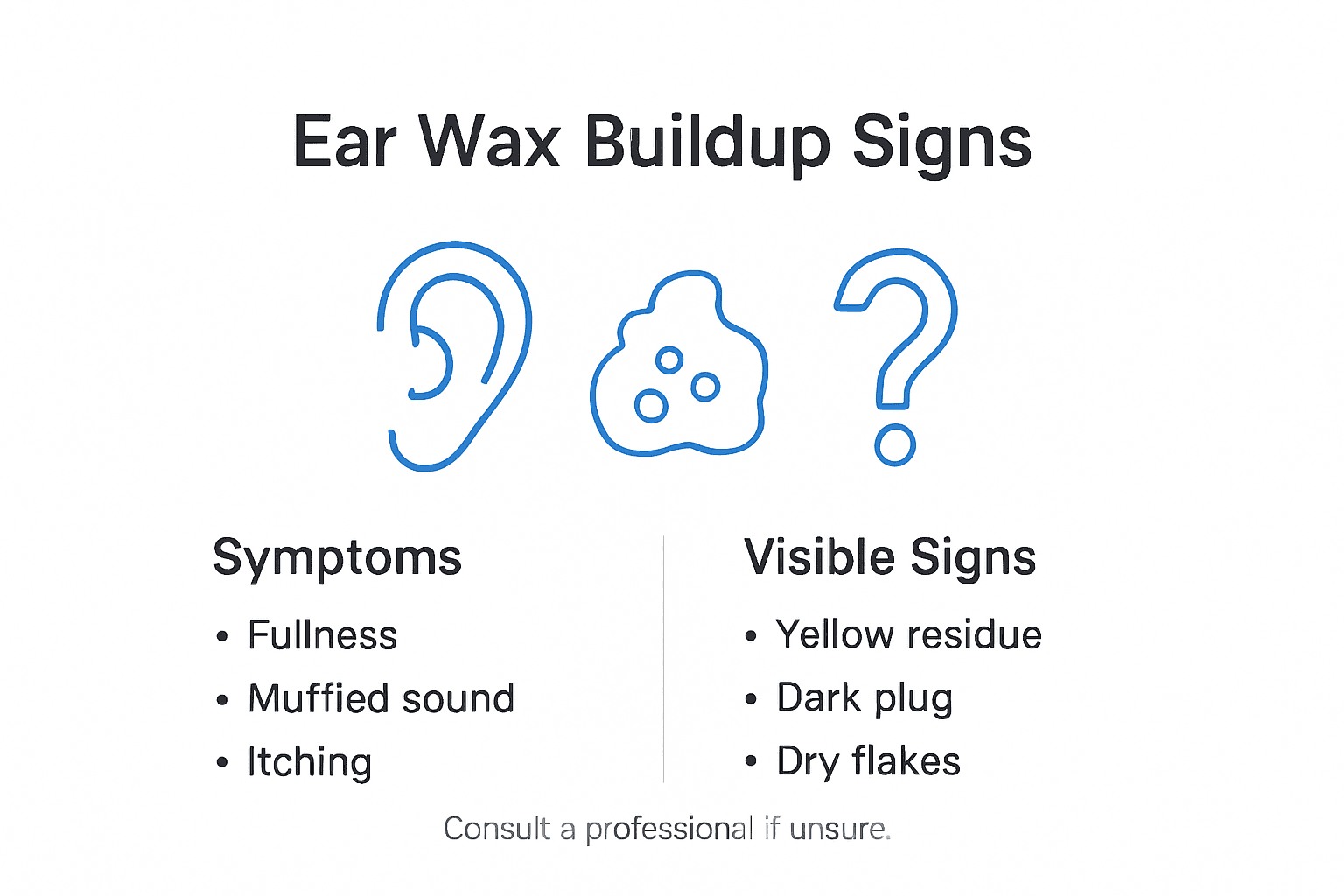
If you notice persistent wax accumulation or experience hearing difficulties, it is crucial to consult a healthcare professional. Some individuals are more prone to ear wax buildup due to factors like narrow ear canals, use of hearing aids, or frequent earphone use. Visual inspection alone cannot determine the full extent of wax accumulation, so professional assessment remains the most reliable method.
Top tip: Use natural light when examining ears and avoid using cotton swabs or sharp objects that might push wax deeper into the ear canal.
Step 3: Assess common symptoms affecting hearing and comfort
Identifying the subtle and sometimes not so subtle signs of ear wax buildup requires careful attention to your body’s signals. Understanding the range of symptoms caused by ear wax blockage can help you recognise when professional intervention might be necessary.
Pay close attention to changes in your hearing and overall ear comfort. Common symptoms include a persistent feeling of fullness in the ear, noticeable reduction in hearing clarity, and unexpected sensations like buzzing or ringing sounds known as tinnitus. You might also experience mild earaches, occasional dizziness, or an unusual sensation of pressure within the ear canal. Some individuals report a mild cough triggered by nerve stimulation or detect an unexpected ear odour that suggests potential wax accumulation beyond normal levels.

Children and adults with hearing aids or frequent earphone users may be more susceptible to these symptoms. While not every ear sensation indicates a serious problem, persistent discomfort or significant hearing changes warrant professional medical assessment. Trust your body’s signals and seek expert advice if these symptoms interfere with your daily activities or cause consistent discomfort.
Top tip: Keep a symptom diary to track the frequency and intensity of ear-related discomfort, which can provide valuable information for healthcare professionals.
Step 4: Verify with gentle observation and safe techniques
Confirming ear wax buildup requires a delicate approach that prioritises your ear health and safety. Understanding gentle verification methods for ear wax assessment can help you navigate potential wax accumulation without causing additional complications.
Begin with soft interventions designed to provide insight without invasive techniques. Warm mineral oil or a diluted hydrogen peroxide solution can help soften ear wax, making it easier to observe potential blockages. Gently introduce a few drops into the ear canal and allow them to sit for several minutes. Tilt your head to let the solution work naturally, but avoid aggressive movements that might cause dizziness. After a short period, carefully rinse the ear with warm water using a soft stream that does not create sudden pressure.
Pay close attention to any changes in your ear’s condition during this process. Watch for signs of wax softening or partial removal, but remain cautious about attempting complete wax extraction yourself. Any persistent blockage or discomfort should prompt a consultation with a healthcare professional who can perform a safe and thorough examination. Remember that professional ear care specialists are trained to handle complex wax buildup scenarios with precision and expertise.
Top tip: Always use lukewarm liquids when attempting any at home ear softening techniques to prevent potential thermal shock or discomfort.
Step 5: Book a professional assessment for lasting reassurance
Taking the final step towards comprehensive ear health involves scheduling a professional assessment with trained specialists who can provide precise and safe ear wax management. Understanding the benefits of professional ear wax removal techniques ensures you receive expert care tailored to your specific needs.
When booking your appointment, prepare relevant information about your ear health history. Professional clinicians will typically use specialised tools such as curettes, suction equipment, or gentle irrigation methods to remove ear wax safely. These procedures are performed with precision to protect your ear canal and eardrum from potential damage. Be prepared to discuss any recurring symptoms, previous ear issues, or specific concerns you may have about your hearing and ear health.
For individuals with recurrent ear wax buildup or those using hearing aids, regular professional cleanings might be recommended. Your healthcare provider can assess your individual requirements and develop a personalised ear care strategy. By choosing professional assessment, you are prioritising your long term ear health and ensuring comprehensive care that goes beyond simple wax removal.
The following table compares ear wax removal techniques and their suitability in different scenarios:
Technique | Best For | Potential Risks | Professional Use |
Olive oil drops | Softening minor wax | Rare allergic reaction | Sometimes |
Irrigation | Moderate blockages | Eardrum injury, infection | Yes |
Curette removal | Hardened deposits | Canal abrasion | Yes |
Cotton swabs | Not recommended | Wax pushed deeper, injury | No |
Here is a summary of common methods for self-assessment versus professional ear wax examination:
Method | Self-Assessment | Professional Assessment |
Tools Used | Visual inspection, softeners | Specialist equipment, medical instruments |
Safety Level | Lower, risk of irritation | Higher, trained personnel |
Accuracy | Limited to visible signs | Comprehensive, entire ear canal |
When Appropriate | Mild discomfort, monitoring | Persistent symptoms, hearing loss |
Top tip: Bring a list of current medications and any recent ear related symptoms to your appointment to help healthcare professionals provide the most accurate assessment possible.
Expert Ear Wax Care You Can Trust
If you have noticed signs of ear wax buildup such as muffled hearing, a feeling of fullness, or discomfort discussed in the article, you are not alone. These common but troubling symptoms highlight the importance of safe and accurate assessment to avoid further complications. At EARS Clinics, we understand that natural self-checks and home remedies are a starting point but often require professional expertise to ensure effective and pain-free removal.

Take control of your ear health today by booking a consultation with our NHS-accredited Aural Care Specialists in Glasgow or Edinburgh. With advanced techniques like microsuction and irrigation, we offer swift, safe treatments without long NHS waiting times. Visit EARS Clinics for convenient appointment options including same-day bookings and home visits. Do not let ear wax buildup affect your hearing longer than necessary - expert help is just a click away. Learn more about why professional care is safer and more thorough by exploring our professional ear wax removal services. Ensure your ears receive the specialist attention they deserve now.
Frequently Asked Questions
How can I naturally identify ear wax buildup?
To naturally identify ear wax buildup, regularly check for visible signs like light brown or yellowish wax at the ear opening. Look for symptoms such as muffled hearing or a feeling of fullness in the ear to assess if there may be excessive wax.
What should I do if I notice signs of ear wax accumulation?
If you notice signs of ear wax accumulation, it’s recommended to apply a few drops of warm mineral oil or diluted hydrogen peroxide in the ear before an examination. This can help soften the wax, making it easier to observe and manage potential blockages.
How can I make my ear examination environment comfortable?
To create a comfortable environment for an ear examination, choose a clean, well-lit space with minimal distractions and a moderate temperature. Sit comfortably in a chair with good visibility of the ear and ideally use natural light for the best results.
What are common symptoms of ear wax blockage?
Common symptoms of ear wax blockage include a persistent feeling of fullness in the ear, reduced hearing clarity, and sensations like buzzing or ringing sounds. If you experience these, consider monitoring changes closely to determine if professional assessment is needed.
How should I safely verify ear wax buildup at home?
To safely verify ear wax buildup at home, gently apply warm mineral oil or a diluted hydrogen peroxide solution into the ear canal and allow it to sit for several minutes. Follow this by carefully rinsing the ear with warm water, taking care to avoid sudden pressure.
When should I seek professional help for ear wax issues?
If you experience persistent discomfort, significant hearing changes, or frequent ear wax buildup, it’s advisable to consult a healthcare professional. Regular check-ups can help you maintain optimal ear health and prevent complications.
Recommended