
How Ear Wax Forms – What Triggers Build-Up

Most people never realize how much their ear wax reveals about their health until a problem appears. For many British adults, issues with wax buildup or discomfort in the ear canal are surprisingly common, affecting comfort and even hearing. In fact, ear wax is a vital, natural defense that protects your ear from infection and injury. Understanding its purpose and how your ear produces and manages wax can help you make smarter choices for ear care and avoid unnecessary complications.
Key Takeaways
Point | Details |
Ear Wax Functions | Ear wax is essential for ear health, trapping contaminants and preventing infections while maintaining moisture in the ear canal. |
Types of Ear Wax | The two main types are wet and dry, driven by genetic factors, with varying characteristics across populations. |
Factors Affecting Production | Ear wax production is influenced by genetics, hormonal changes, and environmental factors, which can alter consistency and volume. |
Professional Removal Recommended | Professional ear wax removal is safer than DIY methods, reducing the risk of complications and ensuring comprehensive ear health evaluation. |
Ear Wax Formation and Its Natural Role
Ear wax, medically known as cerumen, is a remarkable biological substance produced by specialised glands within the ear canal. Its complex protective mechanism serves as a critical defence system for our hearing apparatus, performing multiple essential functions that maintain ear health.

The human ear canal contains specialised sebaceous and ceruminous glands that continuously generate ear wax through a sophisticated self-cleaning process. These glands produce a waxy, oily substance that combines with shed skin cells and moves gradually outward, creating a natural barrier against external contaminants. Ear wax traps dust, debris, and potential pathogens, preventing them from penetrating deeper into the sensitive inner ear structures.
Beyond its physical protective qualities, ear wax possesses remarkable antibacterial properties. The slightly acidic environment it creates inhibits bacterial and fungal growth, reducing the risk of potential ear infections. Its unique composition also helps maintain optimal ear canal moisture, preventing excessive dryness that could lead to irritation or discomfort. The systematic migration of epithelial cells ensures that accumulated wax and trapped debris are naturally expelled from the ear, maintaining a clean and healthy auditory environment.
Key protective functions of ear wax include:
Trapping external particles and microorganisms
Creating an acidic environment that discourages bacterial growth
Lubricating the ear canal to prevent dryness
Providing a natural barrier against insects and environmental pollutants
Types of Ear Wax and Their Differences
Ear wax is not a uniform substance, but rather a complex biological material with notable variations across different populations and individuals. Researchers have identified two primary types of ear wax, each with distinctive characteristics that reflect genetic and ethnic differences.
The two main types of ear wax are wet and dry, which differ significantly in their physical properties and genetic origins. Wet ear wax, predominant among people of European and African descent, appears soft and sticky, typically ranging from yellow to brown in colour. This variant is more fluid and tends to be more prevalent in regions with warmer climates. Conversely, dry ear wax, characteristic of populations with Asian genetic backgrounds, presents as a flaky, gray or tan substance that is considerably less moisture-dense.
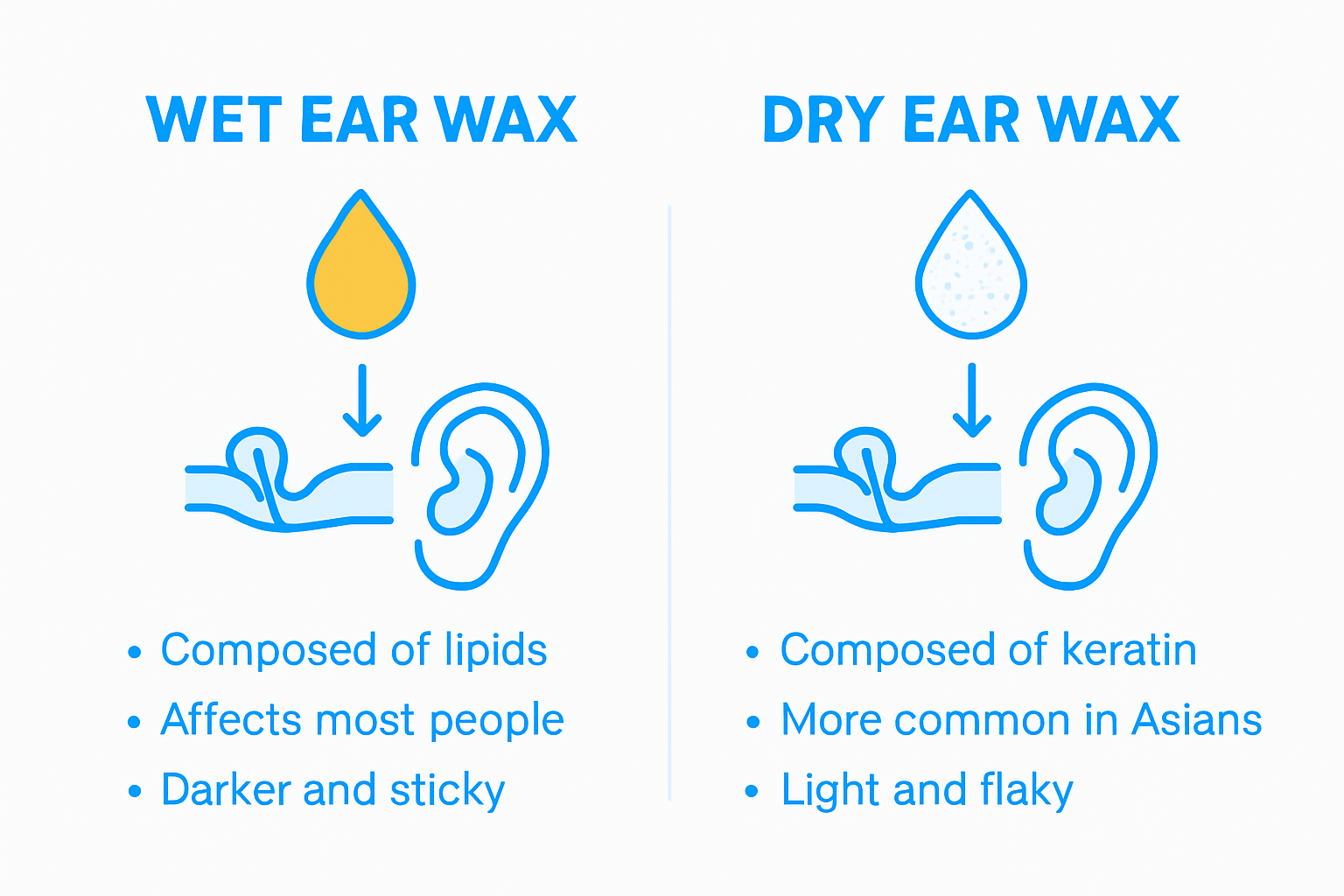
Genetic research has revealed that these variations are not random but are linked to specific genetic mutations. The type of ear wax an individual produces is determined by a single gene, demonstrating how intricate genetic inheritance can manifest in seemingly mundane biological characteristics. These differences extend beyond mere appearance, potentially reflecting broader evolutionary adaptations to different environmental conditions.
Key characteristics of ear wax types include:
Wet ear wax: Soft, sticky texture
Wet ear wax: Yellow to brown colour
Dry ear wax: Flaky, powdery consistency
Dry ear wax: Gray or tan appearance
Genetic determination of type
Correlation with specific ethnic backgrounds
Interestingly, clinical observations suggest that ear wax type can also provide insights into potential health conditions, making it more than just a protective ear secretion but also a potential diagnostic indicator.
Factors That Influence Wax Production
Genetic predisposition plays a fundamental role in determining ear wax characteristics and production levels. Specific polymorphisms in the ABCC11 gene directly influence whether an individual produces wet or dry ear wax, demonstrating the intricate connection between genetic inheritance and biological secretions.
Beyond genetic factors, multiple environmental and physiological elements contribute to ear wax production. Research indicates that age, diet, and environmental conditions significantly impact wax composition and volume. Hormonal changes during puberty and ageing can alter glandular activity, leading to variations in ear wax consistency and quantity. Environmental factors such as humidity, temperature, and exposure to dust or pollutants may also trigger increased wax production as a protective mechanism.
Individual lifestyle and health conditions can further modulate ear wax characteristics. Factors such as stress levels, nutritional intake, and underlying medical conditions can influence glandular secretions. Certain medications, particularly those affecting hormonal balance or immune responses, might also impact ear wax production. Individuals with specific genetic backgrounds or ethnic origins may experience more pronounced variations in wax production and texture.
Key factors influencing ear wax production include:
Genetic polymorphisms
Hormonal changes
Age-related glandular modifications
Environmental exposure
Dietary influences
Stress levels
Underlying health conditions
Medication interactions
Symptoms and Complications of Excess Wax
Ear wax impaction represents a significant health concern that can manifest through various distressing symptoms. Clinical research has identified multiple complications arising from excessive ear wax accumulation, which can profoundly impact an individual’s auditory and overall sensory experience.
Individuals with impacted ear wax may experience a range of symptoms including hearing loss, ear pain, tinnitus, and unexpected dizziness. The complexity of these symptoms often depends on the extent of wax accumulation and individual anatomical variations. Hearing aids users and people with naturally narrow ear canals are particularly susceptible to wax impaction, which can create a cascading effect of auditory and balance-related complications.
Beyond immediate sensory disruptions, prolonged ear wax impaction can lead to more serious health risks. Persistent blockage increases the likelihood of bacterial and fungal infections, potentially causing inflammation of the ear canal. The accumulated wax creates a moist environment conducive to microbial growth, which can result in painful ear infections, reduced hearing acuity, and in rare cases, more severe complications that might require medical intervention.
Key symptoms of excess ear wax include:
Gradual or sudden hearing loss
Persistent ear pain
Ringing or buzzing sounds (tinnitus)
Sensation of ear fullness
Dizziness or balance problems
Increased ear infections
Reduced hearing aid effectiveness
Potential sound distortion
Risks of DIY Removal Versus Professional Care
Home ear cleaning often seems straightforward, but can lead to serious complications that professional practitioners are trained to prevent. Attempting to remove ear wax using household objects like cotton swabs can inadvertently push wax deeper into the ear canal, creating potentially permanent damage to delicate auditory structures.
The risks associated with amateur ear wax removal are multifaceted and can result in significant medical complications. Untrained individuals might unintentionally rupture the eardrum, cause severe infections, or create micro-abrasions within the ear canal. Professional clinicians use specialised equipment and possess in-depth anatomical knowledge, enabling them to safely navigate the ear’s intricate structures while minimising potential trauma.
Professional ear wax removal offers multiple advantages over home remedies. Trained healthcare specialists can accurately assess individual ear health, determine the most appropriate removal technique, and address any underlying conditions. They utilise precise methods like microsuction, irrigation, and manual instrumentation, which are far more controlled and safer than improvised home techniques. Moreover, professional practitioners can identify potential infections, structural abnormalities, or early signs of hearing impairment during the procedure.
Key differences between DIY and professional ear wax removal include:
Risk of permanent hearing damage
Potential for serious ear canal infections
Lack of proper diagnostic assessment
Inappropriate removal techniques
Absence of specialised medical equipment
No comprehensive ear health evaluation
Higher likelihood of complications
Increased potential for long-term hearing issues
Manage Ear Wax Build-Up Safely with Expert Care
If you are noticing symptoms such as hearing loss, ear discomfort, or a feeling of ear fullness caused by wax build-up, you are not alone. As the article explains, ear wax plays a vital protective role but can sometimes accumulate to cause significant problems. Avoid the risks of home removal attempts that may worsen symptoms or cause injury. Instead, trust professional ear wax removal services that understand the complex nature of cerumen and its impact on your ear health.

Choose EARS Clinics in Glasgow or Edinburgh for NHS-accredited, safe, and effective ear wax removal. Our skilled Aural Care Specialists use advanced techniques such as microsuction and irrigation to gently clear excess wax. We offer quick same-day appointments, in-clinic visits, and convenient home visits for all ages. Take control of your ear health today and experience relief with expert care. Book your appointment now to avoid complications and enjoy clearer hearing immediately.
Frequently Asked Questions
What is the role of ear wax in ear health?
Ear wax, or cerumen, plays a vital role in ear health by trapping dust, debris, and microorganisms, preventing them from entering the inner ear. It also maintains moisture, creates an acidic environment that inhibits bacterial growth, and serves as a barrier against environmental pollutants.
What are the main types of ear wax?
There are two primary types of ear wax: wet and dry. Wet ear wax is common in individuals of European and African descent and is soft and sticky, typically yellow or brown in colour. Dry ear wax, found in populations of Asian descent, is flaky and powdery, often grey or tan.
What factors influence ear wax production?
Ear wax production is influenced by several factors, including genetic predisposition, hormonal changes, age, environmental conditions, and individual lifestyle choices such as diet and stress levels.
What symptoms indicate excessive ear wax build-up?
Symptoms of excessive ear wax build-up include gradual or sudden hearing loss, ear pain, tinnitus (ringing in the ears), a sensation of fullness in the ear, dizziness, and increased susceptibility to ear infections.
Recommended