
Guide to Safe Microsuction for Effective Ear Care

Over one in ten British adults experience blocked ears caused by ear wax at some point, yet many overlook the earliest telltale signs. Ignoring subtle symptoms such as muffled hearing or a sense of fullness can lead to discomfort and risk of infection. Understanding how to recognise and address ear wax build-up helps safeguard your hearing and empowers you to seek professional care before small issues become bigger problems.
Quick Summary
Essential Insight | Explanation |
1. Recognise ear wax symptoms early | Symptoms such as fullness, mild hearing loss, and discomfort help identify ear wax build-up and allow prompt management. |
2. Prepare for your microsuction appointment | Use olive oil drops beforehand and inform the clinic of any prior ear conditions for optimal results during the procedure. |
3. Ensure practitioners’ qualifications and clinic standards | Verify that specialists are properly trained and clinics comply with health regulations to guarantee safe ear care. |
4. Understand what happens during microsuction | The procedure involves a comprehensive examination and gentle wax removal with minimal discomfort, usually lasting 15-30 minutes. |
5. Follow up with tailored aftercare advice | Discuss personalised recommendations post-procedure to maintain ear health and prevent future issues effectively. |
Step 1: Recognise symptoms indicating ear wax build-up
Identifying ear wax build-up early can help prevent potential hearing complications and discomfort. Understanding the subtle signs allows you to seek professional ear health management before problems escalate.

The primary symptoms of excessive ear wax accumulation include a persistent feeling of fullness in your ear, mild hearing difficulties, and occasional ear discomfort. More specifically, you might experience hearing loss or tinnitus which can manifest as ringing or buzzing sounds. Some individuals also report experiencing dizziness, ear itchiness, or a noticeable decrease in sound clarity.
Warning signs that require immediate professional attention include sharp ear pain, significant hearing loss, unexpected discharge with an unusual odour, or persistent balance problems. These symptoms could indicate a more serious underlying condition beyond simple ear wax build-up and warrant a professional assessment by a trained Aural Care Specialist.
Step 2: Prepare for your safe microsuction appointment
Preparing for your microsuction appointment requires some simple yet important steps to ensure a smooth and effective ear wax removal process. Your primary goal is to help your practitioner perform a safe and comfortable procedure that addresses your specific ear health needs.
First, apply olive oil ear drops for at least two to three days before your appointment to soften the ear wax, making removal easier. Check that your chosen clinic has practitioners registered with appropriate regulatory bodies, which ensures they meet professional healthcare standards. When scheduling, inform the clinic about any pre existing ear conditions, recent ear infections, or perforated eardrums that might impact the procedure.
On the day of your appointment, arrive with clean ears and avoid inserting any objects into your ear canal. Wear comfortable clothing and be prepared to sit still during the procedure. Remember that professional microsuction is a precise technique performed by trained specialists who use specialised equipment to safely remove ear wax while minimising potential discomfort or risks.
Step 3: Understand practitioner safeguards and clinic standards
Ensuring your safety during ear wax removal begins with understanding the critical safeguards and professional standards that protect patients during microsuction procedures. This step is about recognising the hallmarks of a reputable and trustworthy ear care service.
Practitioners performing microsuction must be highly trained professionals including ENT surgeons, doctors, nurses, or audiologists who have received specific certification and are registered with recognised regulatory bodies. These healthcare professionals undergo rigorous training to ensure they can perform delicate ear procedures safely and effectively, minimising risks and potential complications.
A professional clinic should demonstrate clear evidence of regulatory compliance, including registration with Healthcare Improvement Scotland or the Care Quality Commission, maintained equipment standards, and transparent patient consultation processes. Look for clinics that provide comprehensive patient assessments, explain procedures thoroughly, and have clear protocols for managing potential medical complications. Your safety and comfort should always be their primary concern, with practitioners who communicate clearly, listen to your medical history, and adapt their approach to your individual ear health needs.
Step 4: Experience microsuction performed by specialists
Understanding what to expect during a professional microsuction procedure will help you feel more comfortable and prepared for your ear wax removal appointment. This step focuses on guiding you through the actual microsuction experience with trained healthcare specialists.
When you arrive for your appointment, a specialist will first conduct a comprehensive ear examination using specialised equipment to assess the condition of your ear canal and ear wax. Microsuction specialists will use a precise microscope and gentle suction device to carefully remove wax, ensuring minimal discomfort and maximum effectiveness. The procedure typically takes between 15 to 30 minutes and involves you sitting comfortably while the practitioner works methodically to clear your ear canal.
During the procedure, you might hear soft suction sounds and feel slight pressure, but the process should not be painful. The specialist will communicate with you throughout, explaining each step and ensuring your comfort. After the microsuction is complete, they will conduct a final check to confirm successful wax removal and discuss any follow up recommendations for maintaining your ear health.
Step 5: Verify ear canal clarity and receive tailored aftercare
The final stage of your microsuction journey involves confirming the effectiveness of the procedure and understanding how to maintain optimal ear health moving forward. This step ensures you leave the clinic with clear ears and personalised guidance for future ear care.
After the microsuction procedure, your specialist will conduct a thorough examination using a specialised otoscope to verify complete ear wax removal and assess your ear canal’s overall condition. They will discuss any observations and provide personalised ear health recommendations specific to your individual needs. These might include guidance on preventing future wax build up, techniques for safe ear cleaning, and advice on potential lifestyle or environmental factors affecting your ear health.
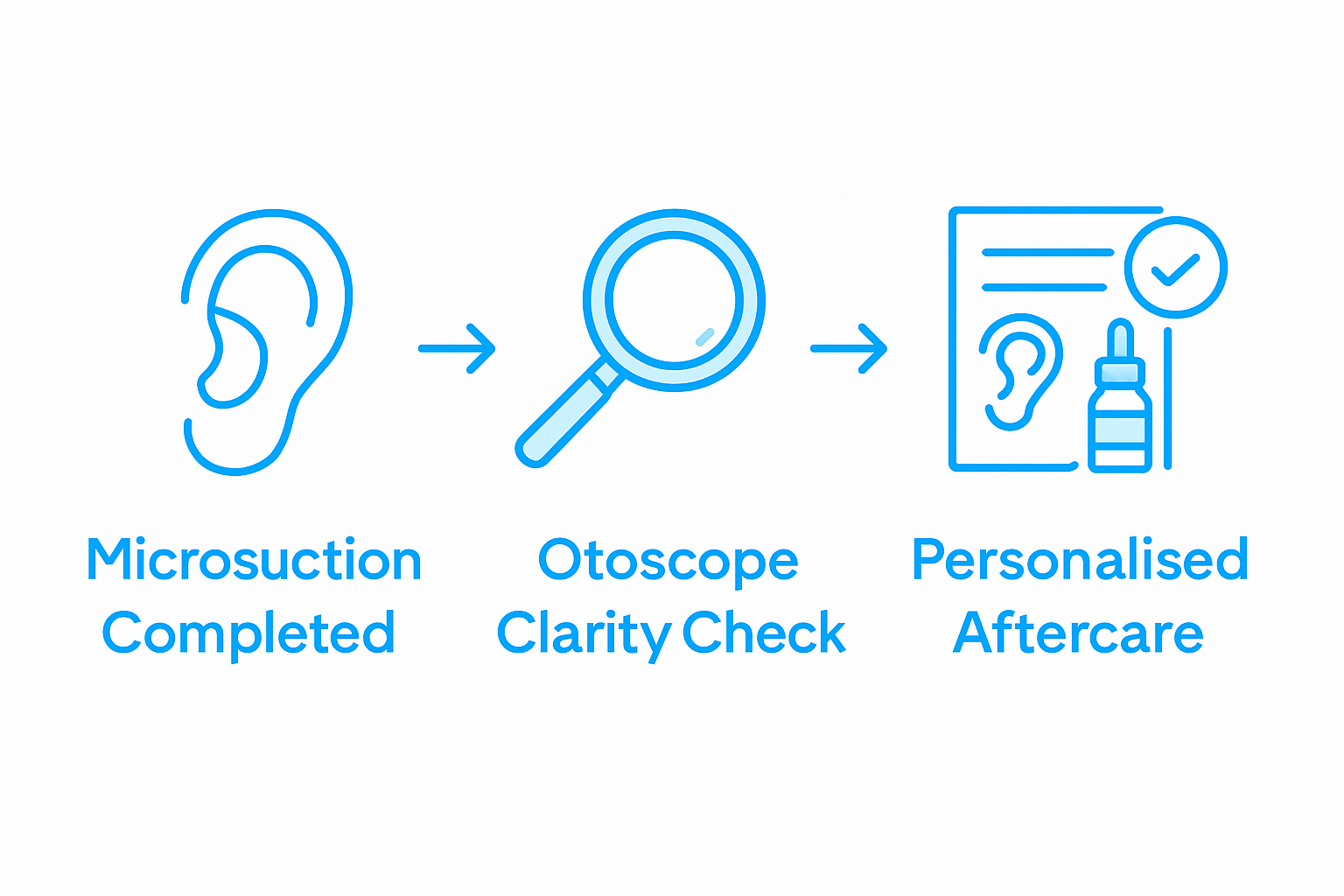
Your specialist may recommend follow up appointments depending on your ear health history, suggest periodic olive oil treatments, or provide specific instructions if you have recurring ear wax issues. They will also be available to answer any questions you might have about ear hygiene, potential symptoms to watch for, and when to seek professional intervention. Remember that ongoing communication with your ear care professional is key to maintaining long term ear health and preventing potential complications.
Take Control of Your Ear Health with Expert Microsuction Services
If you have noticed symptoms like ear fullness, hearing difficulties, or discomfort described in the “Guide to Safe Microsuction for Effective Ear Care”, professional microsuction could be the safe and effective solution you need to restore your hearing clarity and comfort. At EARS Clinics, we understand how frustrating and worrying ear wax build-up can be, especially when waiting times and treatment conditions cause delays in relief.
Choose a trusted provider specialising in NHS-accredited ear wax removal services in Glasgow and Edinburgh. Our trained Aural Care Specialists follow strict safety protocols and use advanced microsuction techniques to gently and precisely clear your ear canal. Book an appointment today at https://earhealthservice.co.uk for convenient in-clinic visits, same-day appointments, or home visits. Don’t let ear wax block your hearing or cause discomfort any longer. Immediate, professional care is just a click away.
Frequently Asked Questions
What symptoms indicate that I may have an ear wax build-up?
Excessive ear wax build-up can lead to a persistent feeling of fullness, mild hearing difficulties, and ear discomfort. If you experience symptoms like tinnitus, dizziness, or noticeable changes in sound clarity, seek professional advice.
How can I prepare for my microsuction appointment?
To ensure a smooth microsuction procedure, apply olive oil ear drops for two to three days before your appointment to soften the wax. Additionally, communicate any pre-existing ear conditions to your clinic when booking your appointment.
What should I expect during the microsuction procedure?
During a microsuction appointment, a specialist will first examine your ears with specialised equipment. The wax removal process typically takes 15 to 30 minutes, with you experiencing minimal discomfort and clear communication from the practitioner throughout.
How can I ensure optimal ear health after microsuction?
Following the microsuction procedure, your specialist will provide personalised recommendations for maintaining ear health. This may include advice on preventing future wax build-up and safe ear cleaning techniques.
What safeguards should I look for in a microsuction clinic?
Choose a clinic with practitioners who are registered with appropriate regulatory bodies and have undergone specific training for microsuction. Also, verify that the clinic complies with necessary healthcare standards and maintains clear patient consultation processes.
When should I seek professional help for ear symptoms?
If you experience sharp ear pain, significant hearing loss, unusual discharge, or persistent balance issues, seek professional help immediately. These symptoms may indicate more serious underlying conditions that require prompt assessment.
Recommended