
The Essential Guide to Ear Wax Removal Myths
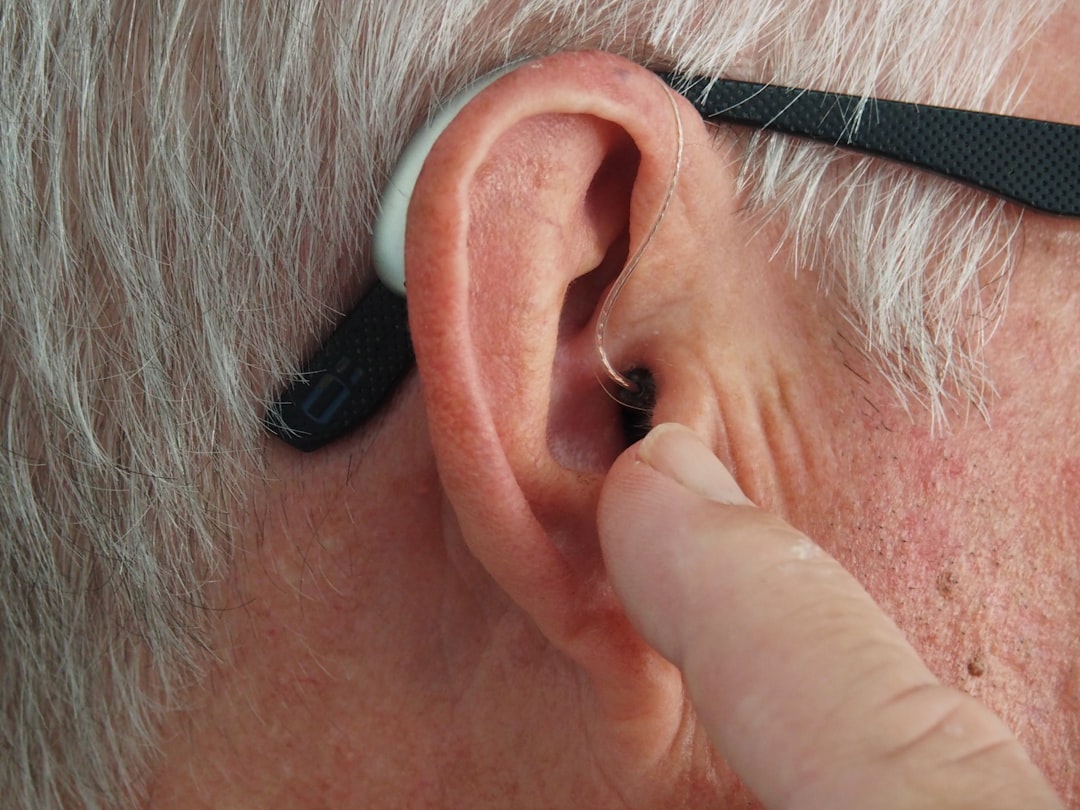
Most british adults have heard at least one myth about ear wax, yet few realise that over 90 percent of ear injuries linked to self-cleaning come from using cotton buds or similar objects. Ear wax often sparks confusion, with many people worried it signals poor hygiene or requires constant removal. Understanding the real function of cerumen and recognising how unsafe practices can harm your ears will help you avoid unnecessary risks and keep your hearing healthy.
Key Takeaways
Point | Details |
Understanding Ear Wax | Ear wax is a natural protection mechanism for ear health, not an indicator of poor hygiene. |
Risks of Self-Removal | Home remedies, like cotton buds and ear candling, can cause serious damage and are discouraged. |
Professional Removal Techniques | Trusted healthcare providers use safe methods like microsuction and cerumenolytics for effective ear wax management. |
Choosing Regulated Services | Select accredited ear care services that adhere to established medical standards for safe treatment. |
Defining Ear Wax and Common Misconceptions
Ear wax, scientifically known as cerumen, is a fascinating natural substance that plays a crucial protective role in our ear health. According to Wikipedia, ear wax is a complex secretion within the ear canal composed of fatty acids, alcohols, squalene, and cholesterol, designed to safeguard our ears against potential environmental threats.
Contrary to popular belief, ear wax is not a sign of poor hygiene but a sophisticated self-cleaning mechanism. Hospital Health highlights that many people mistakenly think ear wax should be regularly removed, when in reality, it serves several critical functions:
Traps dust, debris, and microorganisms
Prevents bacterial and fungal infections
Lubricates and protects the delicate ear canal skin
Helps maintain proper ear canal pH balance
Acts as a natural water-resistant barrier
The most persistent myth about ear wax is that it indicates uncleanliness. This misconception leads many individuals to engage in harmful practices like using cotton buds or other objects to “clean” their ears. In fact, these actions can cause more harm than good by pushing wax deeper, potentially damaging the ear canal or eardrum. Is Ear Wax Removal Safe? What You Need to Know provides comprehensive insights into safe ear wax management for those experiencing excessive build-up.
Understanding ear wax as a natural, protective substance is crucial. Your ears are remarkably self-regulating organs that typically manage wax production and removal without external intervention. Only in cases of significant blockage or discomfort should professional medical assistance be sought for safe, gentle ear wax removal.
Popular Home Remedies: Myths Versus Evidence
Many individuals turn to DIY methods for ear wax removal, often based on long-standing misconceptions about ear health. Leightons warns that one of the most dangerous home remedies involves using cotton buds, which can actually push ear wax deeper into the ear canal, potentially causing serious complications like impaction or injury.
Another misguided home treatment gaining popularity is ear candling, a practice that sounds more like folkloric magic than medical science. Wikipedia definitively states that this method is not only ineffective but potentially hazardous. The technique involves placing a hollow candle in the ear canal and lighting it, supposedly to extract wax, but medical research has comprehensively debunked this approach:
Provides zero evidence of wax removal
Risks significant burn injuries
Can obstruct the ear canal
Creates potential for serious ear damage
Lacks any scientific medical validation
Other common but dangerous home remedies include using hairpins, paperclips, or other sharp objects to “clean” ears, attempting hydrogen peroxide irrigation without professional guidance, or using unregulated over-the-counter ear drops without understanding their composition.
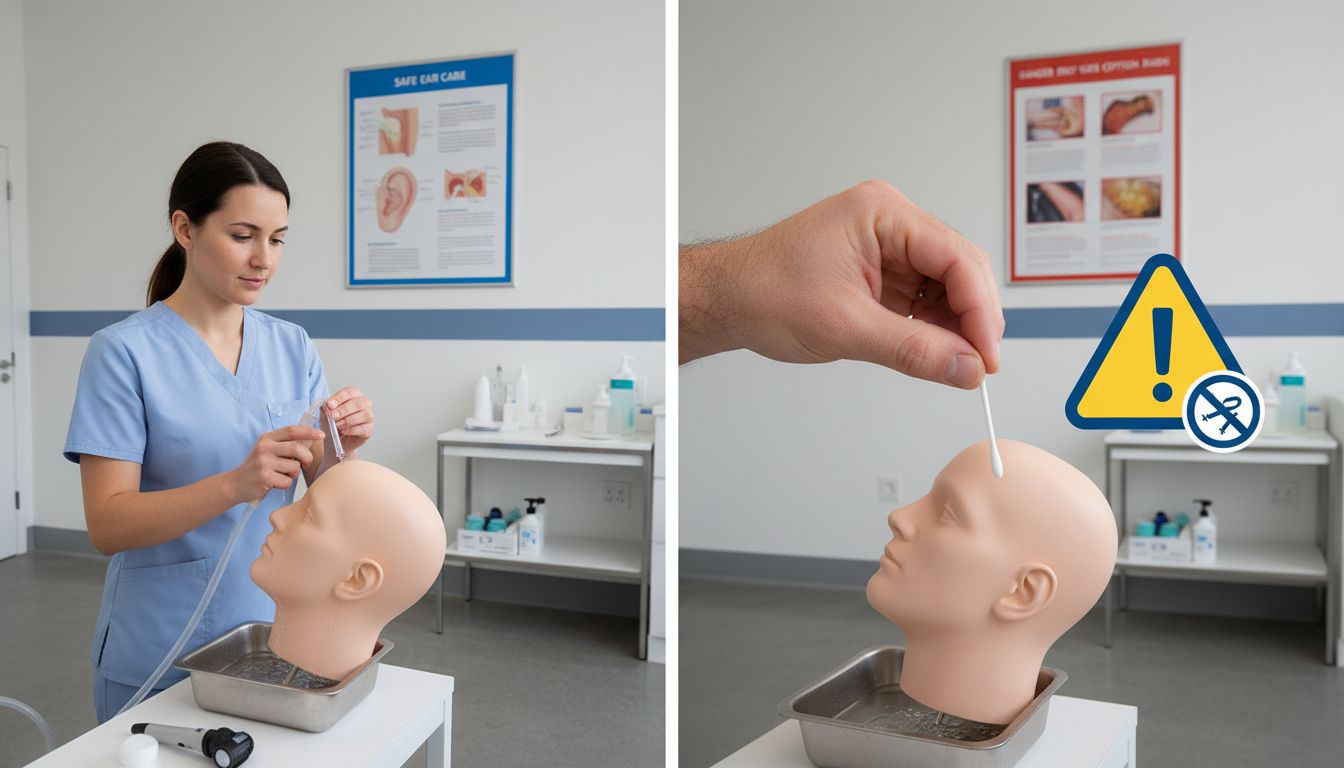
These methods can cause permanent hearing damage, introduce infections, or create painful complications. 5 Common Myths About Ear Health Debunked offers comprehensive insights into why professional assessment is crucial.
The golden rule for ear wax management is simple: when in doubt, seek professional help. Trained healthcare professionals can safely assess your specific ear health needs, using specialised techniques like microsuction or professional irrigation that protect your ear’s delicate structures while effectively managing excessive wax build-up.
Professional Techniques: What the Experts Use
Science Daily highlights that professional ear wax removal requires specialised techniques far beyond home remedies. Healthcare professionals employ carefully selected methods to safely manage ear wax, prioritising patient safety and effective cerumen management through precise, controlled interventions.
One critical professional approach involves cerumenolytics, chemical agents designed to soften and break down ear wax. Wikipedia explains that substances like hydrogen peroxide and carbamide peroxide are strategically used to facilitate wax removal. These professional-grade solutions offer several distinct advantages:
Targeted wax dissolution
Minimally invasive approach
Controlled chemical breakdown
Reduced risk of physical ear canal trauma
Precise application by trained professionals
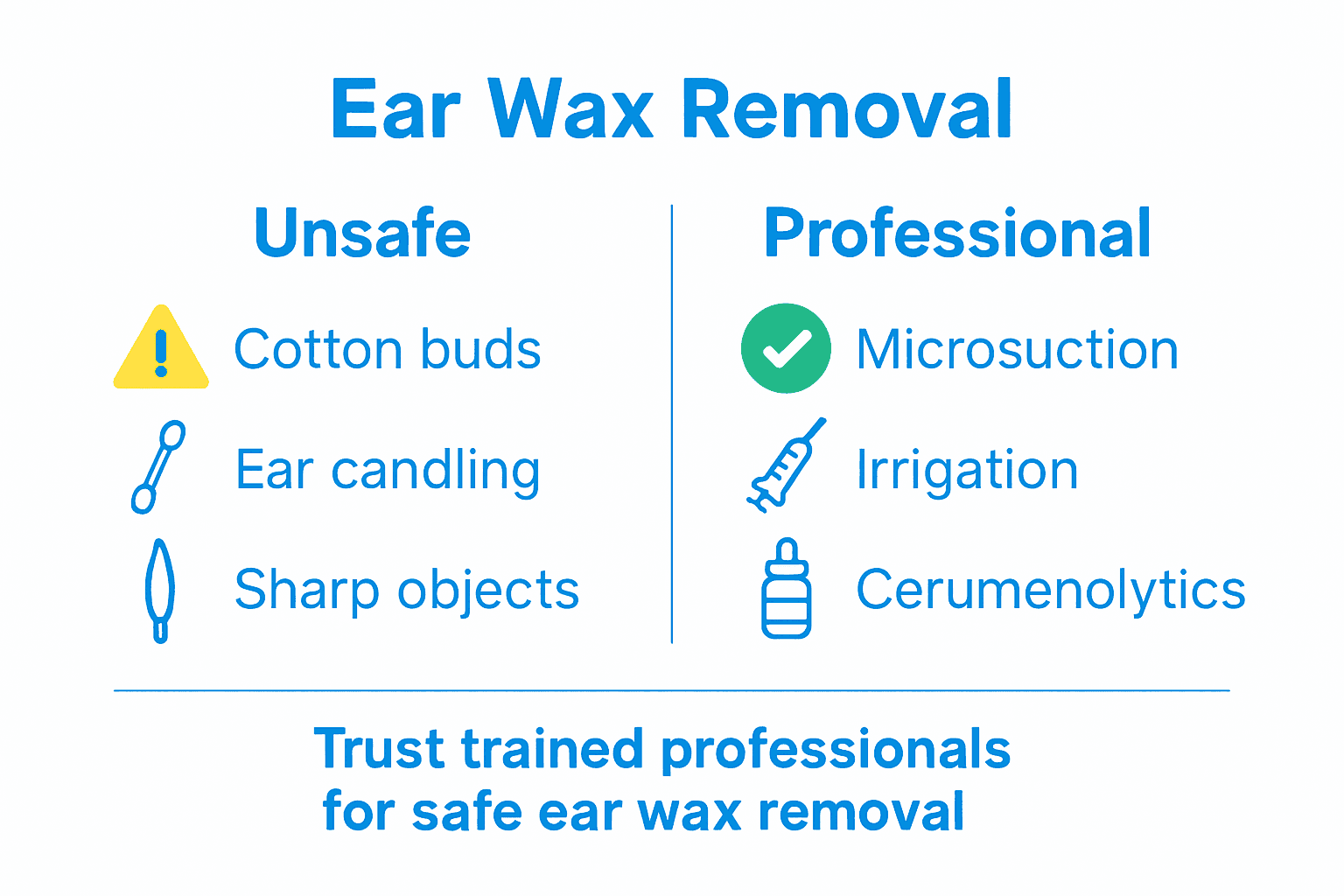
Professional ear wax removal techniques typically include three primary methods: microsuction, irrigation, and manual instrumentation.
VIDEO:video_content] Microsuction, now recommended by NICE guidelines, uses specialised microscopic suction to gently and precisely remove wax without introducing liquid into the ear canal. Irrigation involves carefully controlled water pressure to flush out softened wax, while manual instrumentation uses specialised tools under direct visual guidance to extract stubborn wax deposits. [Is Ear Wax Removal Safe? What You Need to Know provides comprehensive insights into these professional techniques.
The key distinction between amateur and professional ear wax removal lies in expertise, precision, and safety. Trained clinicians assess individual ear canal anatomy, wax consistency, and potential complications before selecting the most appropriate removal technique. This personalised approach ensures minimal discomfort and maximum effectiveness, protecting the delicate structures of the ear while addressing excessive wax build-up with surgical precision.
Risks of Incorrect Ear Wax Removal Methods
Hospital Health warns that incorrect ear wax removal methods can lead to serious, potentially irreversible health complications. What might seem like a simple cleaning task can quickly transform into a dangerous medical risk, threatening the delicate structures of your hearing system.
One of the most prevalent and dangerous home practices involves using cotton buds, which Leightons emphasises can cause significant harm. These seemingly innocuous tools can create multiple hazardous scenarios:
Push ear wax deeper into the canal
Create compacted wax blockages
Increase risk of ear infections
Potentially puncture the eardrum
Cause permanent hearing damage
Beyond cotton buds, other risky removal techniques include ear candling, using sharp objects like hairpins or paperclips, and unsupervised irrigation attempts. Each method carries unique risks, from potential burns to introducing dangerous bacteria into the ear canal. Cotton Buds: The Untold Story of Why They Should Not Be In Your Ears provides crucial insights into the dangers of amateur ear cleaning.
The fundamental principle remains clear: ear wax removal is a delicate medical procedure best left to trained professionals. Amateur attempts can transform a simple ear wax issue into a complex medical problem, potentially requiring extensive and costly medical intervention. Trained clinicians understand ear anatomy, use specialised equipment, and can safely remove wax while preserving your hearing health.
Choosing Safe, Regulated Ear Care Services
Science Daily emphasises that professional ear care requires strict adherence to established medical guidelines, highlighting the critical importance of selecting regulated healthcare providers who follow evidence-based practices for ear wax removal.
Choosing a safe ear care service involves understanding the professional standards that distinguish legitimate clinics. Wikipedia notes that regulated services utilise scientifically validated techniques like cerumenolytics, which involve precise chemical agents such as hydrogen peroxide and carbamide peroxide to safely manage ear wax:
Clinicians trained in specific ear care techniques
Use of medically approved removal methods
Adherence to Healthcare Improvement Scotland (HIS) standards
Comprehensive patient risk assessments
Regulated and licensed practitioners
Key considerations when selecting an ear care provider include verifying their professional accreditations, understanding their specific removal techniques, and ensuring they follow national healthcare guidelines. Professional Ear Wax Removal Beats DIY provides essential insights into what separates professional care from dangerous amateur attempts.
The ultimate goal is finding a service that prioritises patient safety, employs advanced, gentle techniques, and maintains transparent communication about potential risks and treatment options. Regulated clinics like EARS Clinics offer comprehensive assessments, multiple removal techniques, and a patient-first approach that protects your long-term ear health.
Trust Professional Ear Wax Removal to Protect Your Hearing
The article reveals common myths and risks linked to DIY ear wax removal, such as using cotton buds or ear candling. These unsafe methods can deepen blockages, cause pain, or permanent damage. If you struggle with symptoms of ear wax build-up or want to avoid the dangers of at-home attempts, expert care is essential. Your ears deserve careful, regulated treatment that respects their delicate nature and safeguards your hearing.
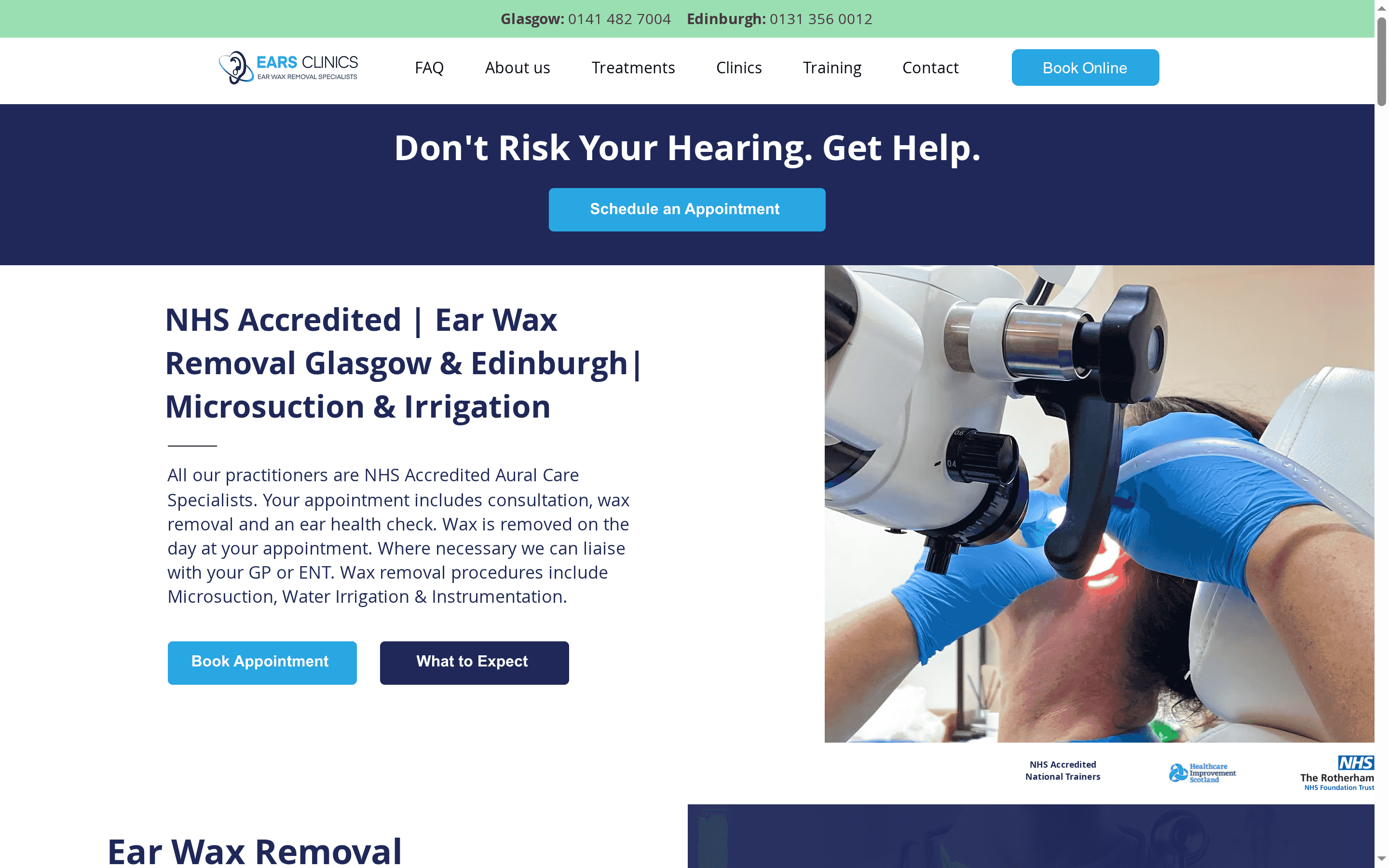
Discover how EARS Clinics offers safe NHS-accredited ear wax removal in Glasgow and Edinburgh delivered by trained Aural Care Specialists. We use advanced techniques such as microsuction and irrigation that provide effective, pain-free relief without risks linked to home remedies. With short waiting times, same-day bookings, and convenient home visits, your ear health can be restored quickly and professionally. Visit EARS Clinics now to book your appointment and experience expert ear care today.
Frequently Asked Questions
What is ear wax and what purpose does it serve?
Ear wax, or cerumen, is a natural substance that protects the ear canal by trapping dust, debris, and microorganisms, preventing infections while lubricating the ear canal skin.
Is ear wax removal necessary for everyone?
No, ear wax is a self-cleaning mechanism and typically does not require removal unless there is significant blockage or discomfort. Most individuals manage wax production naturally.
Why is using cotton buds for ear wax removal discouraged?
Cotton buds can push ear wax deeper into the canal, leading to blockages, infections, or even eardrum perforation. It’s safer to avoid using them for ear cleaning.
What are the professional techniques for safe ear wax removal?
Professional methods include microsuction, irrigation, and the use of cerumenolytics, which are chemical agents that soften wax. These techniques are performed by trained healthcare professionals to ensure safety and effectiveness.
Recommended