
Safety first: ear wax removal in Edinburgh, prices from £60

In Edinburgh, private ear wax removal typically costs about £50 to £100, with the exact fee depending on the clinic, the method used and whether one or both ears need treatment. The clinic charges set fees for adults, children, and for home visits within a specific service area. Most quotes cover an ear examination, clinician assessment and the removal itself, so checking what is included before you book helps you compare providers fairly.
TL;DR:
Private ear wax removal in Edinburgh generally costs between £50 and £60 per appointment, with home visits often exceeding £150 due to travel costs.
Fees can vary based on whether a single or both ears are treated, if a no-wax exam incurs charges, or if a same-day/urgent appointment carries an extra premium.
A typical appointment includes history-taking, ear examination, method selection, treatment often lasting 15 to 30 minutes, and possible follow-up care or photos.
Higher prices usually reflect clinical complexity, equipment costs, or added convenience like home visits, and should be accompanied by a clear, itemized quote.
Only clinics registered with Healthcare Improvement Scotland or the Care Quality Commission can reliably guarantee safe practice and qualified clinicians.
Typical private costs and how clinics charge

Private ear wax removal in the UK generally falls between £40 and £100, and Edinburgh clinics tend to sit within that band, with many local listings around £50 to £60 per appointment. Home visits cost more because of the practitioner’s travel time and portable equipment, often reaching £150 or higher.
The tricky part is that clinics do not all charge the same way, so a lower headline price does not always mean a better deal. Before comparing quotes, it helps to understand the common fee structures you will encounter.
Single fee for both ears: one price covers examination and treatment of both ears in the same visit.
Per-ear fee: some providers charge separately if only one ear needs clearing.
Exam-only or no-wax fee: charged when an examination finds no wax present, even if no removal takes place.
Home-visit premium: a higher fee reflecting travel and equipment costs.
Same-day surcharge: some clinics add a premium for urgent or same-day bookings.
When you request a quote, ask directly whether the price covers both ears, whether there is a separate charge if no wax is found, and whether a follow-up visit would be billed again. These three questions alone clear up most of the confusion around advertised prices.
What a standard appointment covers
A properly run appointment follows a clear clinical sequence, regardless of which clinic you choose. Understanding these steps helps you judge whether a quoted price reflects genuine care or a bare-bones service.
History-taking and otoscopic examination: the clinician reviews your medical history and examines your ear canal before any treatment begins, in line with NHS guidance on ear care.
Method selection: the practitioner chooses between microsuction, irrigation or manual instrumentation based on what they find, not on what the clinic prefers to advertise.
Treatment: the chosen method is carried out, typically taking 15 to 30 minutes for a straightforward case.
Aftercare and optional extras: some clinics include before-and-after photos or a brief follow-up check as part of the fee, while others charge separately.
Microsuction is the method recommended by current NICE guidance for many patients, though irrigation and manual instrumentation remain safe and clinically valid when appropriate. The right method depends on your ear anatomy, the consistency of the wax and any relevant medical history, so a competent clinician will never promise a single technique before examining you.
What makes one quote cost more than another
Prices vary for reasons that are usually legitimate rather than arbitrary. Clinical complexity is the biggest factor: heavily impacted wax, unusual ear canal anatomy, previous ear surgery, and treating children or patients with other health conditions can all take longer and require more skill.
Equipment costs also play a part. A review of the evidence on earwax management notes that irrigation machines are relatively cheap to run while microsuction equipment carries a much higher upfront cost, which can be reflected in the fees clinics charge for that method. Convenience adds a further premium: home visits and same-day appointments both cost more because they require flexible scheduling and portable kit.
Before accepting any quote, run through a short checklist:
Does the price cover one ear or both?
Is there a separate charge if no wax is found?
Would a second visit be billed again?
Is a home-visit or same-day surcharge included in the headline price?
What are the practitioner’s qualifications and regulatory status?
Pro Tip: Ask for a written breakdown of what the quoted price includes before you book, so there are no surprises on the day.
NHS pathways versus private care in Edinburgh
The NHS does not routinely remove earwax for every patient who asks. Local NHS arrangements typically start with a GP assessment, and treatment through community services or a referral to audiology or ENT is usually reserved for cases where wax is causing significant hearing loss or is blocking the view needed for a medical examination.
Local NHS Lothian guidance sets out contact points and referral routes for ear care, but availability and waiting times vary by GP practice. This is one reason many people in Edinburgh choose to pay privately rather than wait.
Speed: private clinics often offer same-day or next-day appointments, compared with a GP referral pathway that can take weeks.
Home visits: private providers can treat patients who struggle to travel, an option not typically available through NHS community services.
No pre-treatment conditions: some private clinics accept bookings without requiring weeks of prior ear drop use, which NHS pathways sometimes ask for before referral.
Whichever route you choose, treatment should only be carried out by trained clinicians who follow recognised safety standards.
How to prepare for your appointment
A little preparation reduces the chance of an incomplete treatment or a repeat visit. Local guidance recommends softening the wax with drops such as olive oil in the days before your appointment, which improves the chances of successful removal in a single visit.
Use softening drops as advised: olive oil or sodium bicarbonate drops are inexpensive and commonly recommended, but follow your clinician’s specific timing instructions.
Share your medical history: mention any grommets, previous ear surgery, perforations or episodes of dizziness before treatment starts.
Expect a short, straightforward visit: most appointments last well under half an hour, with the clinician talking you through each step.
Know the red flags: sudden pain, significant dizziness or bleeding after treatment should be reported to your clinician promptly rather than waited out.
Turning up prepared often means the difference between a single successful appointment and a second, chargeable visit.
Questions to ask and red flags to watch for
A confident clinic will answer these questions without hesitation. Use them to separate genuinely regulated providers from those cutting corners on safety or transparency.
Ask about regulatory status: is the clinic registered with Healthcare Improvement Scotland or the Care Quality Commission, and are staff NHS-accredited?
Confirm what the price covers: one ear or both, an exam-only fee, and whether follow-up visits are included.
Ask which methods are offered: a reputable clinic offers microsuction, irrigation and manual instrumentation, and chooses between them based on your ear rather than a fixed house style.
Watch for red flags: be wary of any provider guaranteeing a single method before examining you, skipping the initial exam, or refusing to give a clear, itemised price.
Ear care should only ever be carried out by trained, competent clinicians working to recognised safety standards, and confirming regulatory status takes only a moment before you book.
Why regulation and credentials matter
Registration with Healthcare Improvement Scotland means a clinic has met defined standards for training, hygiene and patient safety, which matters more in ear care than many people realise given how close the treatment site is to the eardrum. NHS accreditation of individual practitioners adds a further layer of assurance that the person treating you has been assessed against recognised clinical competencies.
A registered clinic treats patients from a young age and publishes its prices online. Its clinicians offer microsuction, irrigation and manual instrumentation, selecting the appropriate method after assessing each patient rather than committing to one technique in advance.
A clinic’s regulatory status is one of the clearest, checkable signals of safe practice, since Healthcare Improvement Scotland and the Care Quality Commission both publish registration and inspection standards that clinics must meet.
Check registration: look up the clinic’s Healthcare Improvement Scotland or Care Quality Commission status before booking.
Ask about training: NHS-accredited practitioners have undergone assessed clinical training in ear care.
Expect a proper exam first: no responsible clinician removes wax without examining the ear canal beforehand.
Publisher perspective on pricing and clinical value
Cheapest is rarely the same as best when it comes to ear care. A lower fee sometimes reflects a shortcut, whether that is skipping the initial examination, using only one removal method regardless of suitability, or employing staff without recognised training.
Paying a fair price for regulated care buys you equipment maintenance, ongoing clinical training and a practitioner who will stop and refer you on if something looks unusual rather than pushing ahead regardless. When you compare quotes, weigh the price against what is actually included: an exam, a choice of methods and a clinician qualified to make that choice safely. A clear, itemised quote from a registered clinic is worth more than the lowest number on a list.
— EARS
Book with EARS Clinics for regulated ear care in Edinburgh
Comparing prices matters, but knowing exactly what you are paying for matters more. This clinic publishes its fees upfront for adults, children, and home visits within a defined area, with no separate exam-only fee added on the day.
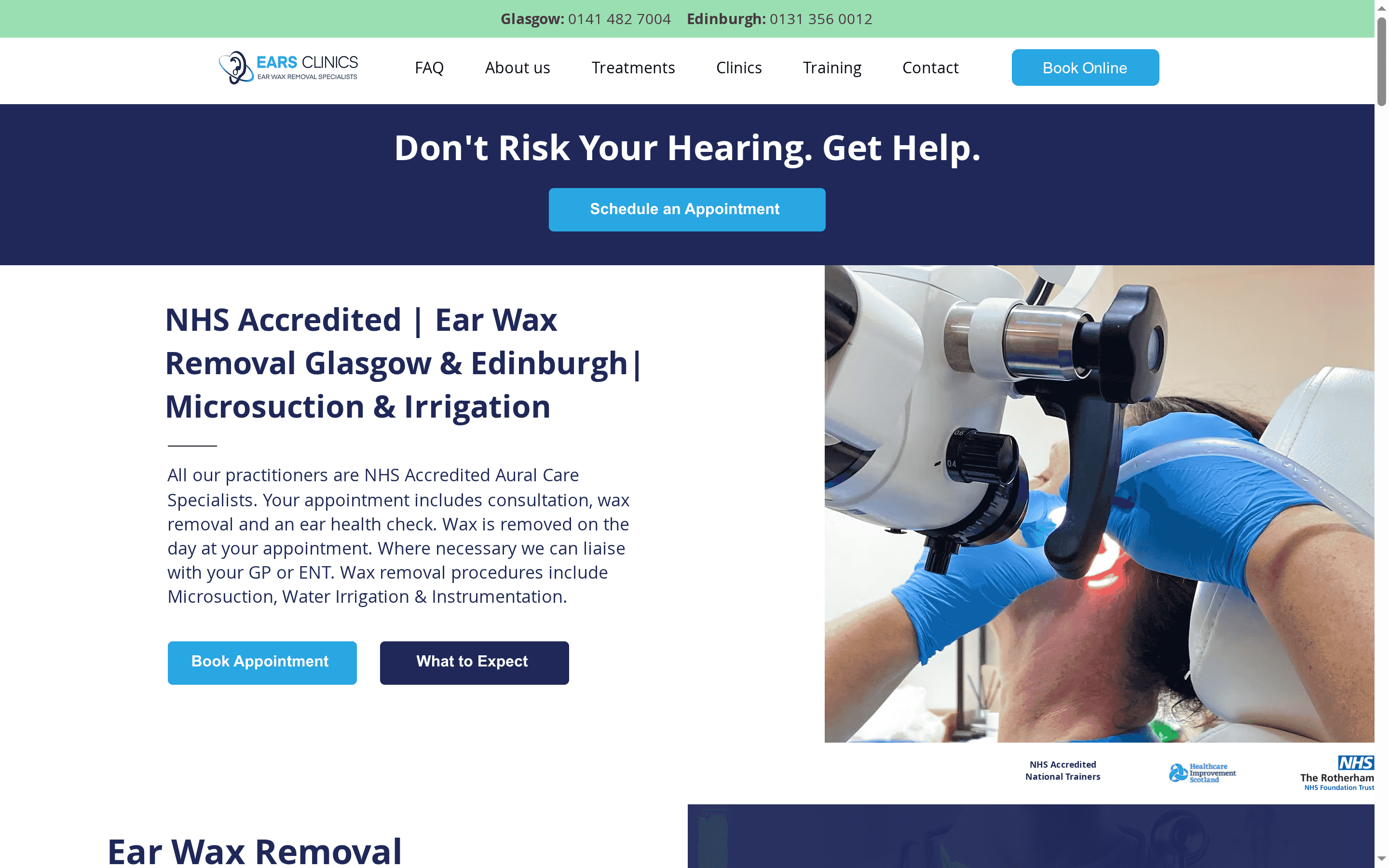
Our Edinburgh clinic offers microsuction, irrigation and manual instrumentation, with your clinician choosing the safest option once they have examined your ears. If travel is difficult, our home visit service brings the same standard of care to you.
Adult appointment: £60, covering examination and treatment.
Under-18 appointment: £75, with methods suited to younger patients.
Home visit: £180, within 20 miles of Glasgow.
You can book an appointment online in a few minutes and choose the option that matches your needs.
Sources
FAQ
How much does ear wax removal cost in the UK?
Private ear wax removal in the UK typically costs between £40 and £100, depending on the clinic, method and location. Charges are set for adults, children, and home visits within certain locations.
Is ear syringing covered by the NHS in Edinburgh?
NHS ear wax removal in Edinburgh is generally only provided when wax is causing significant hearing loss or blocking a necessary medical examination, following a GP assessment. Local NHS Lothian guidance sets out referral routes, though availability and waiting times vary by practice.
Does the NHS pay for ear wax removal?
The NHS can provide earwax removal through GP practices, community services or referral to audiology or ENT, but only when specific clinical criteria are met rather than for routine wax buildup. Many people choose private care instead for faster access or greater flexibility around appointment times.
What should I check before paying for a quote?
Confirm whether the price covers one ear or both, whether there is a separate fee if no wax is found, and whether the clinic is registered with Healthcare Improvement Scotland or the Care Quality Commission. A trustworthy provider will also explain which removal methods it offers and confirm that the choice is made clinically after an examination.
Recommended