
Ear Drops Before Microsuction in the UK: 3–5 Days Isn’t Always Needed

You usually don’t need ear drops before microsuction, since it can be performed on dry wax when a clinician has the right equipment and experience. For stubborn or hardened wax, drops often help, and guidance from NICE and ENT UK accepts either a short course of three to five days or drops used right before your appointment. If you already have a booking, follow the specific instructions your clinic gave you.
TL;DR:
NICE finds no proven schedule; clinics often advise drops three to four times daily for three to five days, but follow your clinic’s instructions.
Olive oil gradually softens recurrent wax, while sodium bicarbonate dissolves it faster; the latter is limited to seven to ten days.
Avoid sodium bicarbonate if you have grommets, an active infection, a suspected perforation, or recent middle ear surgery, and tell the clinic about these risks.
The clinician chooses among microsuction, irrigation, and manual removal after reviewing your history and examining the ear; disclose surgery, infection, or mobility difficulties.
Warm drops to body temperature, lie with the treated ear upward for several minutes, and avoid cotton balls or other objects in the ear canal.
What clinical guidance says about using drops before microsuction
There isn’t a single evidence-backed rule for how long to use ear drops before microsuction, and that’s exactly why advice varies between clinics. NICE guidance notes no high-quality evidence points to one correct interval, so practitioners use their judgement. Many recommend drops three to four times daily for three to five days, while others are happy to proceed with drops instilled immediately before the appointment, depending on how the wax looks and how the ear responds.
ENT UK’s clinical guidance takes a similarly flexible stance. An experienced practitioner with proper tools often doesn’t need any pre-treatment at all, dry wax and all. But if you’ve already been in contact with the clinic and hard or impacted wax is suspected, they may ask for five days of drops beforehand to make clearance easier and reduce the chance of a failed or uncomfortable attempt.
NHS patient leaflets describe different softeners and timings. Olive oil is commonly used to soften wax, while sodium bicarbonate drops can actively dissolve it. Microsuction remains the method recommended under current NICE guidance where it’s available and appropriate, though irrigation and manual instrumentation stay safe, clinically valid choices depending on your ear and your history. Your practitioner chooses the method that fits your medical history and what they find on examination, not a one-size-fits-all approach.

Which ear drops and softeners actually help before microsuction
Three options come up again and again in clinical leaflets, and each suits a slightly different situation.
Olive oil is a gentle lubricant rather than a chemical solvent. It softens wax gradually, which makes it well suited to longer use or to people who get recurrent build-up. NHS wax management guidance lists it as a first-line choice, often used for longer-term or recurrent issues.
Sodium bicarbonate drops work differently: they actively dissolve wax rather than simply softening it, which makes them faster but also means they’re meant for shorter courses. The same NHS guidance limits use to around seven to ten days at a time, and it shouldn’t be used at all if you suspect a perforated eardrum, have had middle ear surgery, or have an active ear infection. Expect a temporary feeling of fullness or slightly reduced hearing as the wax swells and breaks down; that’s a normal part of the process rather than a sign something has gone wrong.
Saline or plain water is the mildest of the three, useful when something gentler is preferred or when oil-based drops aren’t suitable. Other agents, such as hydrogen peroxide-based drops, do appear in some clinical literature, but they aren’t treated as a universal first-line choice the way olive oil and sodium bicarbonate are.
How to put ear drops in safely
Getting the technique right matters as much as choosing the right drops. A few simple steps make the difference between drops that actually soften wax and drops that just run back out.
Warm the bottle to near body temperature first; cold drops instilled straight from the fridge or a cold cupboard can be uncomfortable and may trigger dizziness.
Lie on your side with the ear you’re treating facing upwards, instil the number of drops or sprays you’ve been advised to use, and stay in that position for several minutes so they reach the wax rather than draining straight out.
Wipe away any excess with a clean tissue, then repeat on the other side later if you’ve been told to treat both ears.
Never insert cotton wool into the canal afterwards. It absorbs the oil and pulls it away from the wax instead of letting it work, and nothing else should go into the ear canal either.
Typical regimens vary: olive oil is often used twice daily for two to four weeks, while some clinicians recommend sodium bicarbonate or similar drops three to four times daily for three to five days before a procedure, a pattern NICE cites as common practice. Always follow the specific instructions given at booking rather than a generic schedule.
Pro Tip: Keep a quick note of what drops you used, how often, and for how many days, then bring it with you to your appointment so your practitioner can choose the safest removal method on the day.
When not to use drops, and what to tell your clinic
Drops may not be suitable for everyone, so a few situations call for caution, and your clinic needs to know about them before you start.
Avoid sodium bicarbonate or other solubilising drops if you suspect a perforated eardrum, have grommets fitted, have had recent middle ear surgery, or have an active ear infection, and tell the clinic about any of these.
Mention if you only have useful hearing in one ear, if you’ve had recent discharge from either ear, or if you’ve reacted badly to ear drops before.
If drops cause severe pain, bleeding, or new discharge, stop using them and seek immediate emergency care.
Reporting these details isn’t just a formality. It’s what allows your practitioner to choose between microsuction, irrigation or manual instrumentation safely, since each method suits a different clinical picture.
A simple pre-appointment checklist for microsuction
A few minutes of preparation before you arrive helps your appointment go smoothly and keeps you safe.
Note whether you’ve used ear drops, which type, and for how many days.
Flag any known perforation, grommets, or previous middle ear surgery.
Mention recent ear infections, discharge, or unusual pain.
Let the clinic know about any mobility or cognitive difficulties that might make self-instilling drops hard.
Bring a list of current medications and any known allergies.
Clinics differ in what they ask for. Some request up to five days of drops beforehand, others are happy with drops used immediately before you arrive, so stick with whatever instructions you were given at booking. If you’re unsure, it’s worth phoning the clinic directly rather than starting a softening regime you weren’t advised to use.
Why clinics sometimes ask for drops, and sometimes don’t
Choosing between microsuction, irrigation and manual instrumentation isn’t a fixed script. It depends on your ear history, what the practitioner sees on examination, and how the wax responds on the day. Microsuction tends to be the preferred route where it’s available, since it allows direct visualisation and doesn’t involve flushing water into the canal, but irrigation and manual instrumentation remain safe and appropriate choices when your history points that way.
That’s also why telling a clinic about perforations, grommets, previous surgery or recent infections matters so much. Ear care should only ever be carried out by trained, competent clinicians working to recognised standards, and in Scotland that means practitioners regulated by Healthcare Improvement Scotland. If you’re not sure whether you need drops before your own appointment, it’s worth contacting the clinic directly to talk it through rather than guessing.
— EARS
Booking a microsuction appointment with EARS Clinics
Preparing for microsuction shouldn’t mean working out the right drops on your own. At EARS Clinics, our Aural Care Specialists are trained to deliver microsuction, irrigation and manual instrumentation, choosing whichever method suits your ear and your history on the day.
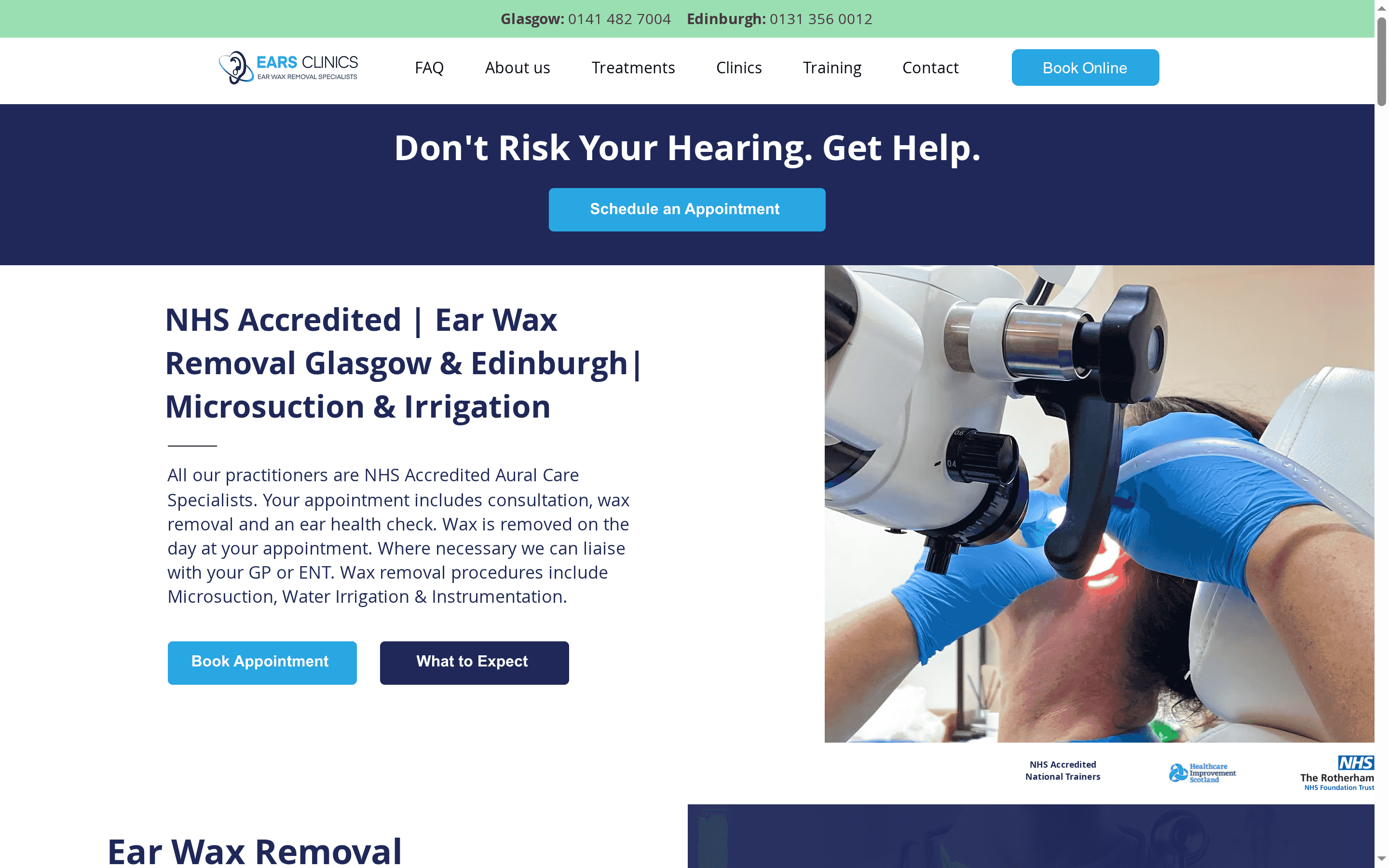
We offer appointments and home visits where a trip to clinic isn’t practical, so you can discuss your needs with us directly. When you book, bring details of any ear drops you’ve used, how long for, and any relevant history such as previous perforations or surgery, so we can plan the safest approach before you arrive. You can book an appointment online for ear wax removal in clinic, or ask about a home visit if that suits you better.
This article is general information, not a substitute for advice from a qualified doctor. Consult a qualified healthcare professional about your own circumstances before acting on anything here.
FAQ
Do I need to use ear drops before microsuction?
Not always. Microsuction can often be performed on dry wax, but drops help when wax is hard or impacted, and NICE and ENT UK both accept either a short three to five day course or drops used right before the appointment. Always follow the specific instructions given by your clinic when you book.
How long should I use ear drops before syringing?
Clinical guidance commonly suggests three to five days of drops, used three to four times daily, before procedures such as irrigation (sometimes called syringing), though NICE notes there’s no single evidence-backed interval. Some patients are advised to use drops immediately before the appointment instead, so it’s worth checking with your clinic which approach they want.
How can I tell if my ears are full of earwax?
Common signs include a feeling of fullness or blockage, reduced hearing, mild discomfort, and sometimes a ringing or buzzing sound. If these symptoms persist or worsen, it’s worth having your ears checked by a trained clinician rather than guessing at the cause.
What should I check before choosing an ear wax removal method?
The safest method, whether microsuction, irrigation or manual instrumentation, depends on your medical history, including any perforations, grommets, previous ear surgery or infections. Sharing this information with your clinic beforehand allows a trained practitioner to choose the most appropriate and safest procedure for you.
How much does microsuction cost?
At EARS Clinics, ear wax removal for adults costs £60, while under-18 appointments are priced at £75, and home visits within 20 miles of Glasgow cost £180. Prices vary between providers, so it’s worth checking directly with whichever clinic you’re considering.
Sources
Recommended