
What is the best way to clear ear wax safely?
- 1 day ago
- 8 min read

TL;DR:
Professional ear wax removal by a regulated clinician using microsuction, irrigation, or instrumentation is the safest and most effective method. Home softening drops aid natural wax expulsion but do not remove blockages, while unsafe DIY methods like cotton swabs pose significant risks. Symptoms such as hearing loss or discomfort require prompt professional assessment to prevent complications.
Professional removal by a trained clinician is the safest and most effective way to clear ear wax, also known clinically as cerumen. Methods such as microsuction, irrigation, and manual instrumentation, performed by regulated practitioners, minimise the risk of eardrum damage and infection that common DIY approaches carry. Home softening agents like mineral oil or carbamide peroxide drops can assist with mild build-up, but only after medical clearance confirms your eardrum is intact. This article explains the clinical options, the approved home remedies for ear wax, and the warning signs that tell you professional care cannot wait.
What is the best way to clear ear wax? Professional methods explained
Professional removal by a healthcare provider is the safest removal method for cerumen build-up. That recommendation holds because trained clinicians assess your ear canal anatomy and medical history before selecting a technique, rather than applying a one-size approach.
Three clinical techniques are used in regulated practice:
Microsuction. A fine suction probe draws wax out under direct visualisation using a microscope or loupe. No water enters the ear canal, making it suitable for patients with a history of perforated eardrums or ear infections. Current NICE guidelines identify microsuction as the preferred method.
Irrigation. A controlled flow of warm water flushes softened wax from the canal. Practitioners select this method when the eardrum is confirmed intact and no contraindications are present. Irrigation carries risks for patients with diabetes, a perforated eardrum, or active infection, so clinical assessment comes first.
Manual instrumentation. A clinician uses a curette or probe to remove wax under direct vision. This technique suits patients where suction or water is not appropriate.
Practitioners regulated by Healthcare Improvement Scotland (HIS) or the Care Quality Commission (CQC) follow strict clinical protocols for each procedure. That regulatory oversight is what separates professional care from unsupervised home attempts. Earhealthservice operates as one of the few HIS-registered ear health clinics in Scotland, treating patients from two years of age under NHS-accredited standards.
Earwax removal must be tailored to the individual’s ear canal anatomy and medical history. A clinician who skips that assessment and proceeds directly to treatment increases the risk of harm, regardless of which technique they use.

For patients with frequent build-up, routine professional cleaning once or twice yearly is the recommended maintenance schedule. That frequency keeps the canal clear without the chronic irritation that repeated self-treatment causes.
How do approved home remedies help with mild ear wax build-up?
Home remedies for ear wax do not remove cerumen. They soften it, which can make natural expulsion easier or prepare the ear for professional removal. That distinction matters, because many people expect drops to clear a blockage entirely and are disappointed when they do not.
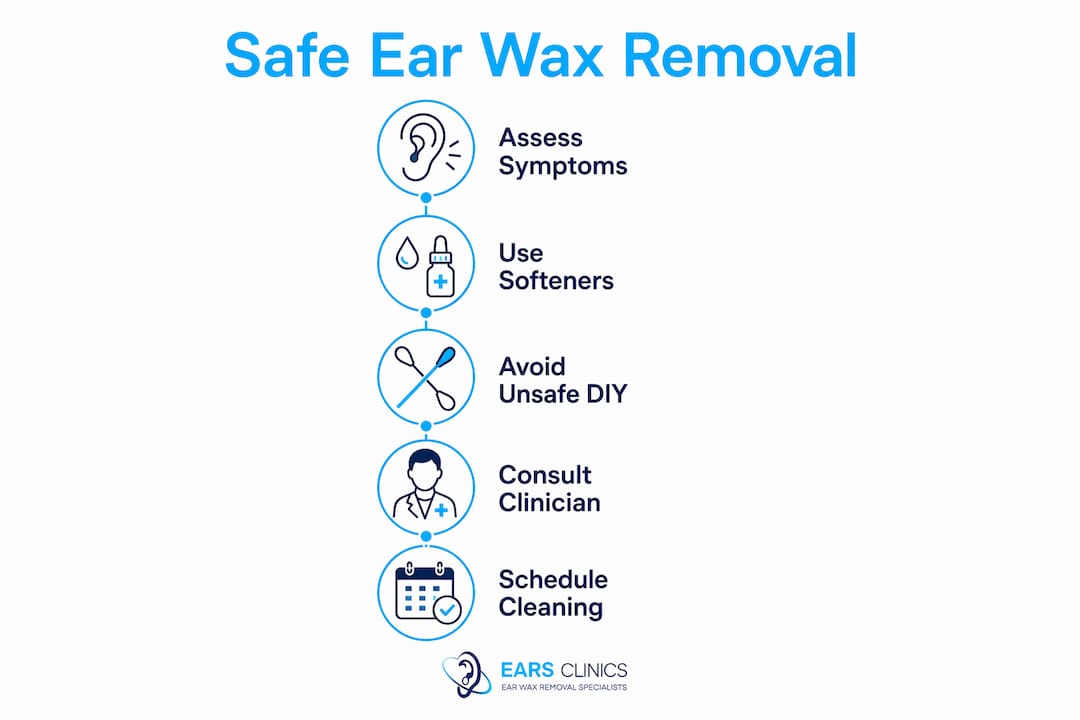
Approved softening agents include mineral oil, baby oil, glycerin, and carbamide peroxide 6.5% drops. Each works by breaking down the wax’s structure so the ear’s own self-cleaning mechanism can move it outward more easily.
The correct application method is straightforward:
Lie on your side with the affected ear facing upward.
Place two to three drops of the softening agent into the ear canal.
Remain in that position for three to five minutes to allow the drops to penetrate.
Sit up and allow any excess to drain onto a tissue.
Repeat once or twice daily for up to five days, then seek professional assessment if symptoms persist.
Pro Tip: Always confirm with a clinician that your eardrum is intact before using any ear drops. Drops entering a perforated eardrum can cause pain, infection, and further damage.
Overusing softening drops carries its own risks. Prolonged exposure to carbamide peroxide can irritate the delicate skin lining the ear canal, leading to dermatitis or chronic discomfort. Repeated at-home attempts can cause chronic irritation, particularly in people with narrow or sensitive ear canals. If drops have not produced noticeable improvement within five days, stop and book a professional assessment rather than continuing.
Natural ways to clear ear wax through home softening are a supportive measure, not a standalone treatment. They work best as a preparatory step before a clinic appointment, where a clinician can confirm the wax has softened sufficiently for safe removal.
Which DIY methods are unsafe and why?
Many popular ear wax removal tips found online cause more harm than benefit. Understanding which methods to avoid is as important as knowing the safe ones.
The most common unsafe practices are:
Cotton swabs. Inserting a swab into the ear canal pushes wax deeper rather than removing it. Cotton swabs and similar objects risk eardrum perforation and compaction of wax against the drum.
Hairpins, pencils, or keys. Any rigid object inserted into the canal risks laceration of the skin, perforation of the eardrum, or displacement of wax into an area the ear cannot self-clean.
Ear candling. This practice involves placing a hollow candle in the ear and lighting it. Clinical evidence shows it does not work. Ear candling’s residue is burnt candle material, not ear wax. The procedure risks burns to the face, ear canal, and eardrum.
Unsupervised home irrigation devices. Bulb syringes and consumer irrigation kits can force water into the middle ear if used incorrectly, causing infection or damage.
“Ear candling is explicitly discouraged by healthcare professionals due to its ineffectiveness and the serious risk of burns and injury. No clinical evidence supports its use for ear wax removal, and the residue it produces is candle wax, not cerumen.”
The clinical consensus is clear. Many online DIY methods cause harm more than benefit, with ear candling being the most hazardous. If you are searching for how to remove ear wax at home, the honest answer is that softening drops are the only safe option, and they work best as preparation for professional care rather than a replacement for it.
When should you seek professional ear wax removal?
Recognising the right moment to book professional care prevents minor build-up from becoming a more serious problem. The ear has a natural self-cleaning mechanism where skin cells migrate outward, carrying wax with them. Manual cleaning disrupts this process and often causes impaction. That means most people need no intervention at all unless symptoms appear.
Symptoms that warrant a professional assessment include:
Sudden or gradual hearing loss in one or both ears
A feeling of fullness or pressure in the ear canal
Tinnitus (ringing, buzzing, or humming sounds)
Earache or discomfort without an obvious cause
Discharge or an unusual odour from the ear
Dizziness or a sense of imbalance
Certain groups face a higher risk of recurrent build-up and benefit from scheduled check-ups rather than waiting for symptoms to worsen.
Patient group | Recommended approach |
Hearing aid wearers | Regular professional checks, as devices trap wax |
Narrow or curved ear canals | Professional removal only; home methods are less effective |
Patients with eczema or skin conditions | Clinical assessment before any treatment |
Children under 18 | Specialist paediatric ear care by a regulated clinician |
Frequent build-up sufferers | Routine professional cleaning once or twice yearly |
Delayed or incorrect self-treatment consistently worsens outcomes. Wax that has been pushed deeper by cotton swabs is harder to remove and more likely to require specialist instrumentation. Booking a professional ear wax assessment at the first sign of symptoms is always the more efficient path.
For patients who are unsure whether their symptoms relate to wax or another condition, a clinician can rule out infection, perforation, or other causes during the same appointment. That diagnostic step is something no home remedy can replicate.
Key takeaways
Professional removal by a trained, regulated clinician using microsuction, irrigation, or manual instrumentation is the safest and most effective method for clearing ear wax build-up.
Point | Details |
Professional removal is safest | Microsuction, irrigation, and instrumentation minimise risk when performed by regulated clinicians. |
Home drops soften, not remove | Mineral oil, glycerin, and carbamide peroxide prepare wax for expulsion but do not clear blockages alone. |
DIY methods cause harm | Cotton swabs, hairpins, and ear candling risk eardrum perforation, burns, and deeper impaction. |
Symptoms signal clinical need | Hearing loss, pain, tinnitus, or discharge require professional assessment, not home treatment. |
High-risk groups need regular care | Hearing aid wearers, children, and those with narrow canals benefit from scheduled professional check-ups. |
Our view on balancing home care and professional treatment
At EARS Clinics, we see the consequences of delayed professional care every week. Patients arrive having used cotton swabs for months, convinced they were keeping their ears clean, only to discover a compacted wax plug sitting against the eardrum. The swabs did not remove the wax. They packed it tighter with every use.
The ear is a self-regulating organ. Earwax fulfils protective roles including moisture retention, infection prevention, and skin protection. Intervening unnecessarily disrupts a system that, in most people, works well without any help. The patients who fare best are those who leave their ears alone until symptoms appear, then seek professional care promptly.
Home softening drops have a legitimate role, but only as preparation for clinical removal, not as a substitute for it. We always advise patients to confirm eardrum integrity with a clinician before using any drops. That single step prevents a significant proportion of the complications we see from unsupervised home treatment.
The most important ear wax removal tip we can offer is this: if you are in doubt, book an appointment. A professional assessment takes minutes and gives you a clear, accurate picture of what is happening in your ear canal. That is worth far more than any home remedy.
— EARS
Professional ear wax removal at Earhealthservice
Earhealthservice provides NHS-accredited ear wax removal at EARS Clinics in Glasgow and Edinburgh, performed by trained Aural Care Specialists. Every appointment begins with a clinical assessment to select the safest procedure for your ear canal and medical history.
The clinic offers microsuction, irrigation, and manual instrumentation as clinically appropriate, with same-day appointments and home visits available for patients who cannot attend in person. EARS Clinics is registered with Healthcare Improvement Scotland (HIS) and is one of the few regulated ear health providers in Scotland. Appointments are priced at £60 for adults, £75 for under-18s, and £180 for home visits. Clinicians seeking to expand their skills can also explore microsuction training courses accredited to NHS standards.
FAQ
What is the safest way to remove ear wax at home?
The only safe home approach is applying approved softening drops such as mineral oil, glycerin, or carbamide peroxide 6.5%, but only after a clinician confirms your eardrum is intact. Drops soften wax to aid natural expulsion; they do not remove a blockage on their own.
Is ear wax removal safe?
Professional ear wax removal is safe when performed by a trained, regulated clinician using microsuction, irrigation, or manual instrumentation. Risks increase significantly with unsupervised DIY methods, particularly cotton swabs and ear candling.
How do I know if I need professional ear wax removal?
Symptoms including hearing loss, a feeling of fullness, tinnitus, earache, or discharge indicate that professional assessment is needed. Patients who wear hearing aids or have narrow ear canals should arrange regular check-ups even without symptoms.
Does ear candling work for removing ear wax?
Ear candling does not remove ear wax. The residue it produces is burnt candle material, not cerumen, and the procedure carries a real risk of burns to the face and ear canal. Healthcare professionals universally advise against it.
How often should I have my ears professionally cleaned?
For patients with frequent build-up, professional cleaning once or twice yearly is the recommended schedule. Most people with healthy ears require no routine cleaning at all unless symptoms develop.
Recommended