
What can I use to remove ear wax safely at home?

Safe substances you can use to remove ear wax
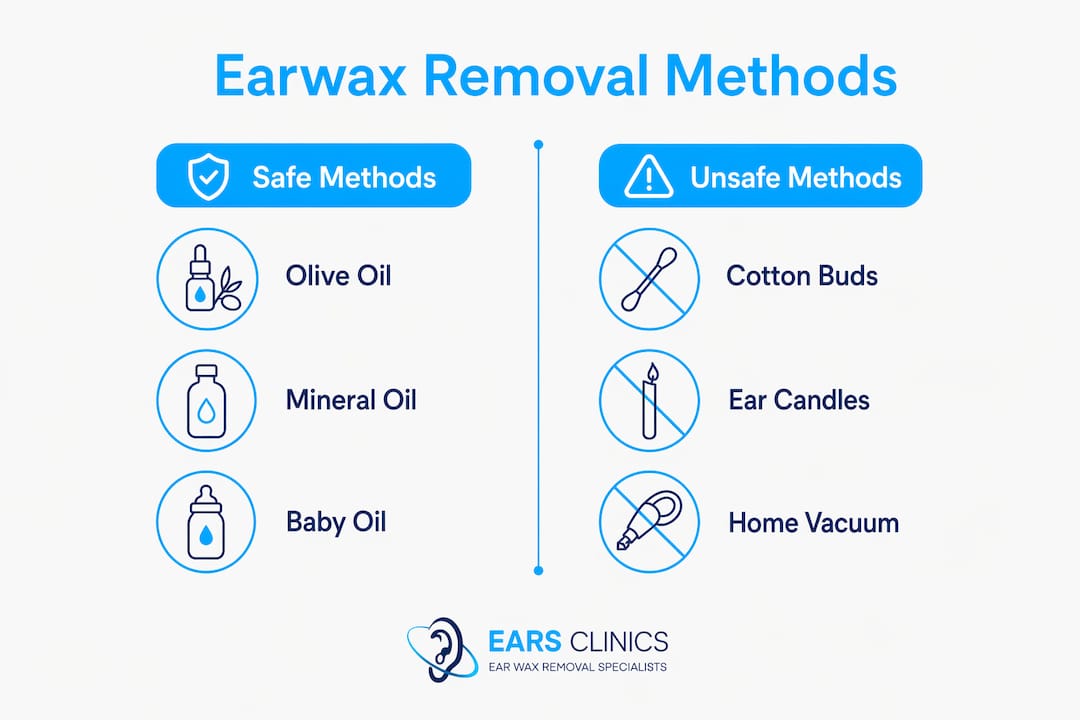
The safest and most clinically endorsed substances for softening earwax at home are oils and gentle medicinal solutions. Used correctly, they soften hardened cerumen (the medical term for earwax) so it can loosen and migrate out of the ear canal naturally. The NHS recommends the following options:
Olive oil: The most widely recommended choice, suitable for most adults and gentle on the ear canal.
Almond oil: An effective alternative to olive oil, but avoid it entirely if you have a nut allergy.
Mineral oil: A safe, odourless option available from most pharmacies.
Baby oil: Gentle and widely available; works in the same way as mineral oil.
Diluted hydrogen peroxide: Available as over-the-counter ear drops; effective at breaking down wax, though it requires careful use (see cautions below).
Glycerin: A mild softening agent sometimes included in commercial ear drop formulations.
What all these substances share is the ability to penetrate and soften compacted wax, making natural expulsion easier. They do not “flush” the ear themselves; they prepare the wax for removal. Earwax is a natural, protective substance and generally needs no intervention at all unless it is causing symptoms.
Unsafe methods to avoid from the outset: cotton buds, fingers, ear candles, and home vacuum devices. These are addressed in full later in this article.

How do you know if earwax is causing your symptoms?
Earwax build-up does not always announce itself obviously. Recognising the signs early helps you decide whether a home remedy is appropriate or whether you need professional assessment.
Common symptoms of earwax accumulation include:
A feeling of fullness or pressure in the ear
Muffled or reduced hearing in one or both ears
Earache or mild discomfort
Tinnitus (a ringing, buzzing, or humming sound)
Itching inside the ear canal
Mild dizziness or a sensation of imbalance
Mild versions of these symptoms, particularly fullness and slightly muffled hearing, are usually suitable for home softening treatment. However, if you experience sharp pain, sudden significant hearing loss, discharge from the ear, or dizziness that affects your balance, do not attempt home treatment. These symptoms may indicate an underlying condition such as a perforated eardrum or infection, and professional assessment is needed promptly.
How to use softening oils correctly: a step-by-step guide
Applying softening agents correctly makes a real difference to how well they work. Follow these steps for safe, effective at-home earwax removal:
Warm the oil gently. Place the bottle in a cup of warm (not hot) water for a few minutes. Slightly warmed oil is more comfortable and penetrates wax more effectively than cold oil applied directly.
Lie on your side with the affected ear facing upward.
Apply 2–3 drops of olive oil, almond oil, or your chosen softening agent into the ear canal.
Stay in position for 5–10 minutes to allow the oil to reach and soften the wax.
Sit up slowly and allow any excess oil to drain onto a tissue. Do not insert anything into the ear to remove it.
Repeat several times daily for a few days. The wax should loosen and fall out naturally over time.
A note on hydrogen peroxide drops: after the oxygen bubbles off, water remains in the canal. Gently rinsing with a few drops of rubbing alcohol afterwards helps dry the area and reduces the risk of bacterial growth.
Do not attempt to physically remove softened wax with any object. The ear canal is delicate, and even a gentle prod with a cotton bud can push wax further in and worsen the blockage.
What to avoid: unsafe earwax removal methods
Some of the most commonly used home methods are also the most harmful. The following carry real clinical risks and should be avoided entirely:
Cotton buds: Cotton buds push wax deeper into the canal, compacting it and making professional removal harder. They are the leading cause of earwax impaction.
Fingers or other objects: Inserting anything into the ear canal risks scratching the skin, introducing infection, or perforating the eardrum.
Ear candles: There is no clinical evidence that ear candling removes wax. It carries genuine risks of burns to the face, ear canal, and eardrum, and has caused fires.
Home ear vacuum devices: No reliable evidence supports their effectiveness, and they can create unsafe pressure changes in the ear.
Water flossers or jet irrigators: These operate at pressures far too high for safe ear use and risk permanent damage to the eardrum and middle ear structures.
Attempting removal of fully impacted wax at home can trap fluid behind the blockage, raising the risk of infection and making the situation considerably worse.
Pro Tip: If you feel any pain, sharp discomfort, or sudden worsening of symptoms at any point during home treatment, stop immediately and seek professional advice. Pain during earwax removal can indicate a perforated eardrum, and continuing could cause lasting damage.
When should you see a professional for earwax removal?
Home softening works well for mild build-up, but there are clear situations where professional care is the only safe option. Seek clinical earwax removal if you experience:
Persistent blockage after completing a full course of softening drops
Significant or sudden hearing loss
Ear pain or a feeling of pressure that does not resolve
Discharge, odour, or any sign of infection from the ear
A history of perforated eardrum, ear surgery, or grommets
Symptoms in a child under the age of 12
Clinicians trained in ear care use three established methods, and the choice between them depends on the patient’s medical history and clinical presentation:
Method | How it works | Key advantage | Suitability |
Microsuction | Gentle suction under microscope guidance | Direct visualisation; no water used | Most patients; preferred per NICE guidelines |
Irrigation | Controlled warm water flow to dislodge wax | Effective for soft, mobile wax | Suitable when eardrum is intact |
Manual instrumentation | Curettes or forceps under microscope guidance | Precise removal of stubborn wax | Complex cases or where suction is unsuitable |
Microsuction is currently the preferred method per NICE guidelines because the clinician can see exactly what they are doing throughout the procedure, avoiding the moisture-related risks associated with irrigation. That said, irrigation and manual instrumentation remain clinically valid and are selected when they are the most appropriate choice for the individual patient. Ear care should only be performed by trained clinicians regulated by HIS or CQC to protect patient safety.
How to prevent earwax build-up in the first place
Prevention is straightforward once you understand what drives excessive wax accumulation. The most common cause is, counterintuitively, over-cleaning.
Do not insert anything into the ear canal. The ear is self-cleaning; the canal’s skin migrates outward naturally, carrying wax with it.
Clean only the outer ear. Use a damp cloth or tissue wrapped around a finger to wipe the outer bowl of the ear after bathing. Go no further than you can see.
Use softening oil periodically if you are prone to build-up. A drop or two of olive oil once or twice a week can keep wax mobile and prevent hardening.
Avoid prolonged use of in-ear headphones or hearing aids without regular cleaning, as these can impede the ear’s natural wax migration.
Attend routine ear health checks if you have a history of recurrent impaction or wear hearing aids, as early intervention prevents more complex blockages.
For those who find that wax accumulates repeatedly despite these measures, professional audiology services can offer tailored advice and regular maintenance appointments.
Professional earwax removal at EARS Clinics
EARS Clinics, operating as Earhealthservice, provides regulated, NHS-accredited earwax removal in Glasgow and Edinburgh. The clinics are registered with Healthcare Improvement Scotland (HIS), making them one of the few fully regulated ear healthcare providers in Scotland. Clinicians hold NHS-accredited Aural Care Specialist qualifications and select the safest removal method based on each patient’s individual medical history and clinical presentation.
Available procedures include:
Microsuction: The gold standard for most patients, performed under microscope guidance with no water involved.
Irrigation: Controlled warm-water irrigation for appropriate cases where the eardrum is confirmed intact.
Manual instrumentation: Precise removal using curettes or forceps under magnification, for cases where suction is not suitable.
Appointments are available in clinic, with same-day options and home visits for patients who cannot travel. Pricing is £60 for patients over 18, £75 for under-18s, and £180 for a home visit. The clinic is licensed to treat patients from two years of age.
Pro Tip: EARS Clinics’ website includes detailed clinical guidance on each procedure, so you can read exactly what to expect before your appointment. Arriving informed makes the experience calmer and more comfortable.
Ready to say goodbye to earwax build-up? Book your appointment with EARS Clinics through earhealthservice.co.uk/ear-wax-removal-types-of-procedures and receive expert, regulated care from NHS-accredited specialists.
Key takeaways
Olive oil, almond oil, mineral oil, baby oil, and diluted hydrogen peroxide are the clinically endorsed substances for softening earwax at home, but professional removal by a regulated clinician is the safest option when symptoms persist.
Point | Details |
Safe softening substances | Olive oil, almond oil (if no allergy), mineral oil, baby oil, and diluted hydrogen peroxide are all clinically appropriate. |
Correct home technique | Apply 2–3 drops of warmed oil, lie on your side for 5–10 minutes, and repeat 3–4 times daily for 3–5 days. Continue for up to two weeks or until wax loosens naturally. |
Methods to avoid | Cotton buds, ear candles, fingers, home vacuums, and jet irrigators all risk injury or worsen impaction. |
When to seek professional care | Persistent blockage, pain, discharge, sudden hearing loss, or a history of eardrum perforation all require clinical assessment. |
Regulated professional removal | Microsuction, irrigation, and manual instrumentation performed by HIS or CQC-regulated clinicians are the safest removal options. |
Recommended