
Remedies for ear wax blockage: safe and effective options

Remedies for ear wax blockage start with gentle, oil-based softening drops you can use at home, and progress to professional removal when self-care is not enough. Most mild blockages respond well to olive oil or almond oil applied over several days, giving the wax time to soften and migrate out naturally. Knowing which methods are safe, and which to avoid entirely, makes all the difference.
Quick home remedies for ear wax blockage

The safest and most effective home treatments work by softening the wax rather than trying to dislodge it forcibly. Oil drops soften wax to enable natural clearance over days to weeks, with no tools required beyond a dropper.
Safe options to try at home:
Olive oil: Widely recommended by NHS guidance; warm slightly to body temperature before use.
Almond oil: Equally effective as a softening agent. Do not use if you have a nut allergy.
Mineral oil: A gentle, fragrance-free alternative available from most pharmacies.
Glycerin: Helps soften and loosen compacted wax; available over the counter.
Baby oil: A mild option suitable for those with sensitive skin.
Saline solution: A warm, mild saltwater rinse can help flush softened wax from the outer canal.
Avoid ear candles and vacuum kits entirely. There is no clinical evidence they remove wax, and both carry real risks including burns and eardrum damage. Cotton buds are equally problematic; they push wax deeper rather than removing it.
What causes ear wax blockage and how do you recognise it?

Earwax, known clinically as cerumen, is produced naturally by glands in the ear canal. Its job is to trap dust and debris and protect the canal lining. The ear is largely self-cleaning, and wax usually migrates outward on its own. Problems arise when that process is disrupted.
Common symptoms of a blockage include:
Muffled hearing or a sensation of fullness in the ear
Earache or mild discomfort
Tinnitus (ringing or buzzing sounds)
Itching inside the ear canal
Occasional dizziness
Causes of build-up include:
Overproduction of wax, which varies between individuals
Narrow or unusually shaped ear canals that slow natural migration
Regular use of hearing aids, earphones, or ear plugs, which can impede outward movement
Inserting cotton buds or other objects, which pushes wax deeper and compresses it against the eardrum
Earwax is not a sign of poor hygiene. Attempting to clean the canal aggressively often creates the blockage it was meant to prevent.
How to safely treat ear wax blockage at home, step by step
Before starting any home treatment, confirm you have no history of a perforated eardrum or recent ear surgery. If you have, skip home drops entirely and seek professional advice.
Warm the oil. Place the bottle of olive or almond oil in a cup of warm water for a few minutes. The oil should feel comfortable against your wrist, not hot.
Position yourself. Lie on your side with the affected ear facing upward.
Apply the drops. Using a dropper, place 2–3 drops of oil into the ear canal.
Stay still. Remain in that position for 5–10 minutes to allow the oil to penetrate the wax.
Repeat regularly. Apply drops 3–4 times daily for 3–5 days. Over a period of days to weeks, softened lumps of wax should fall out naturally.
Optional rinse. If using a saline rinse, use body-temperature water and a soft bulb syringe. Tilt your head, gently direct the stream along the canal wall, then tip your head to drain. Dry the ear thoroughly afterwards to prevent infection.
Pro Tip: Symptoms may feel slightly worse in the first day or two of treatment. Softening drops can cause the wax to swell temporarily before it begins to loosen. This is normal. Patience is part of the process, and most patients notice clear improvement within a week.
For a more detailed walkthrough, the ear wax removal step-by-step guide from Earhealthservice covers both home and clinical approaches in full.
Avoid hydrogen peroxide without professional advice. It can leave residual moisture in the canal, which may encourage bacterial growth. If home treatment has not resolved symptoms after five days, or if your hearing is significantly affected, consult a pharmacist or GP.
When should you see a professional for ear wax removal?
Some blockages do not respond to home treatment, and attempting to persist beyond a reasonable period can cause complications. Professional removal is the right step when:
Symptoms persist after five days of consistent home treatment
You experience significant hearing loss, pain, or discharge
You have a history of ear surgery, perforated eardrum, or recurrent infections
You wear hearing aids and experience frequent blockages
Microsuction is the preferred method under current NICE guidelines. It uses gentle suction through a fine probe to remove wax precisely, with a clear view of the canal throughout. Irrigation, which flushes the canal with warm water, and manual instrumentation, which uses a small curette to lift wax out, are both clinically valid alternatives when the patient’s history and anatomy make them more appropriate. Practitioners select the method based on individual clinical presentation, not a one-size approach.
Ear care must only be performed by trained specialists regulated by Healthcare Improvement Scotland (HIS) or the Care Quality Commission (CQC). Regulation ensures consistent safety standards and protects patients from the risks associated with untrained practitioners.
Pro Tip: Not all GP surgeries offer earwax removal. Private clinics regulated by HIS or CQC, such as EARS Clinics, offer same-day appointments with no pre-treatment requirements, giving you faster access to expert care.
For a full explanation of what microsuction involves, the microsuction procedure guide from Earhealthservice is a useful resource before booking.
How to prevent ear wax blockages from recurring
Prevention is mostly about leaving the ear canal alone and supporting its natural cleaning process rather than interfering with it.
Use softening drops regularly if you are prone to build-up. A few drops of olive oil once or twice a week can keep wax mobile and prevent compaction.
Avoid inserting anything into the canal. Cotton buds, hair grips, and earphones pushed too deeply all disrupt the outward migration of wax.
Do not over-clean. The outer ear can be wiped gently with a cloth, but the canal itself does not need cleaning.
Manage hearing aid and earphone use. Remove them periodically throughout the day and keep them clean to reduce the risk of wax accumulation.
Seek advice if you have recurring blockages. Some people produce more wax than average, or have anatomy that makes natural clearance harder. A clinician can advise on a safe maintenance routine tailored to your ears.
Professional ear wax removal at EARS Clinics
If home remedies have not cleared your blockage, or if you would simply prefer expert care from the outset, Earhealthservice offers professional ear wax removal at EARS Clinics in Glasgow and Edinburgh. Appointments are available the same day, with no requirement to pre-treat with oil drops beforehand.
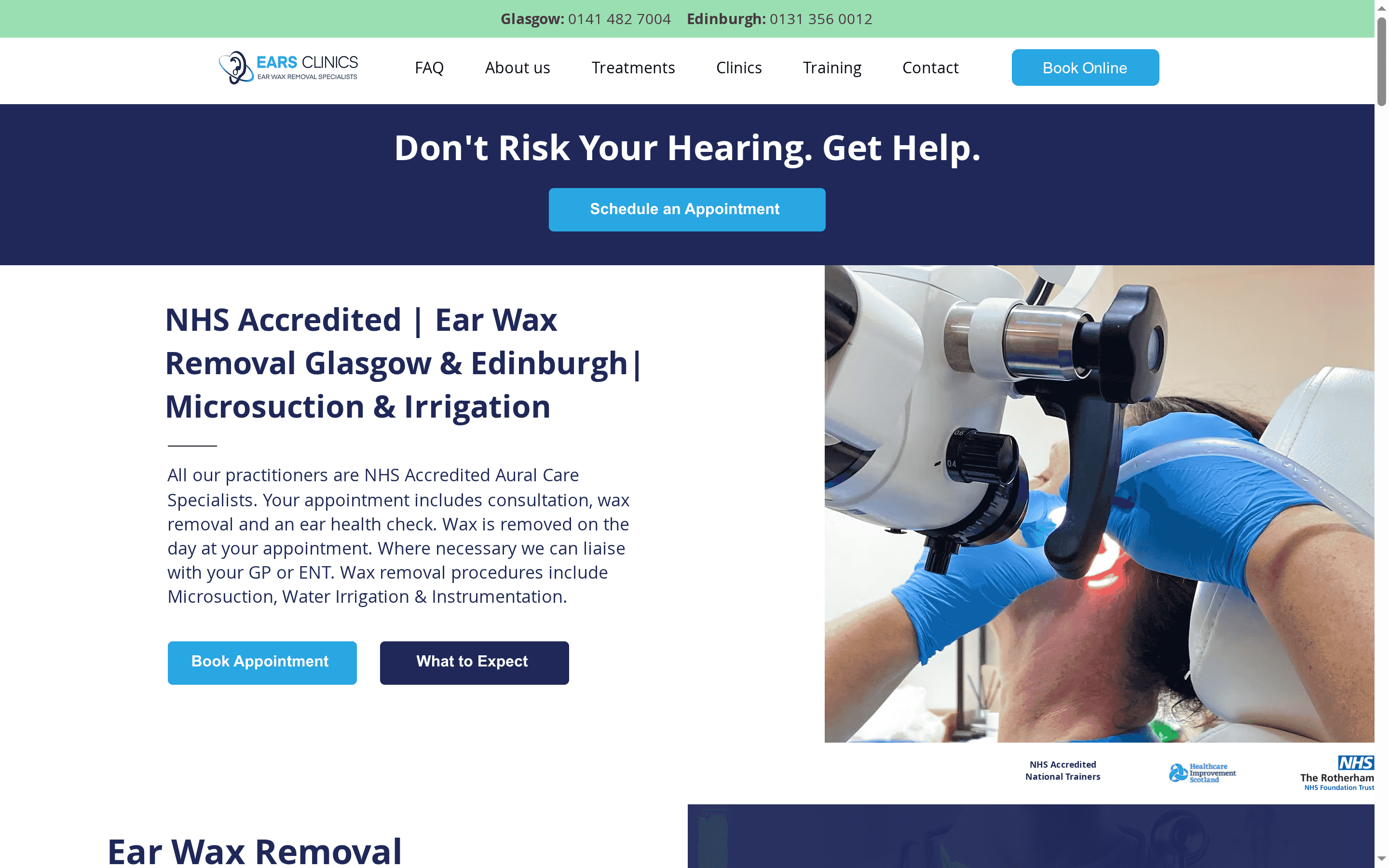
All procedures, whether microsuction, irrigation, or manual instrumentation, are carried out by NHS-accredited Aural Care Specialists registered with Healthcare Improvement Scotland. Pricing is straightforward: £60 for patients over 18, £75 for under-18s, and £180 for a home visit if attending a clinic is not practical. You can view the full range of ear wax removal procedures and book directly through the Earhealthservice website at earhealthservice.co.uk.
Key takeaways
Safe home treatment with oil drops resolves most mild ear wax blockages within two weeks, but persistent or painful blockages require professional removal by a regulated specialist.
Point | Details |
First-line home remedy | Olive or almond oil drops, applied several times daily for a few days, soften wax for natural clearance. |
Avoid unsafe methods | Ear candles, vacuum kits, and cotton buds carry real risks and have no clinical evidence of effectiveness. |
Temporary worsening is normal | Softening drops can cause wax to swell briefly, making symptoms feel worse before they improve. |
Professional removal options | Microsuction is NICE-preferred; irrigation and manual instrumentation are also clinically valid when appropriate. |
Earhealthservice | EARS Clinics offer same-day, HIS-regulated ear wax removal in Glasgow and Edinburgh: £60 for over-18s, £75 for under-18s, and £180 for a home visit. |
Recommended