
Microsuction & Irrigation Training: Boosting Ear Care Careers
Updated: Jan 16

Most british healthcare professionals know that safe ear wax removal demands more than just basic skills. With clinic demand rising and regulations tightening, professionals in the United Kingdom must master specialised techniques to protect patient safety and maintain clinical standards. This guide unpacks the essentials of microsuction and irrigation training, revealing why comprehensive preparation makes all the difference for effective care.
Key Takeaways
Point | Details |
Microsuction Training is Essential | Comprehensive training equips healthcare professionals with critical skills for safe ear wax removal. |
Diverse Techniques Required | Masters of microsuction, irrigation, and manual instrumentation enhance patient care outcomes. |
Certification and Compliance are Crucial | Adherence to NHS and professional standards ensures legal compliance and quality patient care. |
Business Considerations Matter | Strategic planning is vital for establishing a successful ear care service, balancing clinical and commercial interests. |
What Is Microsuction and Irrigation Training?
Microsuction and irrigation training represents a specialised healthcare educational programme designed to equip healthcare professionals with advanced skills for safe and effective ear wax removal. These comprehensive courses provide participants with theoretical knowledge and practical techniques for managing ear health through microsuction and ear irrigation procedures.
The training typically covers extensive learning modules, including detailed exploration of ear anatomy, pathology assessment, and clinical techniques. Comprehensive ear care courses at institutions like University College London offer in-depth instruction on equipment usage, infection control protocols, and patient assessment strategies. Participants learn to utilise specialised medical equipment and understand the nuanced approaches required for different patient presentations.
Healthcare professionals undertaking these courses come from diverse backgrounds, including nursing, audiology, pharmacy, and physiotherapy. The training programme ensures participants develop clinical competence through a structured curriculum that combines theoretical learning with supervised practical experience. The Ear Care Academy emphasises hands-on training with real patients, allowing practitioners to refine their skills under expert supervision.
Key training components typically include:
Ear anatomy and physiology
Pathology recognition
Equipment handling techniques
Patient communication and assessment
Infection prevention protocols
Clinical practice guidelines
Professional Tip: Research and select training programmes accredited by recognised healthcare bodies to ensure comprehensive and legally recognised certification in ear care procedures.
The ultimate goal of microsuction and irrigation training is to produce skilled healthcare professionals capable of delivering safe, effective ear wax removal services that prioritise patient comfort and clinical excellence.
Key Techniques: Microsuction, Irrigation, Instrumentation
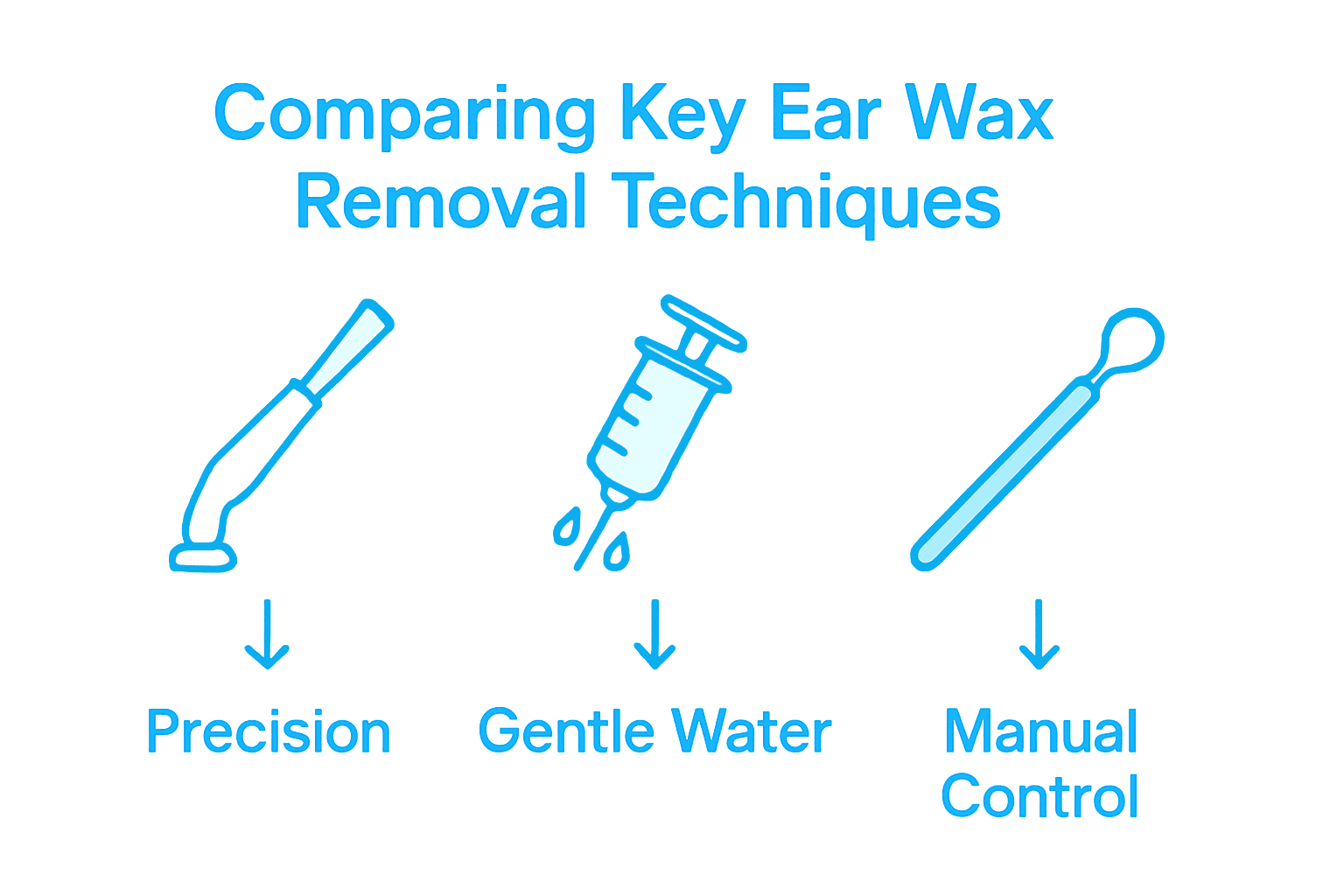
Ear care professionals employ three primary techniques for effective wax removal: microsuction, irrigation, and manual instrumentation. Each method requires specific skills, equipment, and clinical understanding to ensure patient safety and optimal outcomes. Professional ear wax removal techniques demand extensive training and precise execution.
Microsuction represents the most contemporary and recommended approach by current clinical guidelines. This technique utilises a specialised medical microscope and gentle suction device to carefully remove ear wax without introducing liquid into the ear canal. Practitioners use high-resolution magnification, allowing precise visualisation of the ear’s internal structures while maintaining a dry environment that minimises infection risks.
Ear Irrigation involves a controlled water-based technique where practitioners gently flush the ear canal using body-temperature water to dislodge and remove accumulated wax. Comprehensive ear irrigation protocols emphasise maintaining specific water temperature and pressure to prevent potential complications such as vertigo or tympanic membrane damage.

Manual instrumentation represents the most traditional method, involving specialised tools like curettes and loops to manually extract wax under direct visual guidance. This technique requires exceptional hand-eye coordination and an intricate understanding of ear canal anatomy.
Key differences between techniques include:
Here is a comparison of the three primary ear wax removal techniques to help practitioners select the most suitable approach:
Technique | Key Benefits | Limitations | Ideal Patient Scenarios |
Microsuction | Precise, dry, minimal discomfort | Requires microscope, advanced skill | Patients with narrow ear canals |
Irrigation | Suitable for soft wax, non-invasive | Risk of vertigo, water exposure | Patients with soft, moist wax |
Instrumentation | Direct removal, no liquids | Invasive, needs steady hands | Visible, easily-accessible wax |
Microsuction: Dry procedure, minimal patient discomfort
Irrigation: Liquid-based, suitable for softer wax deposits
Instrumentation: Direct manual extraction, most invasive approach
Professional Tip: Always conduct a thorough patient assessment before selecting a specific ear wax removal technique, considering individual medical history and current ear health status.
Certification, NHS Endorsement, and Legal Requirements
Professional ear care practitioners must navigate a complex landscape of certification, regulatory compliance, and legal requirements to deliver safe and effective ear wax removal services. Comprehensive ear wax removal training courses play a crucial role in ensuring practitioners meet the stringent standards demanded by healthcare regulatory bodies.
NHS endorsement represents a critical benchmark for ear care professionals. To obtain certification, practitioners must complete accredited training programmes that demonstrate comprehensive knowledge of ear anatomy, pathological conditions, and advanced removal techniques. Healthcare Improvement Scotland (HIS) and the Care Quality Commission (CQC) provide rigorous oversight, mandating that clinicians maintain high standards of professional practice, patient safety, and clinical competence.
Legal requirements for ear care professionals encompass multiple dimensions. Practitioners must hold current professional registration, maintain up-to-date professional indemnity insurance, and adhere to strict infection control protocols. Continuing professional development (CPD) is mandatory, requiring regular skills updates and evidence-based training to maintain clinical registration and legal compliance.
Key certification requirements include:
Current professional healthcare registration
Completion of accredited ear care training programme
Professional indemnity insurance
Enhanced DBS criminal record check
Annual CPD documentation
Compliance with HIS and CQC standards
Professional Tip: Maintain meticulous documentation of your training, certifications, and professional development to demonstrate ongoing competence and regulatory compliance.
Business Training: Setting Up Ear Care Services
Establishing a successful ear care service requires more than clinical expertise; it demands strategic business planning and comprehensive understanding of healthcare entrepreneurship. Professional ear wax removal business training equips practitioners with essential skills to transform their clinical knowledge into a sustainable and profitable healthcare venture.
The business landscape for ear care services involves complex considerations including market positioning, patient acquisition strategies, and financial management. Practitioners must develop a robust business model that balances clinical excellence with commercial viability. This includes understanding pricing structures, creating effective marketing strategies, and establishing referral networks with local healthcare providers such as general practitioners and ENT specialists.
Technological infrastructure plays a crucial role in modern ear care services. Professionals need to invest in advanced diagnostic equipment, develop user-friendly booking systems, and implement digital record-keeping solutions that comply with healthcare data protection regulations. Effective patient communication channels, including online booking platforms and clear digital information resources, are essential for building trust and attracting a consistent client base.
Key business development considerations include:
Market research and competitive analysis
Developing a comprehensive business plan
Understanding regulatory compliance requirements
Creating transparent pricing structures
Building professional referral networks
Implementing effective digital marketing strategies
Investing in continuous professional development
Professional Tip: Develop a niche specialisation within ear care services to differentiate yourself in a competitive healthcare marketplace, such as focusing on paediatric ear care or specialised hearing protection services.
The following table outlines essential business and clinical factors for launching a modern ear care service:
Aspect | Business Focus | Clinical Focus |
Technology Investment | Online booking, digital records, secure systems | Audiology equipment, diagnostic tools |
Marketing Strategy | Digital presence, local referrals, clear pricing | GP collaborations, patient education |
Compliance Management | Data protection, insurance, registration | Adherence to HIS and CQC standards |
Risks, Competency, and Professional Supervision
Ear care procedures demand exceptional clinical precision, with potential risks that underscore the critical importance of comprehensive training and professional supervision. Detailed ear irrigation risk assessments highlight the intricate challenges practitioners must navigate to ensure patient safety and treatment efficacy.
Competency represents the fundamental cornerstone of safe ear care practice. Healthcare professionals must demonstrate advanced skills in patient assessment, understanding complex ear anatomies, recognising potential contraindications, and selecting appropriate intervention techniques. This requires not just technical proficiency, but a nuanced understanding of individual patient medical histories, potential complications, and precise procedural protocols.
Professional supervision provides a crucial layer of clinical governance, ensuring practitioners maintain the highest standards of patient care. Experienced mentors guide less experienced clinicians through complex clinical scenarios, offering real-time feedback, helping develop critical decision-making skills, and ensuring adherence to strict regulatory guidelines. Supervision involves ongoing assessment of clinical techniques, patient interaction skills, and the ability to manage unexpected complications.
Key risk management strategies include:
Comprehensive patient medical history screening
Detailed pre-procedure risk assessments
Continuous professional skills evaluation
Regular clinical supervision sessions
Maintaining up-to-date clinical knowledge
Implementing robust infection control protocols
Developing emergency response capabilities
Professional Tip: Maintain a reflective practice journal documenting clinical experiences, challenges, and learning opportunities to continuously improve your professional competence and patient care standards.
Elevate Your Ear Care Expertise with Professional Support from EARS Clinics
Microsuction and irrigation training equips healthcare professionals with vital skills to safely manage ear wax removal, addressing challenges such as patient safety, infection control, and clinical precision. At EARS Clinics, we understand these critical requirements and offer NHS-accredited ear wax removal services delivered by trained Aural Care Specialists using the latest microsuction, irrigation, and instrumentation techniques. Whether you face issues with narrow ear canals or require specialised care for children and complex cases, our skilled team is ready to provide safe and effective treatment.
Take the next step in translating your advanced ear care knowledge into excellent patient outcomes by accessing expert care at EARS Clinics. Benefit from our short waiting times, regulated clinics, and immediate appointments available in Glasgow, Edinburgh, or even at your home. Discover how our comprehensive approach complements your professional training. Book your appointment today through our main website or explore the safety and procedures that make EARS Clinics a trusted choice for ear health.
Enhance your clinical practice with confidence and offer your patients the quality care they deserve.
Frequently Asked Questions
What is microsuction training?
Microsuction training is a specialised programme aimed at healthcare professionals to learn safe and effective ear wax removal using a microsuction technique. The training includes theoretical knowledge and practical skills focused on ear anatomy, equipment usage, and patient assessment.
What are the main techniques taught in ear care training?
The main techniques included in ear care training are microsuction, ear irrigation, and manual instrumentation. Each method has its own skills, equipment requirements, and clinical implications, allowing practitioners to choose the most appropriate technique for their patients.
How can I ensure my ear care training is accredited?
To ensure accreditation, select training programmes that are recognised by reputable healthcare bodies. Look for courses that offer certification upon completion and comply with the standards set by regulatory agencies such as the Care Quality Commission (CQC).
What are the risks associated with ear wax removal procedures?
Risks associated with ear wax removal include potential complications like infection, vertigo, and damage to the tympanic membrane. Comprehensive training and professional supervision are essential to minimise these risks and ensure patient safety.
Recommended