
Essential Ear Health Care Tips 2025 for Families
Updated: Jan 16

Every parent knows that missed words and unexplained irritability can signal underlying ear troubles. In fact, over 30 percent of British children experience ear wax build-up severe enough to affect hearing at some stage. For families in Glasgow and Edinburgh, spotting these signs early means you can access prompt ear care at trusted clinics accredited by the NHS. Discover how recognizing symptoms and making safe choices helps keep your child’s ears healthy, comfortable, and clear.
Quick Summary
Important Insight | Explanation |
1. Recognise symptoms of ear wax build-up | Look for signs such as decreased hearing, ear itching, or a sense of fullness. Early recognition allows for professional intervention. |
2. Use safe ear cleaning methods at home | Gather safe supplies like soft cloths and warm water. Avoid cotton swabs to prevent ear canal damage. |
3. Choose appropriate professional removal techniques | Understand methods like microsuction and irrigation. Select based on your child’s ear health and comfort, guided by professionals. |
4. Monitor ear health consistently after removal | Regularly assess hearing responses and any discomfort. Keep a health diary to track symptoms over time. |
5. Schedule regular audiologist visits | Annual check-ups help maintain ear health and catch issues early. This proactive approach keeps ear health in check. |
Step 1: Assess signs of ear wax build-up in children
Identifying ear wax build-up in children requires careful observation of specific symptoms and changes in their auditory behaviour. Parents should understand that ear wax is a natural protective mechanism, but excessive accumulation can lead to discomfort and potential hearing challenges.
Children experiencing ear wax build-up often display recognisable signs including decreased hearing sensitivity, persistent ear itching, and a sense of fullness or pressure in the ear canal. Symptoms of ear wax blockage can manifest through subtle behavioural changes such as frequently asking for repetition, turning up television volume, or seeming less responsive to ambient sounds. Additional indicators include ear pain, unusual discharge, or visible wax accumulation at the ear entrance.

Recognising these symptoms early allows parents to seek professional assessment from trained healthcare specialists who can safely evaluate and address potential ear wax complications. Watch for signs like ear tugging, balance issues, or unexplained irritability which might signal underlying ear health concerns.
Expert Advice: Always consult a professional aural care specialist before attempting home ear wax removal techniques to prevent potential injury or complications.
Step 2: Prepare for safe ear care at home
Preparing for safe ear care at home involves understanding the delicate nature of ear hygiene and implementing gentle, professional recommended practices. Parents must recognise that ears are self cleaning organs that require minimal intervention and maximum caution.
The first step in safe home ear care is gathering appropriate supplies while avoiding harmful tools. Proper ear cleaning techniques emphasise using soft washcloths, warm water, and avoiding cotton swabs that can potentially damage ear canals. Recommended supplies include clean soft cloths, warm water, olive oil ear drops recommended by healthcare professionals, and a gentle approach that prioritises ear protection.
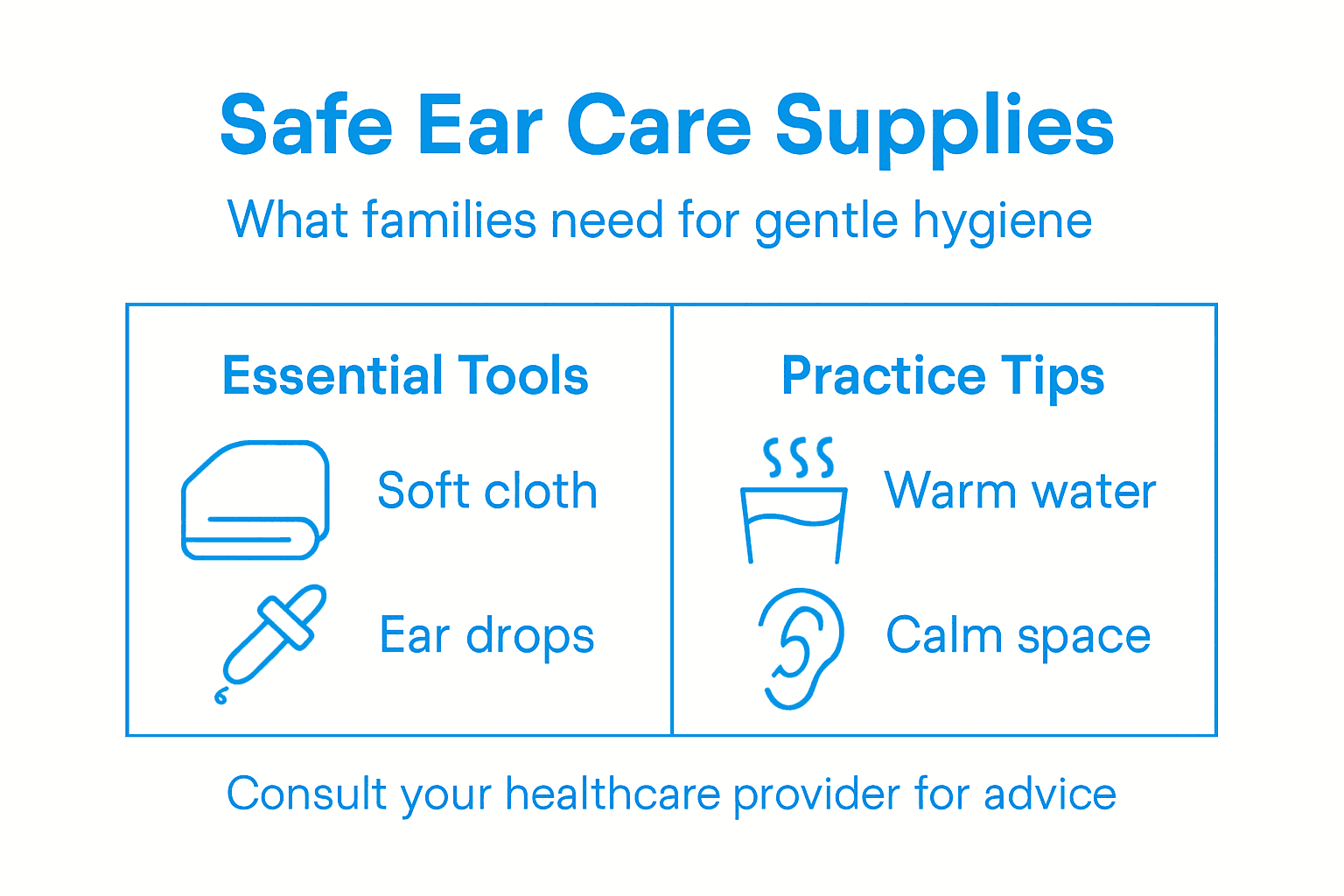
When preparing for ear care, create a calm environment where your child feels comfortable and secure. Ensure good lighting, have all supplies ready beforehand, and maintain a gentle approach that minimises stress. Always clean only the outer ear area and never insert anything inside the ear canal. Professional guidance recommends wiping the outer ear with a soft damp cloth and allowing natural wax removal processes to occur.
Expert Advice: Consult your healthcare professional before attempting any home ear cleaning procedure to ensure the safest approach for your child’s specific ear health needs.
Step 3: Choose professional ear wax removal methods
Selecting the right professional ear wax removal method requires understanding the various safe techniques available and matching them to your child’s specific ear health needs. Different approaches suit different situations and require careful consideration by trained healthcare professionals.
Professional earwax removal techniques include three primary methods: microsuction, irrigation, and manual instrumentation. Each method offers unique advantages depending on the patient’s ear canal condition, wax consistency, and overall ear health. Microsuction uses gentle suction to remove wax without liquid insertion, making it particularly suitable for children with sensitive ears or those prone to ear infections. Irrigation involves carefully controlled warm water flushing to soften and remove wax buildup, while manual instrumentation uses specialised tools like curettes to extract stubborn wax deposits under professional supervision.
Here is a summary of the main professional ear wax removal techniques and their suitability for children:
Method | Key Features | Best For | Clinical Considerations |
Microsuction | Gentle suction, no fluid | Sensitive ears, infection-prone cases | Requires trained specialist, safe for most |
Irrigation | Warm water flushing | Large wax build-up, normal ear canals | Not for perforated eardrums or infections |
Manual Instrument | Specialised tools, precise | Stubborn wax, hard deposits | Professional guidance essential |
Before selecting a removal method, a comprehensive ear examination is crucial. Healthcare professionals will assess ear canal integrity, wax volume, and potential underlying conditions. They will recommend the safest approach tailored to your child’s specific needs, considering factors such as ear anatomy, previous medical history, and potential sensitivities. Always choose clinicians registered with Healthcare Improvement Scotland or the Care Quality Commission who follow stringent safety protocols.
Expert Advice: Request a preliminary ear examination to determine the most appropriate and gentle wax removal technique for your child’s unique ear health requirements.
Step 4: Verify effectiveness and monitor ear health
Monitoring your child’s ear health is a critical ongoing process that requires consistent attention and professional guidance. Understanding how to effectively track ear health helps prevent potential long term complications and ensures timely intervention when needed.
Regular hearing assessments are essential for maintaining optimal ear health and detecting any subtle changes in hearing sensitivity. Parents should schedule comprehensive ear examinations with qualified audiologists who can perform detailed assessments, checking not just hearing capabilities but also examining ear canal condition, wax accumulation, and potential signs of infection. These professional evaluations typically include audiometric testing, visual ear canal inspections, and discussions about any symptoms or concerns your child might be experiencing.
Important monitoring strategies include tracking your child’s response to ear wax removal procedures, observing any changes in hearing clarity, and maintaining a health journal documenting ear related symptoms. Look for signs such as persistent ear discomfort, changes in hearing responsiveness, balance issues, or unusual ear discharge. Follow up with healthcare professionals promptly if you notice any unexpected symptoms or if your child seems uncomfortable after ear wax removal treatments.
For quick guidance, here are ways to monitor a child’s ear health after wax removal:
Monitoring Strategy | Purpose | How to Implement |
Hearing responsiveness | Track improvements in sound detection | Observe responses to conversation |
Discomfort observation | Detect ongoing or new ear issues | Watch for pain or irritability |
Health diary | Document symptoms and interventions | Note dates and signs in notebook |
Audiologist follow-up | Ensure long-term ear health | Schedule yearly hearing checks |
Expert Advice: Keep a detailed record of your child’s ear health history to help healthcare professionals make more informed decisions during future consultations.
Take Control of Your Child’s Ear Health with Expert Care from EARS Clinics
Excessive ear wax build-up can cause discomfort and impact hearing for children and adults alike. If you notice the early signs outlined in “Essential Ear Health Care Tips 2025 for Families” such as ear itching, fullness, or changes in hearing, seeking safe professional removal is crucial. At EARS Clinics, we specialise in gentle, NHS-accredited ear wax removal methods including microsuction, irrigation, and manual instrumentation. Our highly trained Aural Care Specialists ensure your child receives personalised and safe treatment, helping to restore clear hearing and prevent complications.

Don’t wait for symptoms to worsen or for long NHS waiting times. Benefit from same-day appointments, in clinic visits across Glasgow and Edinburgh, or convenient home visits. Take the next step today by visiting EARS Clinics to book an appointment and learn more about our professional ear wax removal services. Protect your family’s hearing health with trusted experts who prioritise safety, comfort, and immediate care.
Frequently Asked Questions
How can I tell if my child has ear wax build-up?
Identifying ear wax build-up in children involves observing signs like decreased hearing, persistent itching, or a sense of fullness in the ear canal. Monitor your child for unusual behaviour such as frequently asking for repetition or showing irritability; consult a healthcare professional if these symptoms are noticed.
What supplies do I need for safe ear care at home?
To ensure safe ear care at home, gather clean soft cloths, warm water, and olive oil ear drops. Prepare a calm environment for your child, ensuring that you are equipped to only clean the outer ear area, and avoid inserting anything into the ear canal.
What professional methods are available for ear wax removal in children?
Professional ear wax removal methods include microsuction, irrigation, and manual instrumentation. Schedule a comprehensive examination with a healthcare provider to determine the best technique for your child’s needs based on their ear health and wax condition.
How often should I schedule hearing assessments for my child?
Regular hearing assessments should be scheduled annually to maintain optimal ear health and detect any changes in hearing sensitivity. Keeping track of your child’s hearing response after treatments can help you determine the appropriate timing for their next audiologist visit.
What steps can I take to monitor my child’s ear health after wax removal?
Monitor your child’s ear health by observing their hearing responsiveness and noting any persistence of discomfort or new symptoms. Keep a health diary to document any changes and ensure you follow up promptly with a healthcare professional if any concerns arise.
Recommended