
Ear wax removal prices UK: clinic costs from £40–£180

Private ear wax removal in the UK typically costs between £40 and £150 depending on the setting and method used, with most in-clinic microsuction appointments falling between £60 and £100. Home visits usually add £20 to £60 on top of that. Most reputable clinics also charge a reduced fee, or nothing at all, if no wax is actually found during your assessment.
TL;DR:
Private ear wax removal costs in the UK generally range from £40 to £150, with in-clinic appointments typically costing between £60 and £100.
Home visits are priced higher, usually between £80 and £180, due to travel expenses and limited daily capacity for clinicians.
If no wax is found during the appointment, many providers reduce the fee to a lower ear health check rate, but policies vary.
The standard price usually covers assessment, removal, and brief aftercare, with additional costs incurred for complications or specific diagnostic needs.
Choosing a regulated provider with NHS or CQC registration, with trained clinicians, provides better safety and value than simply comparing prices.
Ear wax removal prices: a breakdown by setting
Where you book your appointment matters almost as much as which method is used. A high street clinic in a city centre has different overheads to a specialist who travels to your home, and that shows up directly in the price.
Routine private appointments for in-clinic ear wax removal generally sit between £40 and £100 across the UK. Many providers charge a single flat fee that covers both ears rather than pricing per ear, which is worth checking before you book if you’re only expecting one ear to need treatment. Premium clinics, particularly in London and other major cities, can charge £100 to £150 or more for the same appointment, often reflecting central location costs and, in some cases, extended appointment times or additional diagnostic checks.
Here’s how the typical UK price bands break down by setting:
Standard in-clinic appointment: typically between £40 and £100, usually covering both ears
Home visit: commonly between £80 and £180 depending on region and travel distance
Premium or city-centre clinic: often at higher rates due to location and additional services
Reduced or “ear health check” fee: sometimes charged when no wax is found, typically lower than removal fees
Home visits are priced higher for reasons that make practical sense once you think them through. A clinician travelling to you has to factor in transport time, portable equipment, and the fact they can typically see fewer patients in a day than someone based in a fixed clinic. Home-visit charges in the UK commonly sit between £80 and £180, depending on your region and how far the clinician needs to travel.
The “no wax found” scenario catches a lot of people off guard, so it’s worth addressing directly. If you book an appointment expecting wax removal but the clinician finds your ears are actually clear, most providers won’t charge the full removal fee. Many reduce the price to a lower ear health check rate instead, recognising that you’ve still had a professional assessment even if no treatment was needed. This is one of the first things worth asking about when you call to book, because policies do vary between providers.
Prices also shift slightly depending on whether you need both ears treated or just one, though flat-fee pricing is common at many clinics. If a provider quotes per ear rather than as a flat fee, it’s worth asking about their pricing structure.
What’s included in the price, and what costs extra
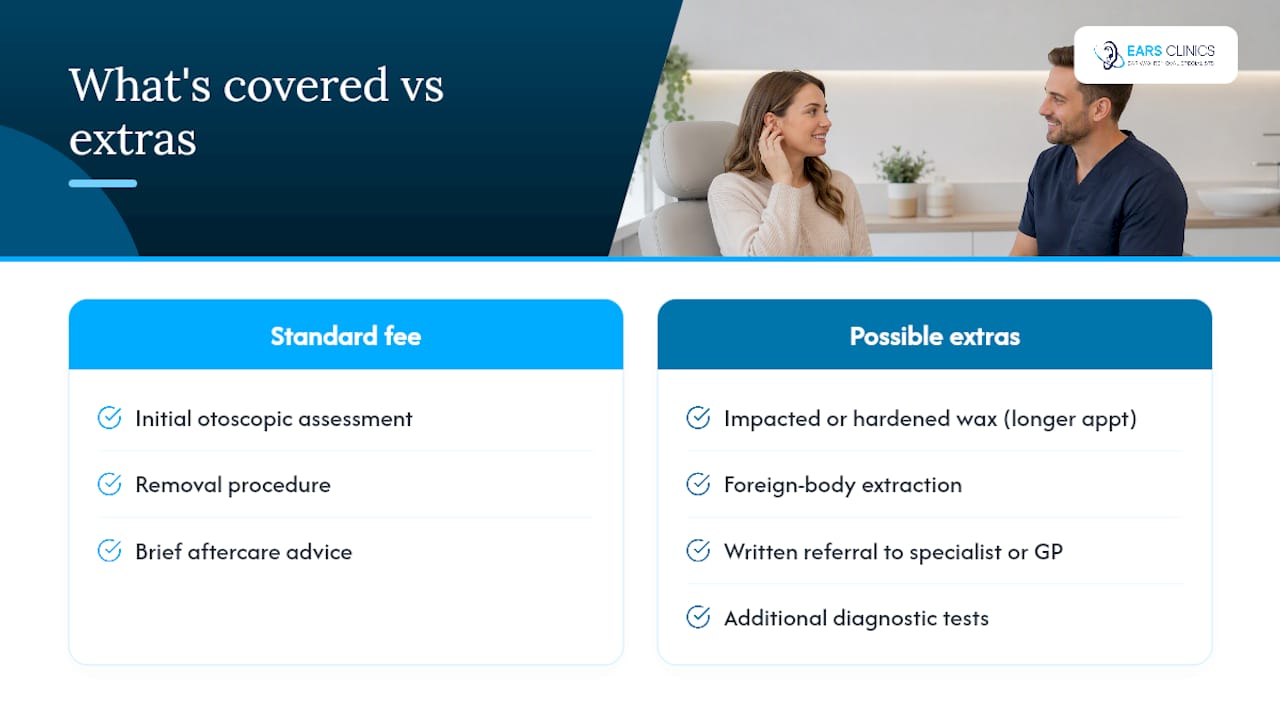
A standard fee typically covers three things: an initial otoscopic assessment to check your ear canal, the removal procedure itself, and brief aftercare advice before you leave. That’s the baseline you should expect from any regulated provider, regardless of which method they use.
Where costs can climb is with complications or extras beyond routine wax build-up:
Costs may increase if removal involves impacted or hardened wax needing longer appointments, extraction of foreign bodies, written referrals to specialists or GP, or additional diagnostic tests beyond the standard assessment.
If you have private health insurance, reimbursement is often possible, though policies vary considerably between insurers. Ask your clinic for an itemised receipt showing the date, procedure performed, and clinician’s name, since insurers typically want this level of detail before processing a claim.
Pro Tip: Use olive oil or a proprietary softening drop for three to five days before your appointment. This is standard clinical advice that softens compacted wax, and it can shorten your appointment time considerably, particularly if your wax is heavily built up.
How the removal method affects the price
Three clinical methods dominate UK ear wax removal, and the one your clinician chooses depends on your ears, not on a menu you pick from yourself.
Microsuction: a fine suction device removes wax under direct magnified vision, usually via a microscope or headlamp with magnification
Irrigation: warm water is gently flushed through the ear canal to dislodge and wash out wax
Manual instrumentation: a clinician uses specialist tools such as a curette or forceps to lift wax out directly
Current NICE guidance and UK clinical practice widely regard microsuction as the preferred method for most adults, largely because the clinician can see exactly what they’re doing throughout the procedure. That visibility is why microsuction sometimes carries a modest price premium over irrigation. You’re paying for precision and reduced risk of accidental trauma to the ear canal, not for a fancier-sounding name.
Irrigation and manual instrumentation remain entirely safe and clinically valid alternatives, and a properly trained clinician may recommend one over microsuction based on what they see. A history of ear surgery, a suspected perforation, an unusually narrow ear canal, or active infection can all make microsuction unsuitable, in which case irrigation or careful manual instrumentation becomes the safer choice. The practitioner selects the appropriate method based on your medical history and what they find during examination, not on price alone.
NHS versus private care: what to actually expect
NHS provision of routine ear wax removal has tightened considerably in many parts of the UK, and availability now varies significantly by local health board or trust. Understanding where you stand before you search for an appointment saves a lot of frustrated phone calls.
Check with your GP practice first. Some surgeries still offer irrigation or microsuction in-house, though many have stopped routine wax removal unless there’s a specific medical indication.
Ask whether you meet the criteria for NHS referral. Hearing loss, pain, or a wax blockage affecting a hearing aid fitting are more likely to qualify than routine wax build-up alone.
Consider private self-referral if NHS waits are long. You don’t typically need a GP referral to book privately, which is often the practical route when NHS capacity is limited.
If you’d rather not wait to find out whether your local surgery still offers the service, our guide to NHS versus private ear treatment sets out the decision points in more detail.
Choosing a provider: what to check and what to ask
Price is only one part of the decision. The clinician’s training and the clinic’s regulatory status matter just as much, arguably more, because ear wax removal carries real risk when done poorly.
Before booking anywhere, confirm the essentials:
The clinic is registered with Healthcare Improvement Scotland (HIS) or the Care Quality Commission (CQC), depending on where you’re based
Clinicians hold recognised, accredited training in the methods they offer
Pricing is stated clearly upfront, including what happens if no wax is found
When you call to book, ask directly: which method will be used and why, what happens if no wax is present, how much a home visit costs if that’s relevant to you, and what the cancellation policy is. A provider that can’t answer these plainly is worth avoiding.
Pro Tip: Treat “ear candling” as a red flag rather than a treatment option. It has no recognised clinical basis for wax removal and isn’t offered by regulated aural care providers.
Earhealthservice’s approach to certified, transparent pricing
Earhealthservice runs EARS Clinics, which are registered with Healthcare Improvement Scotland (HIS) and staffed by NHS-accredited Aural Care Specialists trained in microsuction, irrigation, and manual instrumentation. The clinical team selects whichever method suits your ear canal and history, following the same evidence-based principles outlined above rather than defaulting to one approach regardless of presentation.
Booking is straightforward across in-clinic, same-day, and home-visit options, with pricing published clearly rather than confirmed only at the desk:
In-clinic appointment for adults (over-18s): £60
In-clinic appointment for under-18s: £75
Home visit appointment: £180
Service | Price |
Adult in-clinic appointment | £60 |
Under-18 in-clinic appointment | £75 |
Home visit | £180 |
Every appointment includes an initial assessment, the chosen removal procedure, and aftercare guidance before you leave, with correspondence available to your GP or ENT specialist if clinically needed.
How long does the whole process actually take?
Most patients complete the entire journey, from booking to walking out with clear ears, within a single visit lasting somewhere between 20 and 40 minutes. That figure covers the otoscopic assessment, the removal procedure itself, and a short aftercare conversation, though it varies depending on how compacted the wax is and which method the clinician uses.
Booking-to-appointment time is a separate consideration and depends heavily on where you’re looking. Private clinics frequently offer same-day or next-day appointments, particularly for straightforward cases, which is one of the clearest practical advantages over NHS routes where waits can stretch to several weeks in areas with restricted provision.
If your wax is significantly hardened or impacted, expect a longer appointment, sometimes extending to closer to an hour, because the clinician may need to work more gradually to avoid discomfort or risk to the ear canal. This is another reason softening drops in the days beforehand genuinely help. Softer wax means a shorter, more comfortable appointment and less chance of needing a follow-up visit.
A follow-up isn’t unusual if wax is severely compacted on first attempt, though it’s far from the norm. Clinicians will tell you at the time if they expect this, rather than leaving you to find out afterwards.
Is DIY ear wax removal actually cheaper?
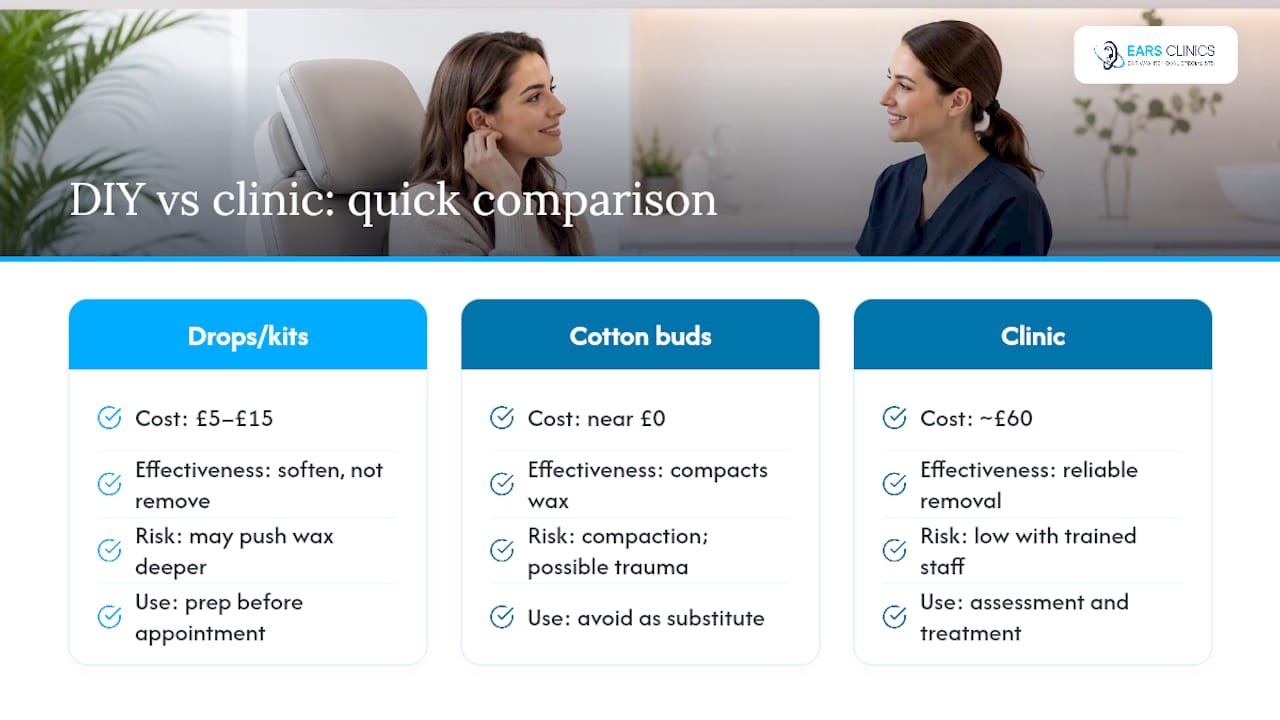
Over-the-counter ear drops and home irrigation kits cost considerably less upfront, typically somewhere between £5 and £15 for a bottle of softening drops or a basic bulb syringe kit. On price alone, that looks like an easy win against a £60 clinic appointment.
The comparison falls apart once you factor in what these products can and can’t actually do. Softening drops are genuinely useful and are exactly what clinicians recommend as preparation before a professional appointment. They loosen wax; they don’t reliably remove it, particularly if the build-up is already impacted or sitting deep in the canal. Home irrigation kits carry a different problem entirely: used without proper training, they carry a real risk of pushing wax further in, causing minor trauma to the ear canal, or, in rarer cases, perforating the eardrum.
Cotton buds sit at the riskier end of this spectrum despite costing next to nothing, since they tend to compact wax rather than remove it. None of this makes DIY products worthless. Used as preparation, in the days before a proper appointment, they can genuinely shorten your treatment time. Used as a substitute for trained assessment, particularly if you have any pain, discharge, or a history of ear surgery, they’re a false economy that can turn a £60 appointment into a more complicated (and more expensive) problem.
Why the price question misses the real point
Most guides to ear wax removal costs treat this as a straightforward shopping decision: find the cheapest number, book it, done. That framing undersells what you’re actually paying for.
The genuine variable across UK providers isn’t price. It’s whether the person treating you can recognise when microsuction is wrong for your ears and switch to irrigation or manual instrumentation instead. A £45 appointment with an untrained operator using one method regardless of presentation is worse value than a £75 appointment with a clinician who assesses first and adapts.
Conventional advice tends to rank providers by price alone, which quietly assumes every provider offers the same clinical judgement behind the same procedure. That assumption doesn’t hold. Regulatory status, whether a clinic is HIS or CQC registered, and evidence of accredited clinician training tell you far more about what you’re actually buying than the number on the price list. Readers should prioritise verifying those two things first, then compare prices among providers that clear that bar. Anything else risks optimising for the wrong variable entirely.
— EARS
Book with confidence at EARS Clinics
Earhealthservice runs EARS Clinics as the transparent, regulated alternative to guessing your way through unclear pricing and unverified clinicians elsewhere. Every appointment, whether in-clinic or at home, is delivered by an NHS-accredited Aural Care Specialist working within HIS-registered standards, with published prices you can check before you ever pick up the phone.
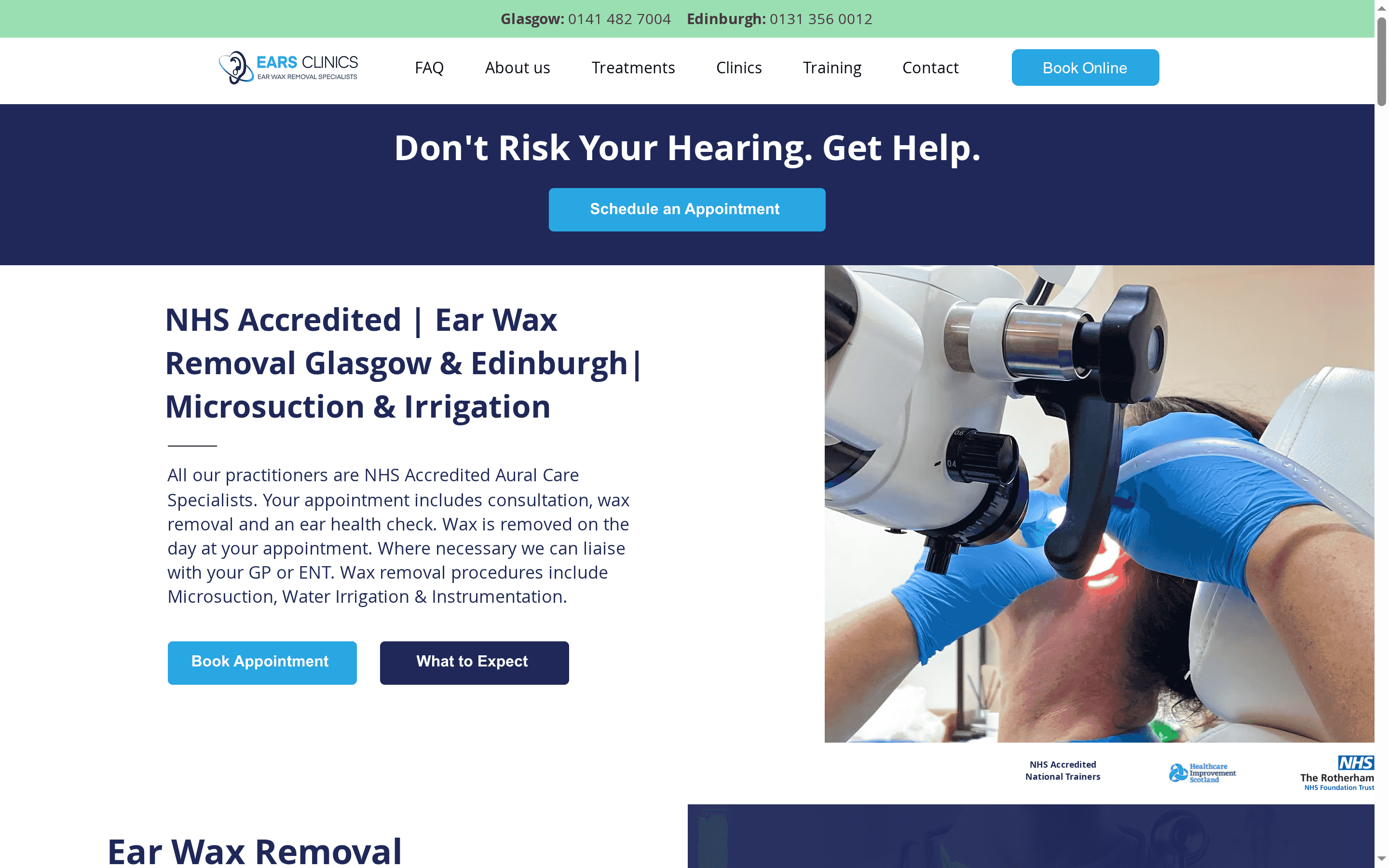
There’s no GP referral needed, no long NHS-style wait, and no ambiguity about what you’ll pay. Adults booking an in-clinic appointment pay £60, under-18s pay £75, and a home visit is £180, covering the full assessment, treatment, and aftercare regardless of whether your clinician uses microsuction, irrigation, or manual instrumentation. If you’d like to see exactly what happens during your visit before you commit, take a look at what to expect from an appointment, then book directly through EARS Clinics for a same-day or home-visit slot near you.
Sources
For the clinical detail behind microsuction and irrigation, including preparation advice, see Right Decision Scotland’s ear care guidance. For a wider look at NHS restrictions and what’s changed locally, read our post on NHS ear wax removal and what to do now. To understand the clinical differences between procedures in more depth, visit our page on types of ear wax removal procedures.
This article is general information, not a substitute for advice from a qualified doctor. Consult a qualified healthcare professional about your own circumstances before acting on anything here.
Recommended