
Ear microsuction age: when clinics will treat children from 2 years

There’s no single fixed minimum age for ear microsuction written into clinical guidance, so the honest answer is “it depends on the child.” What matters more than a birthday is whether your child can sit still, tolerate the noise, and be safely assessed. Guidance from RightDecisions and the AAO‑HNSF supports treating symptomatic children when a trained clinician judges it appropriate.
TL;DR:
Many NHS pathways set age limits between 10 and 16 for community microsuction, with younger children often referred elsewhere.
Eligibility depends on symptoms and ear assessment, including hearing loss, failed ear drops, and the child’s ability to stay still.
Proper training and regulation are essential, as NHS-accredited clinics treat children from age 2 and tailor procedures to individual needs.
Microsuction is generally well tolerated, with noise avoidance strategies and quick appointments making it suitable for most children.
Aftercare usually involves minimal precautions, such as keeping the ear dry and monitoring for signs of infection or discomfort.
Who can have microsuction: age guidance and clinical eligibility
Parents searching for a strict cut-off point tend to be disappointed, and for good reason: no clinical guideline names a universal lower age limit for microsuction. What you’ll find instead is a patchwork of local rules. Some NHS pathways restrict community microsuction to children aged 10 and above, others set the bar at 12 or 16, and younger children are typically redirected to acute trusts or specialist paediatric services, as seen in the Norfolk and Waveney referral pathway.
Eligibility comes down to symptoms and assessment rather than age alone. A clinician will usually want to see evidence of hearing loss, a failed attempt at self-managed softening drops, or an eardrum that can’t be properly examined. Before booking, most services check for:
The ability to keep the head still for the duration of the procedure
No active ear infection or discharge at the time of the appointment
Enough understanding to give assent alongside parental consent
What happens during a child’s microsuction appointment
Microsuction for children follows a straightforward sequence, and knowing the order of events helps take the mystery out of it for both you and your child.
The clinician examines the ear canal under a microscope or magnifying camera to see the wax clearly before touching anything.
A fine, sterile suction tip gently draws out the wax under direct vision, with light instrumentation used only if a stubborn plug needs loosening first.
The whole appointment usually wraps up in a short time, often faster if the wax is soft and the child settles quickly.
The suction device makes a steady, mechanical whirring noise, and this is usually the part that catches children off guard rather than the sensation itself. Clinicians often let a nervous child listen to the sound before it goes near their ear, which takes the edge off considerably. Microsuction is often preferred in paediatric care over irrigation, largely because it avoids introducing water into the ear canal and lets the clinician watch, in real time, exactly how the wax is being removed rather than working blind. That said, irrigation and manual instrumentation remain safe and clinically valid options, and a competent practitioner will choose whichever method best suits your child’s ear on the day, as no single method is proven superior for all cases.
Safety, contraindications and when microsuction isn’t right
Microsuction is well tolerated by most children, but it isn’t automatically suitable for every ear or every child. A properly trained clinician will screen for reasons to pause or avoid the procedure altogether, including:
Active ear discharge or a suspected perforation
Severe dizziness, vertigo, or a history of hyperacusis (unusual sensitivity to sound)
Recent ear surgery or grommet insertion
Genuine inability to stay still, even with reassurance and breaks
Trained practitioners are taught to stop immediately if a child becomes distressed, and to use appropriate protective equipment and calibrated suction settings throughout. If the ear canal can’t be safely assessed, or if something concerning turns up, referral to an ENT specialist is the correct next step rather than pushing ahead. Professional BSA guidance is explicit that anyone treating a child under 18 needs specific paediatric training, not just general competence in adult ear care. For a closer look at conditions that warrant extra caution, this medical insights resource covers when dizziness or heightened sound sensitivity should delay a procedure.
Pro Tip: Tell the clinician in advance if your child has struggled at previous appointments, has sensory sensitivities, or has additional needs. A five-minute phone call before booking lets the clinic plan extra time or a quieter room, which makes a real difference on the day.

Getting your child ready: preparation and consent
A little preparation goes a long way towards a calm, successful appointment. If your clinician recommends softening drops, start them a few days beforehand exactly as advised, since softened wax comes away far more easily and reduces the time spent in the chair.
Beyond the ear drops, simple behavioural groundwork helps enormously:
Explain the procedure in plain, low-drama language (“the doctor will use a little machine to clean your ear”)
Practise sitting still for a few minutes at home, perhaps during a favourite show
Bring a comfort toy or item for reassurance
Expect the actual appointment to be short, so there’s little need to over-prepare for a long ordeal
You’ll be asked to give formal parental consent, and where a child is old enough, clinicians will also seek their assent in age-appropriate terms. Bring any relevant medical history or GP correspondence with you, particularly if your child has had grommets or previous ear surgery. Further practical tips for the appointment itself are covered in this guide to safe wax removal for children.
Recovery and aftercare after microsuction
Most children feel completely normal within minutes, though some notice mild, temporary tinnitus or a slight fullness in the ear that settles within a day or two. Hearing improvement is often immediate once the blockage clears, which can be a genuinely striking moment for both parent and child.
Aftercare is minimal but worth following:
If irrigation was used instead, keep the ear dry for 24 to 48 hours
Watch for discharge, unusual pain, or a raised temperature in the days afterwards
Use any prescribed drops exactly as directed
Attend a follow-up if the clinician has advised one
Contact your GP or the treating clinician promptly if you notice significant pain, bleeding, persistent hearing loss, or fever. The AAO‑HNSF guideline update notes that no single removal method outperforms all others across every patient, which is exactly why a trained clinician tailors the approach to your child’s ear rather than following a rigid script.
NHS versus private: how age limits actually work in practice
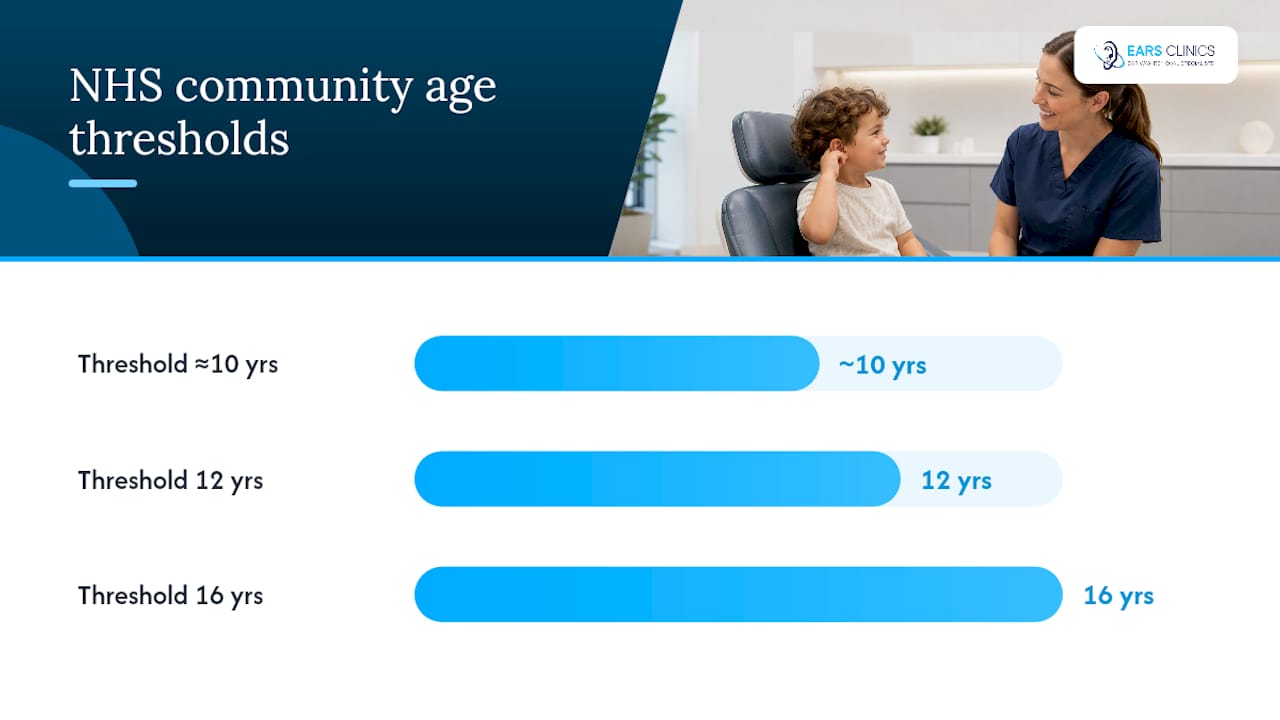
NHS pathways vary considerably by area, and this is where a lot of parental confusion comes from. Some regions provide community microsuction only from around age 10, others set 12 or 16 as the threshold, with younger children referred to hospital-based ENT or audiology services instead. Guidance also tends to favour trying ear drops first, reserving microsuction for cases where self-management hasn’t worked or where clear visibility of the eardrum is needed.
Private clinics with genuine paediatric capability, appropriately trained staff, and suitable facilities can often accept younger children where an NHS community pathway would decline them. If you’re unsure where your child fits, a few practical steps help:
Ask your GP or local audiology service what their age criteria actually are
Confirm whether your local NHS pathway includes paediatric provision at all
Contact a regulated private clinic directly to ask about their paediatric age policy
Why regulated, NHS-accredited care matters for children’s ears
Regulation isn’t a box-ticking formality when it comes to a child’s ear canal. It’s the difference between a practitioner who has been properly assessed against national standards and one who hasn’t. Earhealthservice operates under Healthcare Improvement Scotland registration, and its Aural Care Specialists are NHS-accredited, which means paediatric competence has been independently checked rather than simply claimed.
Earhealthservice is licensed to treat patients from 2 years of age, with both in-clinic appointments and home visits available for families who need flexibility. Before booking anywhere, it’s worth asking a few direct questions:
Is the practitioner specifically trained in paediatric ear care, not just adult wax removal?
Does the clinic have a written policy for treating children under a given age?
What happens if my child becomes distressed partway through?
What parents can expect: the honest picture
Most of the worry around a child’s first microsuction appointment centres on two things: the noise of the suction device and whether the child will actually sit still. In practice, clinicians manage both routinely, using distraction, short breaks, and a calm, unhurried pace rather than pushing through resistance.
Outcomes tend to be reassuringly straightforward. When performed by a properly trained practitioner, microsuction rarely causes complications, and the improvement in hearing is often noticeable the moment the wax comes away. If there’s one practical tip worth remembering, it’s this: a five-minute chat with your child beforehand about what the noise sounds like does more for a smooth appointment than almost anything else.
— EARS
Booking paediatric microsuction with a regulated clinic
If you’ve read this far weighing up whether your child is ready for microsuction, the next sensible step is talking to a clinic that treats children as a matter of routine rather than an exception. Earhealthservice is licensed to treat patients from 2 years of age, well below many NHS community thresholds, because its Aural Care Specialists hold specific paediatric training and its clinics are Healthcare Improvement Scotland registered.
Families can choose between in-clinic appointments or home visits, which matters if your child settles better in familiar surroundings. Bring any GP correspondence, a list of previous ear issues, and your child’s comfort item if that helps. You can view current microsuction provision and appointment details directly, or check availability at your nearest clinic, such as the Clydebank service, to book a paediatric assessment.
Sources
This article is general information, not a substitute for advice from a qualified doctor. Consult a qualified healthcare professional about your own circumstances before acting on anything here.
Recommended