
Role of Ear Hygiene—Why It Matters for Children
Every british parent knows the worry that comes when a child struggles to hear or complains about sore ears. With up to 1 in 8 children experiencing earwax issues every year, safe and professional care becomes a top priority—especially in busy areas like Glasgow and Edinburgh where NHS waitlists can be long. This guide gives you clear answers on maintaining ear hygiene for your child, explaining the best steps for effective, immediate ear wax removal when safety matters most.
Key Takeaways
Point | Details |
Importance of Ear Hygiene | Proper ear hygiene is crucial for children’s ear health, as it prevents infections and complications. Consult professionals rather than using invasive methods for cleaning. |
Anatomical Differences | Children’s ears differ significantly from adults, making them more prone to infections and requiring specialised care. Beware of structural issues that can affect ear health. |
Safe Cleaning Practices | Always use gentle cleaning methods, avoiding objects inside the ear canal. A soft washcloth is preferable for cleaning the outer ear. |
When to Seek Help | Seek professional care for persistent symptoms like ear pain or hearing difficulties, as these could indicate serious underlying issues. Document symptoms before consultations for better assessment. |
Defining Ear Hygiene and Its Importance
Ear hygiene represents a fundamental aspect of maintaining overall ear health, particularly for children who are more susceptible to ear-related complications. The World Health Organization emphasizes that ear and hearing care are critical components of universal health coverage, underscoring the importance of understanding proper ear maintenance.
At its core, ear hygiene involves understanding and maintaining the delicate ecosystem within the ear canal. Cerumen (earwax) plays a surprisingly sophisticated protective role, serving as a natural barrier against dust, debris, and potential microbial invasions. Research from nursing perspectives highlights that this waxy substance helps prevent infections and potential injuries by trapping foreign particles and providing a protective coating for the sensitive ear canal.
Effective ear hygiene goes beyond simple cleaning and requires understanding the ear’s natural mechanisms. Parents and caregivers must recognise that aggressive or inappropriate cleaning methods can cause more harm than good. Inserting objects like cotton buds into the ear canal can potentially damage the delicate skin, push wax deeper, or cause micro-abrasions that increase infection risks. Instead, gentle external cleaning and professional guidance are recommended for maintaining optimal ear health.
Pro tip: Always consult a healthcare professional before attempting any ear cleaning procedures, especially for young children who have more sensitive ear structures.
How Children’s Ears Differ From Adults’
Children’s ears have unique anatomical and developmental characteristics that distinguish them significantly from adult ear structures. Professional medical resources highlight the critical differences in Eustachian tube configuration, which directly impact ear health and potential medical interventions.
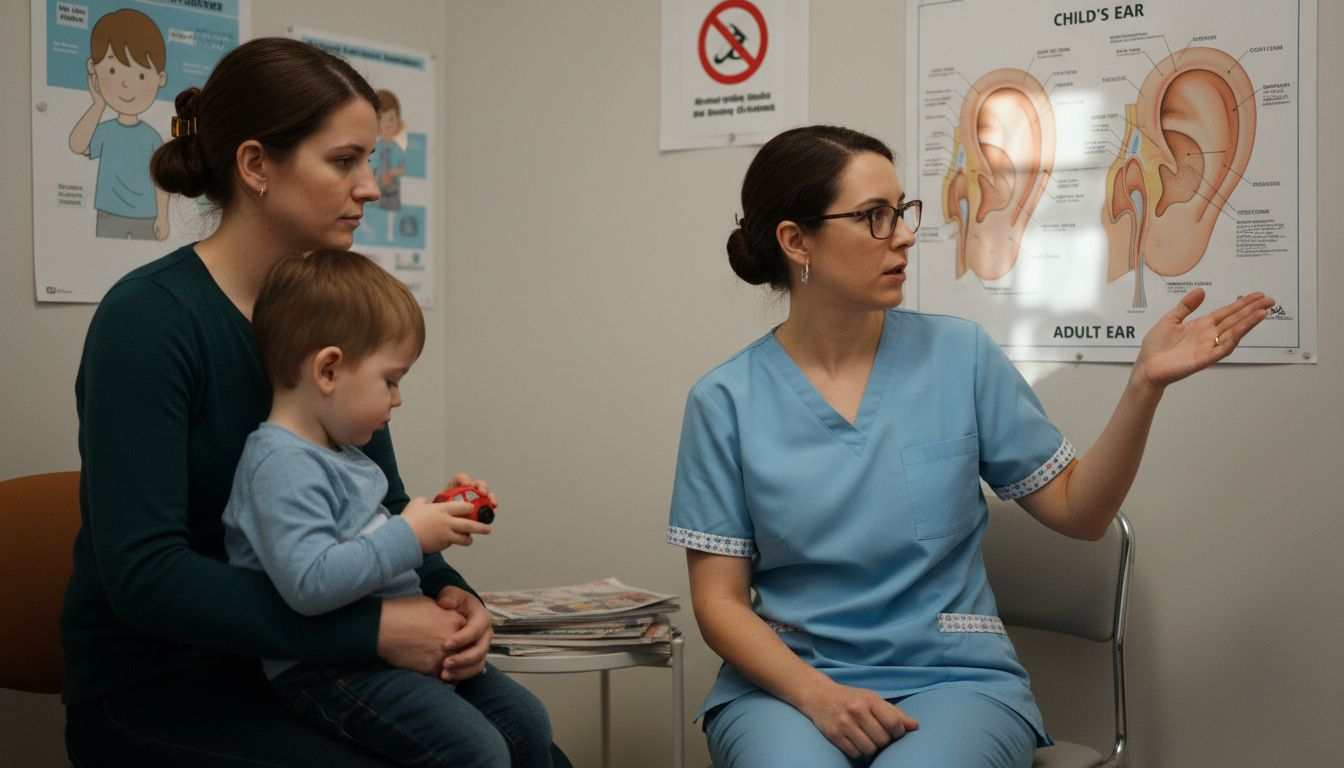
The primary distinguishing feature is the Eustachian tube structure. In children, this tube is shorter, narrower, and positioned more horizontally compared to adults. This anatomical variation makes paediatric ears significantly more vulnerable to infections and fluid accumulation. The tube’s structural differences mean that bacteria and viruses can more easily travel from the nasal passages into the middle ear, creating an environment more prone to inflammatory responses and potential hearing complications.
Additional physiological variations include smaller ear canals, more delicate tympanic membranes, and less developed immune responses. These factors contribute to why children experience ear infections more frequently and why their ear health requires more specialised, age-appropriate medical attention. For instance, the narrower ear canal makes children more susceptible to wax impaction and can complicate ear wax removal procedures, necessitating gentler, more precise professional interventions.
The table below summarises key anatomical and developmental differences between children’s and adults’ ears:
Characteristic | Children’s Ears | Adults’ Ears |
Eustachian tube length | Shorter | Longer |
Eustachian tube angle | More horizontal | More vertical |
Ear canal size | Smaller, narrower | Larger, wider |
Tympanic membrane | More delicate | Thicker, more resilient |
Immune response | Less developed | Fully developed |
Infection risk | Increased due to structure | Lower with maturation |
Pro tip: Regular paediatric ear check-ups can help identify and address structural differences before they develop into more serious health concerns.
Safe Ear Cleaning Methods for Children
Pediatric otolaryngologists emphasise the critical importance of gentle and cautious ear cleaning techniques that protect children’s delicate ear structures. Understanding proper ear hygiene involves recognising what methods are safe and which practices can potentially cause harm.
The fundamental rule for children’s ear cleaning is straightforward: never insert any objects directly into the ear canal. Cotton swabs, hair pins, ear candles, and other invasive tools can cause serious damage to the sensitive ear structure. Instead, parents should focus on cleaning only the outer ear using a soft, damp washcloth. This approach removes surface debris without risking internal ear canal injury. For children experiencing excessive wax buildup, professional medical intervention becomes the safest and most appropriate solution.
Medical professionals from leading children’s hospitals recommend specific cleaning protocols that prioritise safety and minimise potential complications. These protocols typically involve gentle external cleaning, avoiding inserting anything smaller than an elbow into the ear canal. When wax accumulation becomes problematic, healthcare providers might recommend specific ear drops or professional wax removal techniques tailored to the child’s age and ear condition.
Pro tip: Always consult a healthcare professional before attempting any ear cleaning procedure, and remember that visible earwax is typically a sign of healthy, self-cleaning ear mechanisms.
The following table outlines common ear cleaning methods and their potential outcomes for children:
Cleaning Method | Safety Level | Possible Consequences |
Soft, damp washcloth | Very safe | Reduces surface debris, no canal risk |
Cotton bud in canal | Risky | Wax impaction, eardrum injury |
Ear candles | Dangerous | Burns, ear canal blockage |
Professional cleaning | Safest | Tailored, minimally invasive care |
Risks of Improper Ear Hygiene Practices
Systematic literature reviews reveal alarming risks associated with inappropriate ear cleaning practices, particularly among children who are most vulnerable to potential complications. Understanding these risks is crucial for parents and caregivers seeking to protect their children’s ear health.
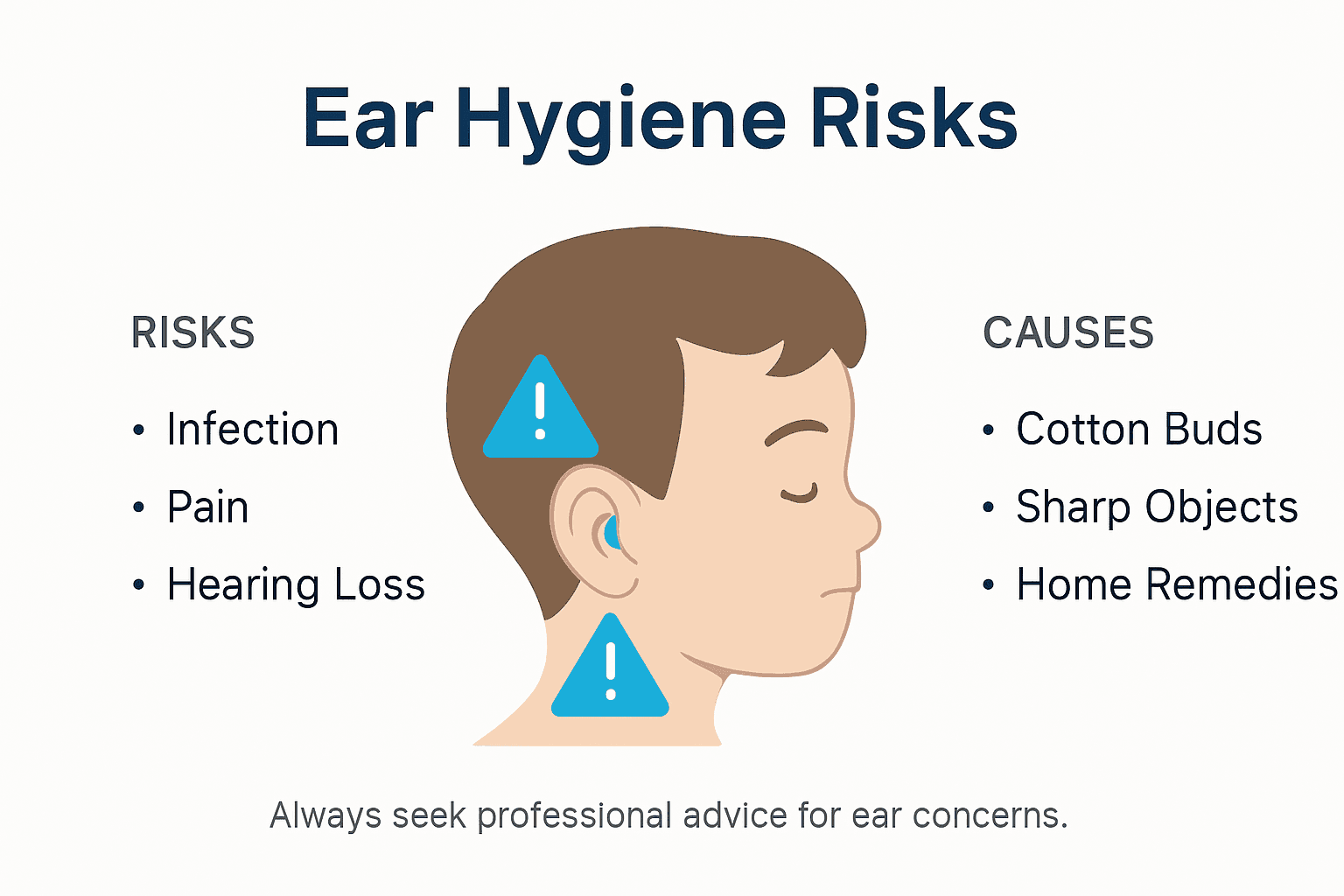
The most significant dangers emerge from using invasive cleaning methods like cotton buds or improvised tools. These practices can cause multiple serious complications, including wax compaction, eardrum perforation, and increased risk of infections. When objects are inserted into the ear canal, they can push earwax deeper, creating blockages that impair hearing and potentially lead to painful inflammatory conditions such as otitis externa. The delicate skin within the ear canal is easily damaged, making professional medical intervention the safest approach for addressing ear hygiene concerns.
Medical experts emphasise that improper ear cleaning can lead to long-term hearing complications that extend far beyond immediate discomfort. Children are particularly susceptible to these risks due to their smaller, more sensitive ear structures. Potential consequences include chronic ear infections, temporary or permanent hearing loss, and increased susceptibility to bacterial and fungal growth within the ear canal. Professional healthcare providers strongly recommend against home interventions that involve direct canal manipulation.
Pro tip: Always prioritise professional medical advice over home remedies when dealing with ear hygiene, and remember that visible earwax is typically a natural, protective mechanism.
When to Seek Professional Ear Care
The World Health Organization provides critical guidance on identifying when professional ear care becomes essential, particularly for children whose developmental health can be significantly impacted by unaddressed ear conditions. Understanding the key indicators that warrant professional intervention is crucial for parents and caregivers.
Several specific symptoms should prompt immediate consultation with a healthcare professional. Warning signs include persistent ear pain, noticeable hearing difficulties, unusual discharge, recurring infections, or visible wax build-up that cannot be safely managed at home. Children might demonstrate these symptoms through behavioural changes such as reduced responsiveness, frequent requests to repeat conversations, or increased irritability related to ear discomfort.
Pediatric ENT specialists recommend professional assessment when specific ear health red flags emerge, particularly if symptoms persist beyond a few days. Potential complications can range from temporary hearing impairment to more serious developmental challenges if left unaddressed. Professional ear care practitioners can perform comprehensive evaluations, utilise safe removal techniques, and identify underlying conditions that might not be apparent during home observations.
Pro tip: Document the frequency and specific nature of your child’s ear-related symptoms before your medical consultation to provide healthcare professionals with precise, helpful information.
Protect Your Child’s Ear Health with Expert Care from EARS Clinics
The article highlights the crucial need for safe ear hygiene practices in children to avoid complications from improper cleaning methods. If you are concerned about your child’s delicate ear structures or noticing signs of wax buildup and discomfort remember that professional ear care is essential. Avoid the risks of using cotton buds or unsafe home remedies and trust specialists who understand paediatric ear anatomy and offer gentle, NHS-accredited removal techniques such as microsuction and irrigation.

Ensure your child’s ear health is in the best hands with EARS Clinics. We provide trusted, regulated ear care services in Glasgow and Edinburgh with flexible options including in clinic appointments and home visits tailored for children from age 2 upwards. Act now to secure quicker access than NHS services and benefit from expert advice designed to protect your child’s hearing and wellbeing. Book your appointment today at EARS Clinics and discover the advantages of professional ear wax removal backed by Healthcare Improvement Scotland standards. Learn more about safe cleaning and care on our site here and take the first step towards healthier ears for your family.
Frequently Asked Questions
What is ear hygiene, and why is it important for children?
Ear hygiene refers to the proper maintenance and care of the ear, essential for preventing infections and maintaining overall ear health, particularly in children who are more vulnerable to ear-related complications.
How can I safely clean my child’s ears?
To safely clean your child’s ears, avoid inserting any objects into the ear canal. Instead, use a soft, damp washcloth to gently clean the outer ear. For excessive wax buildup, seek professional medical intervention.
What are the risks of improper ear cleaning practices for children?
Improper ear cleaning, such as using cotton buds or other invasive tools, can lead to serious risks like eardrum perforation, wax compaction, and increased susceptibility to ear infections, especially in children with sensitive ear structures.
When should I seek professional ear care for my child?
You should seek professional ear care if your child exhibits persistent ear pain, hearing difficulties, unusual discharge, recurring infections, or visible wax build-up that cannot be managed safely at home.
Recommended